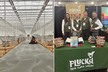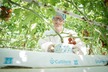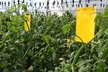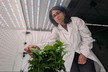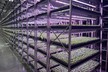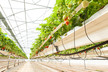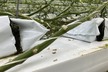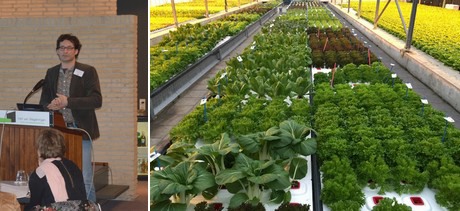
Left: Maurice van der Knaap; Right: dry hydroponics
As it turns out, ‘dry’ hydroponics isn’t actually dry. The plant is rooted in water. There are, however, two major differences with regular hydroponic cultivation. Firstly, the substrate used is floating above the water, a technique that, according to Van der Knaap, has all kinds of benefits. "A higher production can be achieved, the plant will be stronger (i.e., less crop protection necessary) and, moreover, there are no excess fertilizers." The second difference is in the plastic elements keeping the crops afloat. These are hollow at the bottom, thereby increasing the contact surface between water and air. "This is essential for the quality of the water and consequently for the crop."
Water
'Good' water is crucial in every cultivation, but in hydroponics probably even more so. Van der Knaap calls this "the big black box". "Basically, there are two philosophies that the grower can use," he explains. "The first is that of the intensive treatment and sterilization. This was the most common approach up to now, but a growing understanding of the plant and the role of the water has changed this. Water should be left alone as much as possible, to let all kinds of microflora find a balance and help the water remain healthy.”
Sustainable cultivation
The second is sustainability. Dry Hydroponics is the (provisional) end result of a quest for the most sustainable cultivation possible. "In the beginning we saw the concept of sustainability as a marketing gimmick, until we discovered that growing sustainably is actually beneficial in terms of costs."
More information:
 Dry Hydroponics ®
Maurice van der Knaap
T: 0031-(0)6-22925151
E: [email protected]
www.dryhydroponics.nl