Sign up for our daily Newsletter and stay up to date with all the latest news!

Subscribe I am already a subscriber

You are using software which is blocking our advertisements (adblocker).

As we provide the news for free, we are relying on revenues from our banners. So please disable your adblocker and reload the page to continue using this site.
Thanks!

Click here for a guide on disabling your adblocker.

Sign up for our daily Newsletter and stay up to date with all the latest news!

Subscribe I am already a subscriber

US: How do plants grow aboard the international space station?

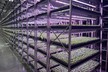
There have been numerous experiments into plant growth in space. It's important to scientists on the ground because it can help us better understand how plants function, which can help us to grow food more efficaciously. It's also important to NASA, because when we finally start sending astronauts away from low Earth orbit, they may need to grow their own food and maintain their own regenerable atmosphere.

Gravity is not the only difference between the Earth environment and the International Space Station environment. In the closed atmosphere of a spacecraft, volatile organic compounds can accumulate. VOCs need to be scrubbed from the air, or seed production will suffer. There are elevated radiation levels that can cause mutations and affect growth. An experiment on Mir that involved storing tomato seeds in space for six years found mutation rates up to 20 times higher in the space seeds than in the control seeds stored on the ground. And there are the spectral effects of using only electric lighting.

Click here to read the complete article at www.slate.com.
Publication date:

Related Articles → See More