Canada: Can urban agriculture work on a commercial scale?
Fifteen years later, despite many experiments with farming inside city buildings, the first large-scale vertical farm, as envisioned by Despommier, has yet to be built. The urban farming industry, still in its infancy, is struggling to address the engineering challenges that make growing food in cities a costly business. Sales and distribution have also proven harder than almost anybody imagined. “What’s been lacking,” says Mohamed Hage of Montréal, “are players who will do it at a true commercial scale, with the right business model.”
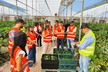
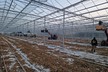
Hage is trying to fill exactly that gap with his company, Lufa Farms. His path to scaling up urban agriculture is not vertical but horizontal. In 2011, Lufa set up the world’s first commercial rooftop greenhouse on top of a wide industrial building in northern Montréal. The area, a nondescript industrial zone bordered by two highways and an outdoor mall full of big box stores, doesn’t turn up in design magazines. But this is where Hage, after spending hours painstakingly scouring Google Earth, found the perfect rooftop for his next-gen greenhouse.
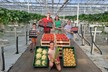
Lufa’s biggest innovation has little to do with farming techniques or architecture. It’s marketing and e-commerce. Lufa sells its produce through a complex distribution system that puts to shame the usual get-what-you-get offerings of farm co-ops found in many North American cities. For a minimum of $30 a week, Lufa customers select what goes into their basket through a fancy online marketplace (Sicilian eggplants have never looked sexier). To fill out its product offerings, Lufa partnered with a slew of other local food makers to provide customers with all kinds of products, from fresh bread to dairy, to herbs, honey and dry beans. - See more at:
Click here to read the complete article at citiscope.org