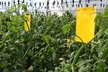
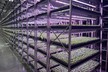
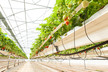
The sustainability of Almeria's agricultural model, based on the intensive production of fruit and vegetables, has been subject to a thorough study. The researchers from the Department of Applied Economics of the University of Almeria, Emilio Galdeano, José Ángel Aznar and Juan Carlos Pérez, have aimed to demonstrate how Almeria's model is setting examples in economic, environmental and social sustainability.
Economic component
According to the researchers, a detailed study of the financial statistics "points to the sustained stability of an endogenous local development, which has also had an impact on a wide range of other productive activities. The relevance of European funding in this context is minimal, as it represents a mere 2% of the agricultural income."
Environmental component
The study shows that there is "an efficient use of the resources, with a really positive impact in terms of ecological footprint, especially in irrigation, which includes aspects such as the albedo effect in greenhouses for the tackling of global warming, as well as integrated solutions. The environmental impact is thus twenty times lower than the national average for certain resources."
Social component
The authors put special emphasis on the social component as one of the key aspects, "as the exploitations are mainly family businesses, contributing with their organisations and industries to enhance social cohesion and to facilitate a balanced distribution of the revenue generated."
All three components have complemented each other for the past five decades.
Source: ideal.es