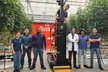
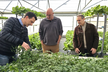
Four hectares of high-tech greenhouses for the intensive production of vine tomatoes. Inspired by the Dutch model and manufactured by a French company, they are located in Ravenna (Emilia Romagna), an area particularly suitable for fruit and vegetable cultivation.
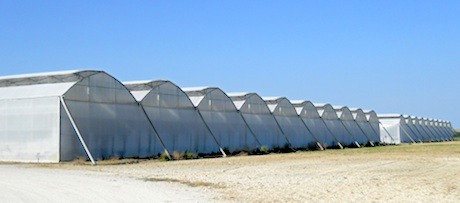
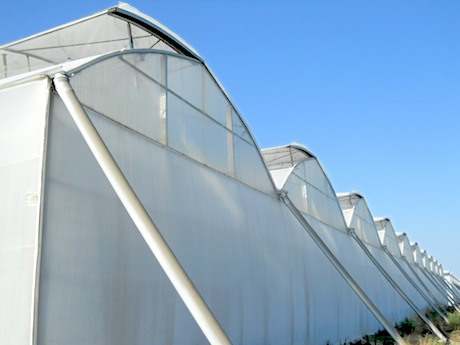
Two blocks of greenhouses located in Ravenna. Below: 100-metre-long top windows favour air circulation. Double plastic films, insulated and painted white, protect plants from hot and cold weather. A study on sun exposure and winds enabled the perfect orientation of the greenhouses.
Nowadays, professional tomato crops require high-tech plants. Nothing is left to chance and everything is monitored by computers that use sensors to record he main environmental factors daily.
Not only that. They also measure the distance between the flower truss and the head, the length of the leaves, the diameter of the stalk, the number of leaves and flower bunches and so on. By measuring and confronting a number of parameters, plants are managed in a scientific way so as to obtain the maximum fruit production.
In fact, on the basis of morphological data, plant management models were developed that enable them to calculate the production for the weeks to come.
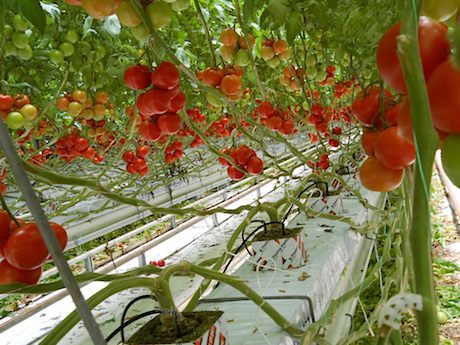
Inside the greenhouses, tomato plants are cultivated soil-less on a mineral wood plaque, so they are isolated from external dangers, they have fertile soil free from diseases and the perfect environment in terms of oxygen and air circulation.
Technology and professionalism are what make the production "sustainable". A perfect example of this is the fact that the nutrient solution is recuperated.
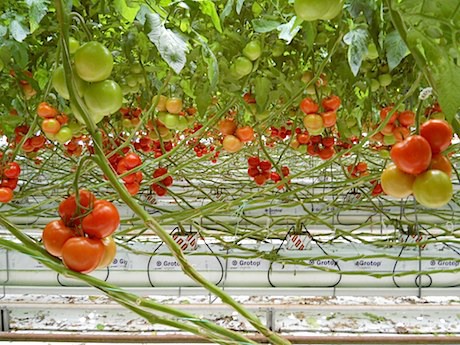
Grafted plants produce on three branches, so the density is of around 3.3 plants/square metre. 244 rows are taken care of by 25 workers who are coordinated by Valentino Grisolia, the head of the greenhouses.
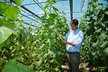
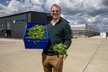
Lorenzo Ceroni (in the photo below) is the owner. After many years as a manager in the financial sector, in 2007 he decided to invest in specialised greenhouses.
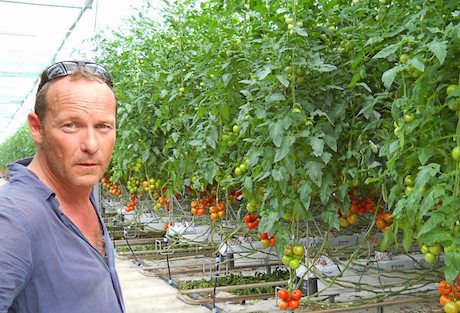
Ceroni explains that, "in a production cycle, a square metre of this type of greenhouse produces 55-60 kg of produce. In Holland, thanks to the change in temperature, which is fundamental to increase the weight of fruit, and to humidity, they reach 70 kg per square metre. It is impossible for us to reach such volumes because in Summer high temperatures during the night do not create the ideal weather for the weight to increase."
"Despite this, the production of these greenhouses is on average definitely bigger than that of the traditional ones. We can reach up to 32 vines per plant against the usual 8," stresses the entrepreneur.
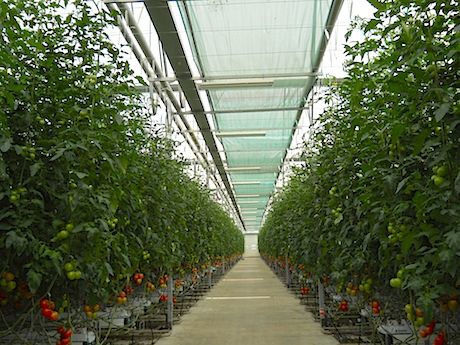
In greenhouses, pollination is carried out using bumblebees and useful insects are used for integrated control. All growing operations to grant the climatic and productive balance must be carried our in a week.
"We receive 40 cm plants with the first little truss in it from a Dutch nursery garden. Transplants are carried our around the third week of January, we start harvesting the first week of April and we finish on the last week of November."
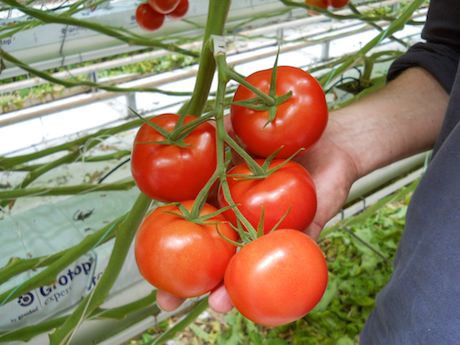
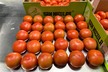
Merlice (De Ruiter) vine tomato. Using varieties developed for technological cultivation contributes to the final result.
"This year, because of the lack of light, we have started harvesting two weeks late, on 18th April," continues Lorenzo Ceroni.
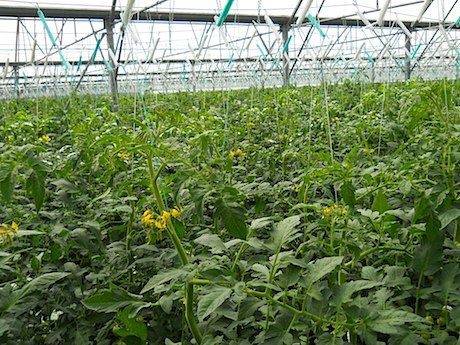
The greenhouse from above. In December, at the end of the cycle, plants are almost 15 metres long.
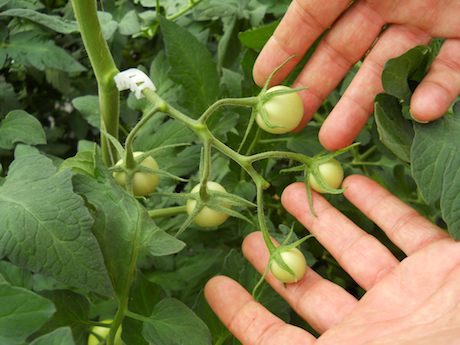
The future production. Growing operations - climate strategy, processing, nutrient solution - are carried out early on with respect to harvesting so bunches can grow better.
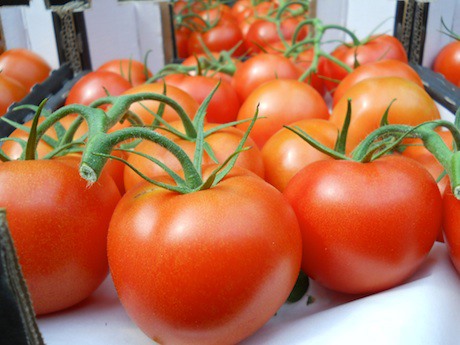
"Every day we ship between 20 and 30 pallets of tomatoes to retailers. So far, the sales campaign has been fluctuating - in April, demand was rather low, May was good, whereas in June both demand and supply increased, so prices dropped."
"Precision agriculture requires a great deal of professionalism, but thanks to these greenhouses final results are guaranteed and the produce is homogeneous for quality, colour and taste."
Contacts
Società agricola Castellanina srl
Lorenzo Ceroni
Via Sant'Alberto 313
48123 Ravenna
Tel.: (+39) 335 8335861
Fax: (+39) 0544 483074
Email: [email protected]