Japanese start-up's new technique uses little water and no soil
Singapore: Grower starts greenhouse operation with Integrated Membrane Culture
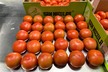
When he went to Singapore last year to assess the market potential, he was convinced he had picked the right kind of project for the right place. "We discovered that, in general, vegetables sold in Singapore did not taste so good," he said. The tomatoes he is bringing to Singapore are of the high-sugar variety. They go by the name of "fruit tomato" in Japan and boast a sugar content of 8 per cent or more, compared with just 5 per cent for ordinary tomatoes.
He is currently growing such tomatoes on a farm in Isehara city, in Kanagawa prefecture west of Tokyo, using a technique based on hydrogel technology developed by Yuichi Mori, a visiting professor at Waseda University.
Hydrogels, which absorb water and hold it in the form of a gel, are used in products like disposable diapers.
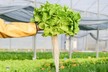
Mori invented a cultivation technique that uses transparent film made from hydrogels. A drip tube placed beneath the film supplies water and nutrients which are retained by the hydrogel in the film until they are absorbed by the plants that are grown on the film.
A waterproof sheet placed underneath the film and the drip tube prevents the plants from being contaminated by soil.
This cultivation technique, known as Integrated Membrane Culture (Imec) and marketed by Mori's bio-venture Mebiol, was even used in 2009 to grow tomatoes in the desert near Dubai.
Iimura's tomato farm in Singapore will be built on 1,200 sq m of land leased from a farm resort in the northwest. A greenhouse is to be built in August and planting will begin in September. The first crop of mini tomatoes will be harvested about two months later.
Iimura hopes to produce about seven tonnes of tomatoes a year, all of which is expected to be consumed in Singapore. Cucumbers, musk melons and leafy vegetables are also on the cards.
Once the farm is up and running, he hopes to increase the area of cultivation to 1ha or 2ha.
Early last year, a rooftop farm using traditional techniques that Iimura's company manages in Tokyo's fashionable Omotesando district, which attracted many visitors from abroad, drew some businessmen and government officials from Singapore.
Hearing from his visitors that there was interest in Singapore in agricultural technology such as vertical farming to grow leafy vegetables, Iimura hit upon the idea of bringing high-tech farming to the republic.
The Imec technique has several advantages over existing techniques. The film used contains extremely tiny holes - more accurately, "nanoholes" - that allow water and nutrients to pass through but not bacteria or viruses, thus protecting the plants from disease.
Because the materials used are very light and the amount of liquid nutrients involved is small, the technique is highly portable compared with traditional hydroponics that needs a lot of water.
Imec farms can therefore conceivably be constructed on floating platforms and located on reservoirs or lakes.
An architect by training, Iimura was born into a family of part-time farmers in Ibaraki prefecture northeast of Tokyo.
After working for a few years at an architectural firm, then moving on to a real estate firm and other ventures, he finally decided four years ago to use his business experience to help farmers.
"Getting involved in the farm sector was like going back to my roots," he said.
His main business is working with Japanese farmers to send their produce to Tokyo where it is sold at outlets run by his firm.
Using his extensive network of farmers, Iimura plans to import fruit and vegetables from Japan for sale in Singapore.
"I expect good demand from the many Japanese restaurants in Singapore, the Japanese expatriate community and the growing number of affluent Singaporeans who enjoy quality Japanese foodstuffs," he said.
Source: The Straits Times