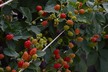
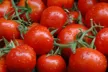
Split tomatoes causes substantial economic damage because shelf life is shorter and tomatoes suffering from splits are more vulnerable to germs. The condition is caused by both genetic and environmental factors, as well as the method of cultivation. The pressure within the fruit, which is related to the water balance, also has an effect.
An increase in radiation also seems to cause splitting, mostly as a result of a rise in temperature and the production of photo assimilates. Lime on the other hand appears to play a part in the flexibility of the membranes, and could reduce splitting. Also, an increased concentration of NaCl has been known to decelerate the formation of splitting.
Tests have been done on the potentially beneficial effects of:
- Calcium and salinity as nutrient solutions
- Pruning the leaves
- Bagging the vines
The tomato varieties used in these tests were Gardeners Delight, Oakley, xenon and Platero. Tests involving the addition of lime and saline solutions showed a stabilization or a reduction in rupturing up to 8%, depending on the variety, with the exception of the Oakly and the Patero, in which the increase of the salt content had an opposite effect. Experiments involving pruning of the leaves likewise showed a reduction of cracking, again depending on the variety. Xenon showed an increase in crack formation with pruning. Bagging did not yield any discernible result.
The overall results show that with small and low-cost applications in cultivation, the formation of splits can be reduced, depending on the variety involved.
Source: poscosecha.com