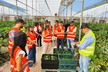
Canada: Diverse collection of seedlings in Smoky Lake nursery destined for oilsands reclamation
Forestry companies were once the sole users of pine and spruce seedlings, but now oilsands companies are big customers as they reclaim former minesite and tailings ponds with a wide variety of trees, bushes and grasses, and aim to restore biodiversity in those areas.
“There is a lot known about growing trees, but bushes and grasses are new. And we are trying to perfect this area because it is becoming very important for us,” said Stuart Howarth, manager of the Smoky Lake Forest Nursery, which is part of the Coast to Coast (C2C) Reforestation company that operates most of the former government nursery.
Due to the firm’s success in becoming a reliable source of native plant material and expertise in growing plants from harvested seeds, it is a finalist for an Emerald Award in the small business category.
Syncrude Canada plants more than a million trees and shrubs each year, and the collection of seed pods, cones and other material from its lands are sent to Smoky Lake for seed recovery, which can be a real challenge, says company agronomist Eric Girard.
“With aspen, you need to locate a good female tree that will produce. But then timing is critical, because you may have just three days to collect the seeds once they are ready, and if you miss that window they are all gone on the wind.”
But that one tree can produce enough seeds for literally millions of new trees in the same location, since using seeds from other areas is prohibited. The situation is even more challenging with shrubs like low bush cranberries and blueberries, as well as many of the sedges and grasses needed for specific reclamation sites, including new fenlands.
“We may find a great patch of blueberries, and we must wait until they are ready. But when we return they are all gone — the local wildlife got there first,” he said.
The seeds from plants can be almost microscopic in size, basically flyspecks that are too small to plant individually. So the nursery staff will plant a whole flat and then transplant the tiny seedlings into pots — a very tedious job. Germination doesn’t always occur immediately, but comes in stages as the conditions change. Other times, some grasses or bushes grow beautifully, while those in the next flat do nothing at all.
“We are learning a lot. We have changed our methods in the field at the Syncrude sites and are doing things differently than in the past,” said Girard.
For example, reapplying forest floor debris, which contains plenty of local seeds, has improved the rate of recovery, he added.
While dealing with tiny seeds is perhaps the most challenging part of the business, Smoky Lake has been recovering seeds from commercial coniferous trees — pine and spruce — since 1977, when it opened as the cornerstone of Alberta’s push for reforestation.
Client firms collect the cones from their sites and the “paper chase” begins, says seed plant manager Henny Darago, who adds that each of the hundreds of batches of seeds handled by the centre are coded and must be stored separately.
Pine and spruce cones are flash-heated to crack the outer seal, then sent to a rotating kiln where the seeds and their attached “wings” fall from the open cones. The wings are separated later using water.
The now-seedless cones are sold to landscaping firms or craft suppliers. All the cleaned seeds are stored for six weeks in a cold room and then registered by original location in the provincial seed archives, which keep a portion of the seed in a safe storage centre.
With 19 Quonset huts and two huge nursery buildings, Smoky Lake produces more than 10 million container seedlings and shrubs each year indoors, plus millions of bare root seedlings in its adjacent fields.
For eight months of the year, the workload requires 30 temporary foreign workers to supplement the 15 permanent staff. This year the crew is from Trinidad.
“English-speakers are a real asset because there are a lot of specific instructions,” said Howarth, who adds with so many plants going to hundreds of specific locations every year, mix-ups must be avoided.
Girard’s team delivers everything from fresh willow “whips” used for cuttings, to seed pods, cattail and ratroot material and jackpine cones to Smoky Lake and comes away with ready-to-plant seedlings. For him, May is the best time of year.
“We will be starting in a few weeks up in (Fort) McMurray,” he said. “It is wonderful to see these seedlings go in the ground.”
Source: edmontonjournal.com