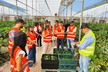
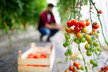
Three years later, the two simple greenhouses she constructed at her expansive farm at Kiamunyi in Rongai District, Nakuru County, have transformed her style of farming. She constructed a greenhouse measuring 40x80 feet on a quarter-acre of land using local materials such as polythene and poles. It cost Sh80,000.
She planted tomatoes that took three months to mature. When she took her first harvest to the market in Nakuru town 10 kilometres away, she made Sh450,000.
“I could not believe it. I thought I was daydreaming. I could not understand at that time how I could earn such a huge amount of money from a small piece of land.
“It was just unbelievable as this was the first time I was experimenting with this kind of farming,” Ms Chesyna said.
Encouraged, she did not hesitate to expand her investment as she went on to construct her second greenhouse, where she decided to plant capsicum, popularly known as pilipili hoho.
“After three months, the yield was amazing because I made a net profit of Sh350,000,” she said.
Since she set up the two greenhouses, visitors from as far as Mombasa, Nairobi, Meru, and around Nakuru have been making a beeline for her farm, keen on understanding how she has managed to make it.
Ms Chesyna’s greenhouse venture has created 10 permanent jobs for youths in Rongai area.
Better health
“My joy is that apart from making a profit, my greenhouses have provided jobs to young people besides contributing to better health for Kenyans who buy our produce in supermarkets,” she says.A kilogramme of capsicum at the supermarket goes for between Sh100 and Sh120, she said.
Ms Chesyna notes that a greenhouse has many advantages as a farmer can easily monitor market trends to know what is likely to make a profit, unlike farmers who depend on rain-fed agriculture.
However, her desire to build more greenhouses has been hampered by inadequate water supply in Kiamunyi area. She has constructed an underground water tank with a holding capacity of 400,000 litres at a cost of Sh2 million.
“The taps in Kiamunyi ran dry about five years ago and my greenhouses have survived on the water I harvest during the rainy season. When there is no water, I have to buy between 5,000 and 10,000 litres every two days, which is expensive,” she says.
Source: nation.co.ke