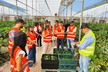
Iceland: GMO greenhouse barley well accepted
Iceland’s geothermal heating and electric companies pride themselves on the reliability of their networks; therefore, the greenhouse doesn’t have outages that could endanger three months of production, even though the freezing winter winds will howl at 70 miles per hour at times.
An additional 4,000 square meters of greenhouses are located on Iceland for protein production, research of GMO protein platforms and new product development.
The proteins are being extracted from GM barley grown in greenhouses on the island. Orf Genetics devised its greenhouse barley production platform after four scientists discovered a way to alter barley to produce various proteins in the barley seed harvested at the end of a 2 ½ to three month greenhouse growing season.
“We started out simply with an idea, and we were plant geneticist with a plant biology background. We weren’t the first to use plants for this purpose, but we were the first in the world to come to the market with products. Traditionally, these kinds of proteins are produced in bacteria or in animal cells, and there is a risk of infection or viral contamination,” said Einar Mäntylä, Ph.D., vice president, director of research liaison and intellectual property for Orf Genetics and one of the founders of the company.
Click here to read more at agprofessional.com