Early-stage decisions often dictate project timelines and operational efficiency. According to Joe Swartz, Senior Vice President of American Hydroponics (AmHydro), one of the most common pitfalls growers face is fragmentation during setup. "One of the fastest ways to lose time and money is to piece together a farm from a hundred separate decisions," he explains, noting that missing components frequently surface only after installation is underway.
To address this, AmHydro has developed its "Get Growing" CEA farm bundles, integrated packages designed to reduce complexity and accelerate deployment. These turnkey solutions combine hydroponic infrastructure with essential operational inputs, enabling growers to move more quickly from installation to production.
 © AmHydro
System design and package composition
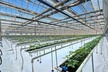
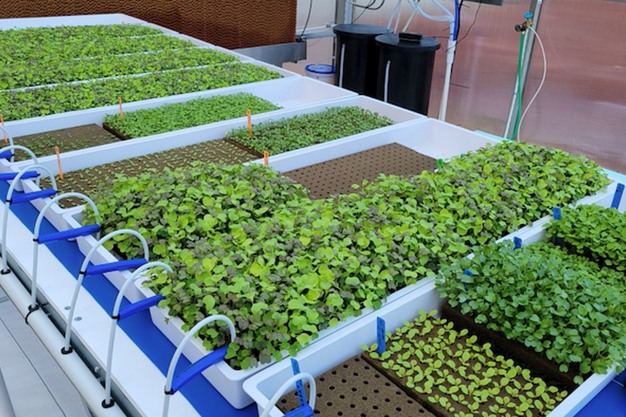
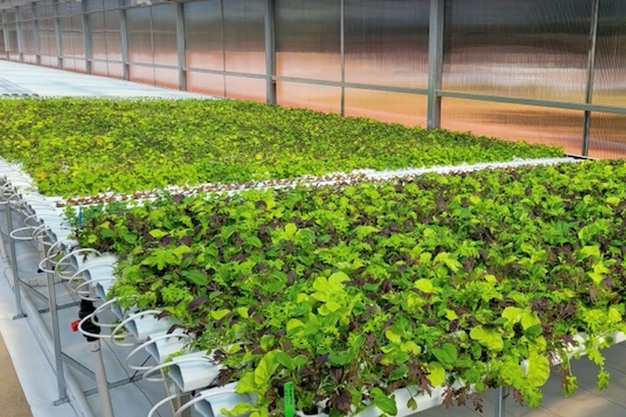
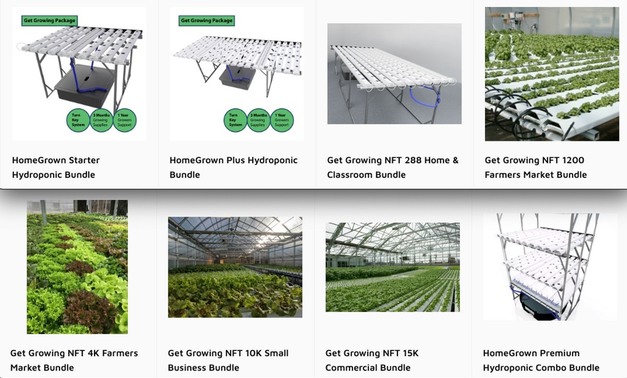
The Get Growing bundles are built around AmHydro's commercial-grade hydroponic systems, with a strong emphasis on Nutrient Film Technique (NFT) for leafy greens and herbs. Configurations range from small-scale units suitable for education or home use to larger systems designed for commercial output.
Each bundle includes core system components such as channels, reservoirs, pumps, manifolds, and circulation plumbing. However, Joe emphasizes that the inclusion of ancillary materials is equally important. "It's the system and the 'not-so-obvious' essentials that keep production moving," he says.
Propagation supplies are included to ensure continuity between crop cycles. Starter inputs such as seeds, growing media, nutrients, and calibration solutions are also provided, along with practical tools for system setup and maintenance. Documentation and access to technical support round out the package, offering guidance on system operation, crop selection, and nutrient management.
 © AmHydro
Operational advantages for existing growers
For established greenhouse or field growers, hydroponic integration is increasingly viewed as a strategy to stabilize production and diversify crop offerings. Joe notes that bundled systems can simplify this transition. "Fewer sourcing surprises means you can build, plant, and start learning faster," he says.
Standardization is another key benefit. By deploying consistent system layouts, growers can streamline training, develop repeatable standard operating procedures (SOPs), and scale operations more efficiently. Additionally, bundled inputs reduce the likelihood of mid-cycle disruptions caused by overlooked consumables.
From a market perspective, these systems support the production of high-turn crops such as leafy greens and herbs, which align well with direct-to-consumer channels, restaurant supply, and local retail.
 © AmHydro
Supporting first-time operators
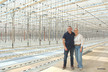
For new entrants to CEA, the primary challenge is often not technical complexity but operational consistency. "You have to turn a big idea into a repeatable weekly routine," he explains. Tasks such as propagation scheduling, nutrient balancing, and harvest planning require coordination and discipline.
Turnkey bundles provide a defined starting point, simplifying budgeting and reducing uncertainty. Access to experienced technical support further mitigates risk during early production cycles. "Knowing you can call experienced growers reduces the 'I'm stuck' moments," he adds.
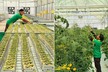
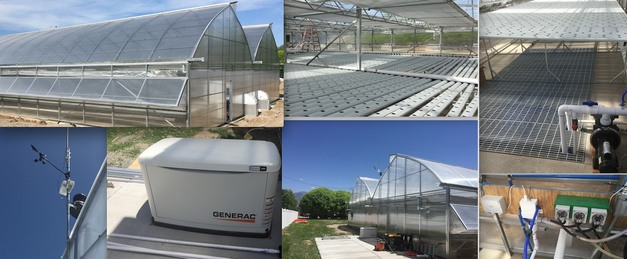
The systems are also designed around practical workflows, integrating seeding, nursery management, finishing, and harvest into a cohesive production cycle. This structure helps new growers establish a reliable cadence before scaling.
 © AmHydro
Scalability and flexibility
A notable feature of the Get Growing approach is its scalability. Operators can begin with smaller systems to validate market demand and operational capacity, then expand incrementally. "Start small, validate your market, then expand with a larger bundle as your sales channels grow."
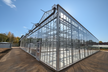
Importantly, the bundles do not include site infrastructure such as greenhouses, utilities, or labor. This allows growers to adapt installations to their specific environments and resource constraints.
 © AmHydro
Choosing an appropriate bundle depends on three primary factors: target market, crop selection, and available labor. Growers must align system size and complexity with their intended sales channels, whether direct-to-consumer, wholesale, or institutional, and ensure that operational demands match available staffing.
For more information: AmHydro
Joe Swartz, Vice President
[email protected]
amhydro.com