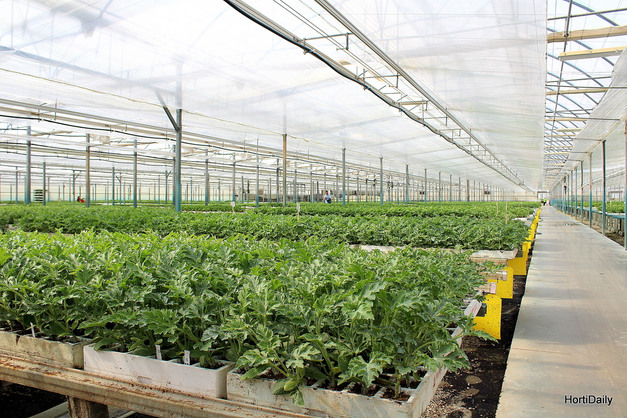
In the heart of western Almeria, Semilleros Los Crespos has spent more than three decades building a production model grounded in specialization, client-centered adaptation, and exhaustive process control. Founded in 1991 with just 7,000 square meters, the nursery has grown steadily, expanding into neighboring plots until it consolidated the roughly 9 hectares it now operates in the El Ejido area, establishing itself as one of the largest players in the sector in Almeria.
"Los Crespos started small and kept growing into adjacent plots until we had all the surface we have today," explain Santiago Olivares, the nursery's agricultural technical engineer, and Luis Crespos, describing an evolution "driven by growing client demand and the need to respond to an increasingly exacting market."
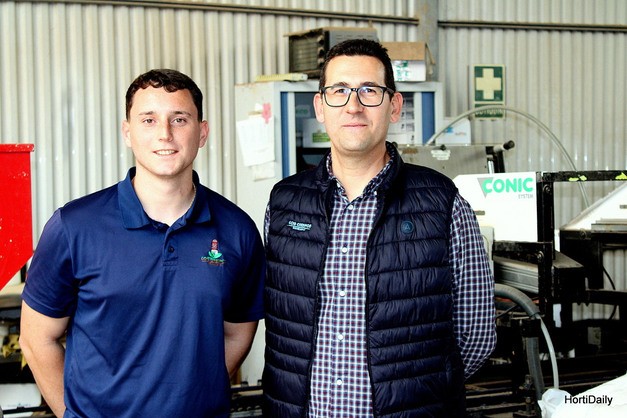
Today, with around 230 employees, the nursery operates at near-constant activity throughout the year, running campaigns back to back and adapting to the different production calendars of the main agricultural zones across southern Europe. The greatest volume and complexity of work, however, is concentrated in watermelon.
"This year we passed 13 million watermelon grafts," Olivares notes, highlighting the scale of a campaign that demands precise planning "from seeding through to transplanting." Watermelon, grafted onto squash rootstock in 99% of cases, requires duplicating the process across trays and incorporating a highly specialized manual phase in which the two plants are joined using what is known as Japanese grafting.
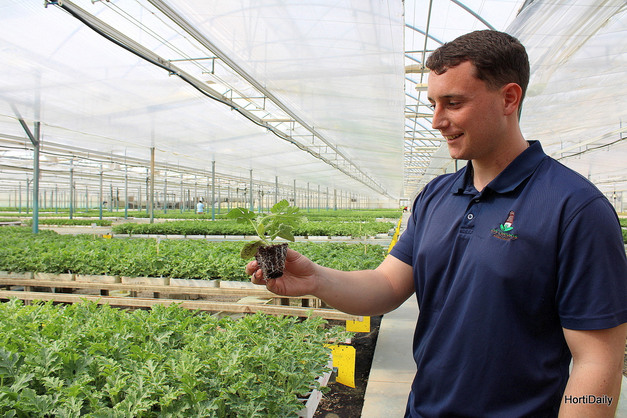
This process remains heavily dependent on human skill and precision, far from being fully automated, Olivares underlines. After the union, plants move to rooting chambers where they develop new roots under strictly controlled conditions.
"Plant health is one of the fundamental pillars of the production system. From selecting high-quality peat to using disinfected seed, the entire process is designed to minimize risk from the outset," Olivares says, stressing the importance of getting ahead of any issue before it develops.
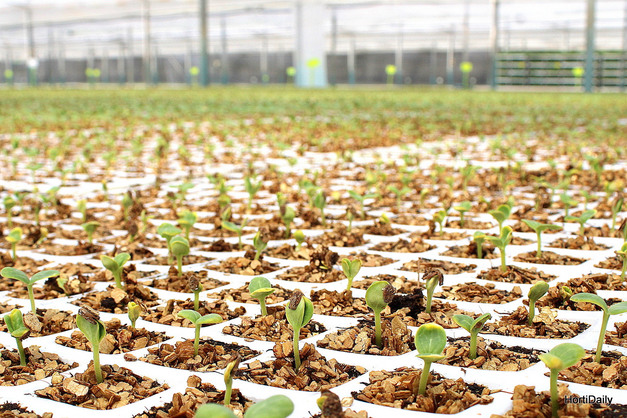
"That preventive approach extends to pest management, where the nursery has made a firm commitment to integrated pest management. Introducing beneficials such as Orius, Swirskii, and Macrocheles, combined with insect-proof netting, allows us to keep the environment as sealed as possible. When the fields are empty, we are full of plants, and pests go where their food is," he says.
On the variety side, market behavior this 2026/27 season confirms a clear preference for proven options over new ones. "Striped seedless watermelon remains the dominant choice, while in the dark-skin segment the variety Fenway stands out. Growers are not taking chances, because costs this season are very high; that is why they have gone with what is safe, with what they know works," Olivares summarizes.
"More differentiated varieties, such as yellow or orange flesh watermelons, maintain a very limited presence, generally tied to specific programs with marketing companies. These are very niche markets that are not seeing significant growth," he adds.
In melon, the picture is more complex. "The variety Bobal, valued for its resistance to diseases such as New Delhi virus, has seen reduced availability this season, forcing growers to look for alternatives that do not always offer the same level of security."
"That situation has contributed to a slight shift toward watermelon at the expense of melon, in a season where the grower's priority remains minimizing risk and securing production."
 For more information:
Semilleros Los Crespos
Carretera Habana, Bajo, 04770 La Curva, Almeria
M. 674 13 45 23
https://semilleroloscrespos.com