Global headlines are dominated by the announcement of a two-week ceasefire agreement between the United States and Iran, which, among other consequences, will allow the Strait of Hormuz to reopen for that period. The strait is a critical chokepoint for the international transit of hydrocarbons from the Gulf.
 © Mr.siwabud Veerapaisarn | Dreamstime
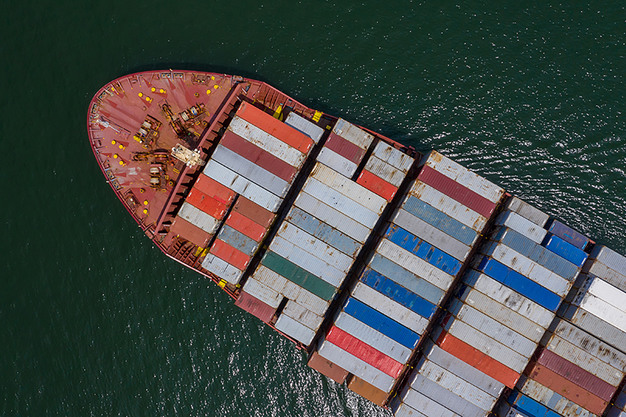
The fertilizer sector has taken a significant hit from the conflict in Iran and the closure of the Strait of Hormuz. According to Spain's National Association of Fertilizer Manufacturers, ANFFE, more than 30% of global fertilizer trade and close to 20% of the world's natural gas consumption moves through that corridor. "Additionally, half of global sulfur trade flows through that route. It is worth remembering that natural gas is essential for the production of nitrogen fertilizers, while sulfur is used in the manufacture of sulfuric acid, which is needed to produce phosphate fertilizers," the association noted.
"Countries in the Persian Gulf region account for a very significant share of global fertilizer production and supply major consuming markets including India and China. The current conflicts have forced the temporary closure of some fertilizer production plants, tightening supply, and are also creating serious obstacles to the movement of goods through the Strait of Hormuz."
"Spain does not typically import fertilizers from the Persian Gulf region, drawing its supplies primarily from countries such as Egypt, Algeria, and Morocco. That said, fertilizer markets are global, and the disruption to merchandise flows is having an impact worldwide, affecting our country indirectly as well."
 © Whpics | Dreamstime
"Countries in Asia and Africa, which are heavily reliant on fertilizer imports, are particularly exposed to supply disruptions and are actively looking for alternatives. China has opted to temporarily halt exports to secure its domestic supply, while India may be forced to seek out alternative sources, further reshuffling global fertilizer flows."
Is there a real risk of fertilizer shortages in Spain?
Natural gas is the primary raw material for the production of nitrogen fertilizers, accounting for more than 70% of manufacturing costs. "The conflict in Iran has been compressing global gas supply, and this mismatch between supply and demand has pushed gas prices higher worldwide. On top of that, prices for other raw materials, fuels, and energy have broadly increased, driving up production costs for fertilizers and eroding the competitiveness of the industry," ANFFE said.
"At this point, fertilizer manufacturers are making significant efforts to keep production running despite the rise in their costs, and they will continue to do so unless circumstances make it impossible. That is why it is essential that the conflicts come to a definitive end and that normality is restored in the region, so that markets can stabilize and the industry can continue operating."
"For now, domestic manufacturers have been able to supply product for this season, thanks to the efforts companies have made. However, if the situation were to continue or worsen, the impact on the sector could deepen considerably, posing a serious threat to the viability of fertilizer production, and potentially leading to the closure of some production plants. That would have dangerous consequences for future fertilizer availability, and could even put supplies for the next sowing season at risk."
 © Anuchit Singkham | Dreamstime
"The scale of the impact on the sector will ultimately depend on how long the conflict lasts. We are confident it will come to a definitive end, so that there are no serious consequences for fertilizer availability, and by extension for agricultural production."
Fertilizer sector calls for support for farmers
Since the conflict in Iran began, raw material and energy prices have climbed sharply, forcing manufacturers to optimize purchasing operations. Even so, the significant increase in production costs is feeding through to final product prices and threatening the profitability, viability, and survival of fertilizer producers.
"At the same time, the rise in fertilizer prices globally and the lack of product availability is hitting farmers very hard. Grain, oilseed, and other crop prices are already quite low, and a number of other adverse circumstances are compounding the pressure. That is why the fertilizer sector is calling for measures to support farmers in affording their inputs, because if this situation is not resolved, growers may choose to apply fewer fertilizers to their crops, resulting in lower agricultural output and a further deterioration of farm profitability," the association warned.
"For the time being, however, this pressure is not being passed on to the end consumer, and it is not significantly affecting food prices," ANFFE added.
 © Dmitry Kalinovsky | Dreamstime
Supporting domestic industry to secure strategic autonomy
Mineral fertilizers are essential inputs for agricultural production and their use is "irreplaceable," according to the association, as they allow crops to be supplied efficiently with the nutrients they need and contribute to feeding half the world's population.
"It is therefore necessary to ensure their continuity, and in particular to maintain a strong and competitive domestic industry, with the capacity to keep innovating and to supply farmers quickly and efficiently, especially in circumstances like the current ones, where problems with supply from external sources are acute."
"As a result, dependence on foreign supply should be minimized as much as possible, through support measures for domestic industry, with the aim of securing the strategic autonomy of our country."
 For more information:
ANFFE
[email protected]
www.anffe.com