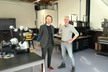
Digitalizing a greenhouse does not necessarily mean building new infrastructure, it means making existing infrastructure smarter. That is the premise behind Invernadero Inteligente, a Spanish agri-tech company whose CEO, Francisco Gutiérrez, recently walked through a watermelon operation in the Vícar area that illustrates the challenge well: a facility whose structures have evolved over the years and that, following the damage from this winter's storms, needs not just repair but technological adaptation.
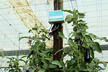
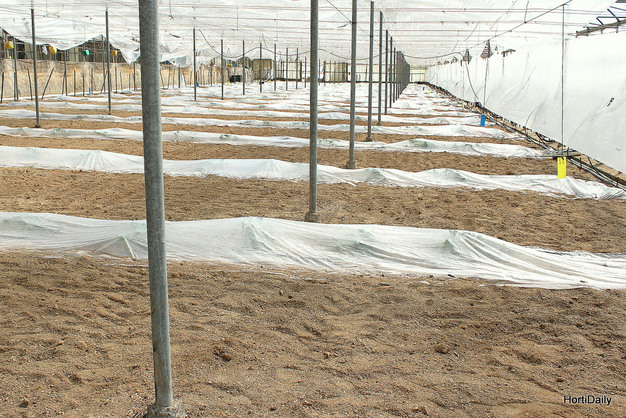 Greenhouse planted with watermelon, where the ravages of this winter's storms are still visible.
The starting point, Gutiérrez explains, is a scenario he encounters routinely. A greenhouse running a basic climate control system limited to managing windows and shade bands, with no integration capability and no capacity for joint data analysis. "That situation is common in older installations," he says, "and it limits the farmer's ability to make data-driven decisions."
"From that context, the Invernadero Inteligente proposal is based on making maximum use of existing infrastructure, avoiding unnecessary investment and building on top of what is already installed a technology layer that acts as the brain of the system. In practice, this means incorporating a control unit capable of collecting data continuously, every few minutes, and acting on parameters previously defined by the farmer himself, integrating both control of the greenhouse's moving elements and monitoring of environmental conditions and crop status."
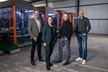
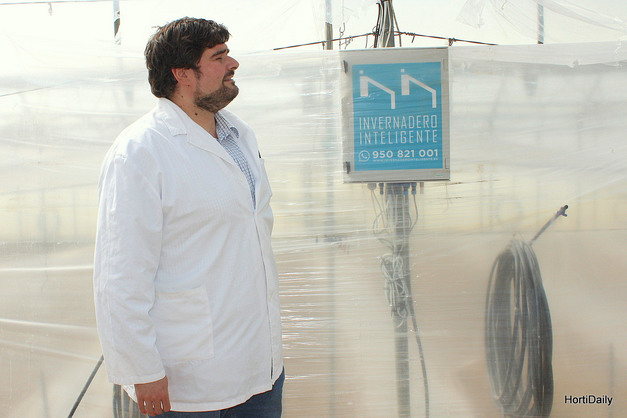 Francisco Gutiérrez, CEO of Invernadero Inteligente
"Sensorization is one of the key elements of this model, with devices that measure temperature and humidity, both in the environment and above the roof, as well as PAR radiation, that is, the fraction of light useful for photosynthesis, a fundamental data point for understanding how the plant responds to its environmental conditions."
"One of the most relevant aspects of Invernadero Inteligente is, in fact, the incorporation of substrate control within the same system, something that is not usually present in traditional climate controllers, which focus exclusively on environmental variables. To do this, we use tensiometers, a type of sensor with a long track record in agriculture that directly measures the water demand of the soil and provides a clear signal independent of substrate type, avoiding the limitations of other systems that are more sensitive to factors such as compaction or soil composition."
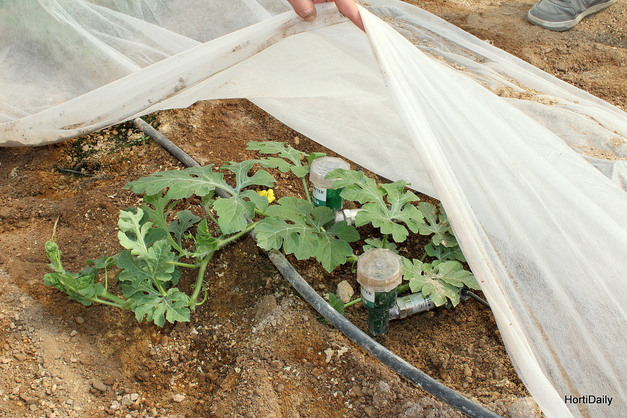
"This integration allows irrigation to be managed with greater precision, reducing both water consumption and energy costs and fertilizer use, something very important at a time when cost efficiency is increasingly critical," he explains while showing the tensiometers on a watermelon crop in the Vícar area.
Reverse engineering to integrate the old
The company's approach also relies on a complex but decisive technical process: reverse engineering, "necessary to integrate new systems into old installations where no standardization exists whatsoever."
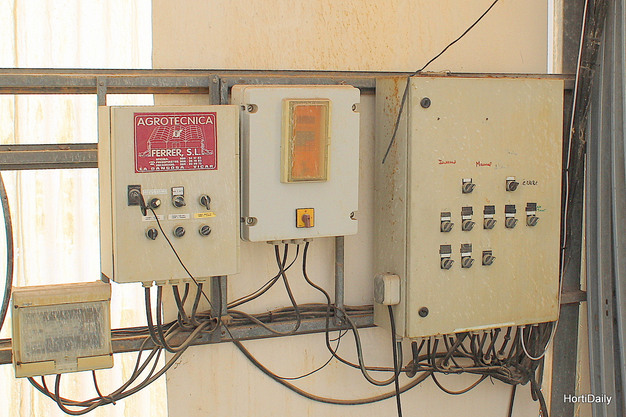
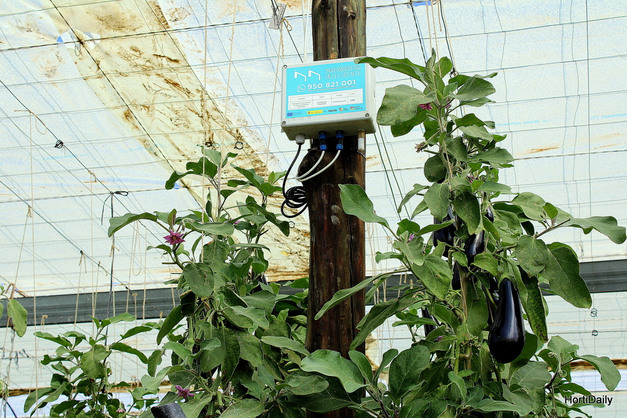
"Every greenhouse reflects different construction solutions, often developed in an artisanal way decades ago with no documentation on the electrical panels, which makes it necessary to trace the existing wiring to figure out how it works and adapt to it. This work, though laborious, is more cost-effective than replacing the installation entirely, since it allows reuse of elements such as window-opening motors or existing electrical structures, significantly reducing the investment needed to digitalize the operation," he explains. "The complexity arises from the fact that there is no way to standardize the integration — it is an artisanal process. But even so, it remains far more cost-effective than a completely new installation," he adds.
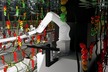
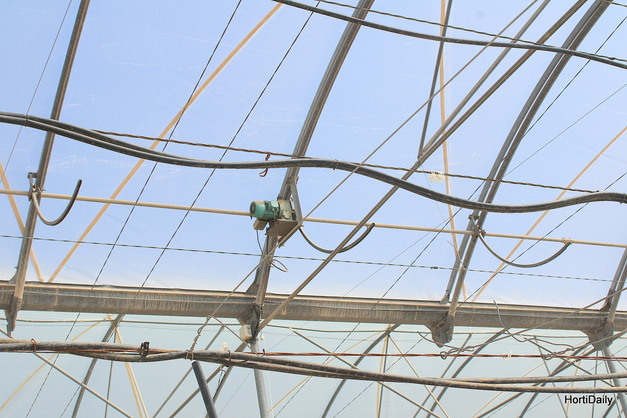 Engines installed in the past, already integrated in the Smart Greenhouse system
From the most advanced multi-tunnels to traditional scrape-and-grass greenhouses
This integration model is not limited to any specific type of greenhouse, it can be applied to both more advanced multi-tunnel structures and traditional raspa y amagado greenhouses, which are widespread in areas such as the western Almería region.
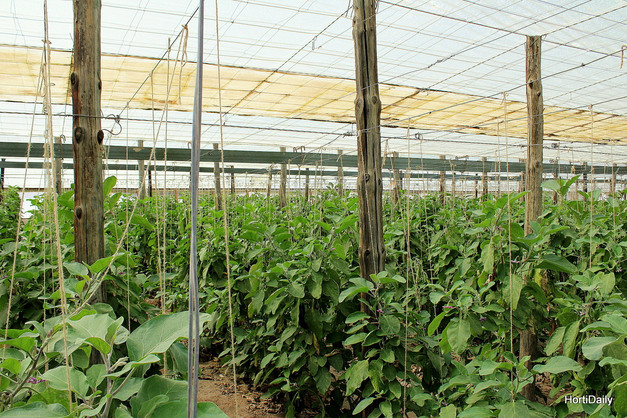
"The difference lies in the level of automation that can be achieved: in more modern installations it is possible to act directly on motorized systems, while in more basic structures the focus shifts to monitoring and providing information that supports better decision-making. In both cases, the logic is the same: give the farmer tools to better understand what is happening in the crop and optimize management without requiring large upfront investment."
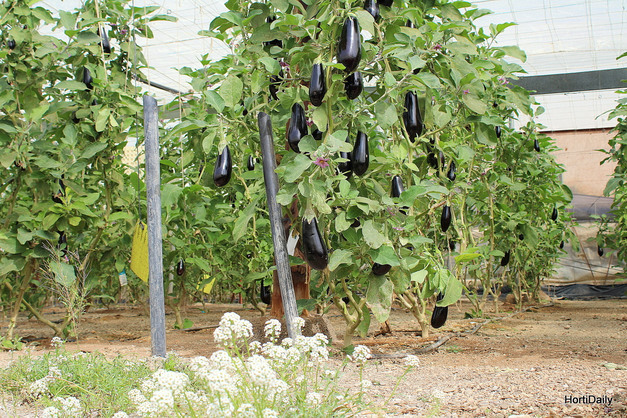
From the earliest developments tied to the colonial settlements and access to the western aquifer, through to the expansion of intensive production models based on techniques like enarenado, the greenhouse has evolved from very basic structures to increasingly technified systems, though with a heterogeneity that remains one of the defining characteristics of the productive landscape.
"In practice, this heterogeneity is reflected in the coexistence of operations with different levels of technology adoption, where digitalization can take very different forms, whether complete climate control and automation systems or simpler solutions oriented toward monitoring key parameters such as soil humidity or environmental conditions."
"In the case of small producers, the availability of public funding, such as European resilience funds, has in some cases allowed the complete financing of equipment installation, facilitating access to technologies that would otherwise be more difficult to implement."
Economic efficiency and sustainability
The impact of these solutions translates into a direct improvement in productive and economic efficiency, allowing more precise adjustment of resource use in a context where every cost carries significant weight in the final profitability of the operation.
"Irrigation control, for example, affects not only water consumption but also the associated energy costs and the use of inputs such as fertilizers, with both economic and environmental implications. In this sense, digitalization presents itself not only as a tool for improving productivity, but also as a path toward more sustainable production models."
"The Invernadero Inteligente proposal is clear: to convert any greenhouse, regardless of its age or level of technology, into a system capable of generating data, interpreting it, and acting accordingly, integrating within a single platform variables that were traditionally managed separately. An approach that shows that innovation does not always mean building from scratch, but knowing how to connect and optimize what already exists," Francisco concludes.
 © Invernadero InteligenteFor more information:
Invernadero Inteligente
T. +34 950 821 001
www.invernaderointeligente.es/