Mexico's greenhouse industry is entering a new era of water management, shaped by regulatory reform, climate pressure, and rapid technological adoption. The recent reform of the National Water Law marks a significant shift, introducing stricter controls and redefining how water is allocated, monitored, and reused across sectors, including protected horticulture.
According to legal analysis from Garrigues, "the reform introduces profound changes in the regulation of the use and exploitation of water in Mexico, prioritizing human consumption and sustainability," while also strengthening state control and tightening the concession regime. For greenhouse growers, this creates a more complex and regulated operating environment.
A key principle is prioritizing domestic supply. As noted, "the priority of human and domestic use is established as the guiding axis," meaning agricultural users may face reductions in water allocations if public supply is at risk. The National Water Commission (CONAGUA) now has the authority to adjust or revoke concessions following technical assessment, increasing the importance of compliance and operational transparency.
In response, growers are expected to adopt more rigorous documentation and monitoring practices. Garrigues advises companies to "maintain a solid documentary file on the use of the resource," reinforcing the role of data-driven irrigation, metering, and traceability systems in greenhouse production.
Stricter concessions and long-term planning
The reform also tightens the concession regime. "Extensions will be granted only if continuous water compliance is accredited," while the transfer or modification of water rights is significantly restricted. This reduces flexibility and requires growers to integrate water strategy into long-term planning, particularly when expanding production areas.
At the same time, the law promotes more sustainable water use. "The reform promotes sustainable water management," including incentives for wastewater reuse and stricter discharge controls. Closed-loop irrigation systems and recirculation technologies are therefore becoming increasingly relevant, helping greenhouse operators reduce both water consumption and regulatory risk.
Rainwater harvesting is also gaining importance as an alternative source, although new authorization requirements apply. This aligns with broader national efforts to address water scarcity, which is intensifying due to climate variability.
Industry response and technology adoption
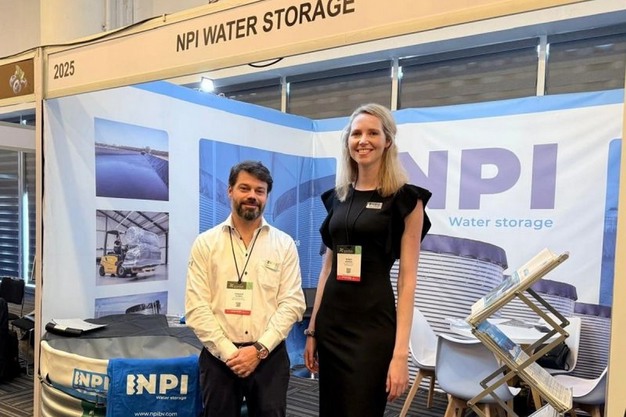
Industry stakeholders are actively adapting to this changing landscape. The NPI team, present at GreenTech Americas in Querétaro, emphasized the urgency of improved water infrastructure. "We're here to explore our water storage solutions and see how we support reliable and efficient water management; more important than ever in Mexico with the new water law," they stated during the event. The exhibition highlighted how storage solutions are becoming central to greenhouse resilience.
 © NPI
© NPI
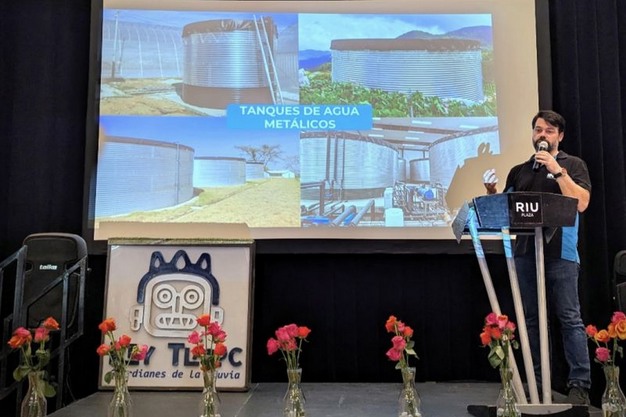
Beyond trade events, technical discussions are continuing across the sector. During a business gathering in Guadalajara, the NPI team noted: "With increasing water scarcity, climate challenges, and new regulations in Mexico, water storage is more important than ever," underlining the growing consensus around the need for investment in water infrastructure.
 © NPI
© NPI
This shift is clearly reflected in project-level decisions. In Hidalgo, an orchid grower recently expanded its storage capacity by installing two basins instead of one. As the NPI team explained, "due to Mexico's new water regulations, the grower decided to install both basins," ensuring sufficient buffer capacity for both current production and planned expansion.
The greenhouse itself integrates advanced technologies, including automated drip irrigation and climate control systems such as underfloor heating, CO₂ dosing, and humidity management. For high-value crops, consistent water availability is essential, making storage infrastructure a critical component of production reliability. Both basins are designed to capture rainwater, supporting national strategies that promote rainwater harvesting as a key future resource.
At the same time, the reform introduces a stricter enforcement framework. Garrigues highlights "a much more severe sanctioning regime," including fines, operational closures, and the revocation of water rights, as well as the classification of water-related crimes. This further elevates water management from an operational concern to a strategic priority.
As Garrigues concludes, the reform represents "greater centralization of the State, an emphasis on sustainability, strict control of water use, and a reinforced sanctioning regime." For Mexico's greenhouse industry, adapting to this new paradigm will require a combination of compliance, efficiency, and investment in advanced irrigation and storage systems, positioning water as a defining factor for future competitiveness.
For more information:
NPI Water Storage
npiwaterstorage.com