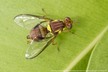
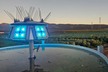
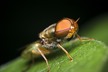
Early-stage field trials using wavelength-tuned LED light traps are showing promise for monitoring and managing diamondback moth (Plutella xylostella) and other lepidopteran pests in South African horticulture. This initiative, driven by collaboration between commercial growers and technical teams, represents a shift toward precision pest management tools in both greenhouse and open-field production systems.
 © Woolworths
A decade of innovation
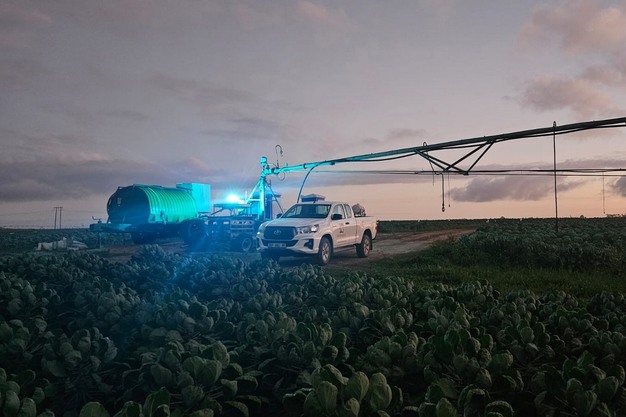
Tom Murray, Technical Manager: Fresh Fruit and Horticulture at Woolworths South Africa, traces the work back to a long-standing partnership with brassica grower Peter Leppan. "He's one of our main brassica growers, and diamondback moths have been an issue for him for many, many years. This is actually the original farm where we started looking at LED light applications about ten years ago."
The current phase of the project focuses on refining "tuned frequencies" to selectively attract pest species without significantly affecting beneficial insects. "When we had the opportunity to deploy tuned frequencies for moths, we prioritized sending units to his farm," Tom shares. "At the same time, we included a separate configuration targeting green stink bug to broaden the dataset."
 © Woolworths
Confirmed attraction across multiple pests
Pan traps integrated with LED lights were deployed specifically to evaluate capture rates of diamondback moth under controlled spectral conditions. "We sent up the pan trap specifically to determine whether it would effectively attract diamondback moth as part of the experiment. We now have confirmation that it does."
Beyond diamondback moth, early trials in New Hanover indicate that the system can also capture other species. "I've got one unit operating in the tunnels in New Hanover where it's currently catching Eldana saccharina," Tom reports. "They are currently actively trapping that species, along with Tuta absoluta, on the same farm."
He emphasizes that the research is exploratory. "At this stage, it's very much about trialing and understanding which moth species respond to specific frequencies."
Grower perspective: Early adoption under high pest pressure
From a commercial production standpoint, Peter Leppan's experience highlights both the urgency of improved diamondback moth control and cautious optimism around emerging technologies.
He reports that pest pressure has intensified over time, and chemical tools have lost effectiveness. "The pressure has been getting worse," he stated. "Chemically we lost that war long ago and they have reduced our arsenal." Environmental conditions add further complexity: "High temperature has made IPM methods less successful at times."
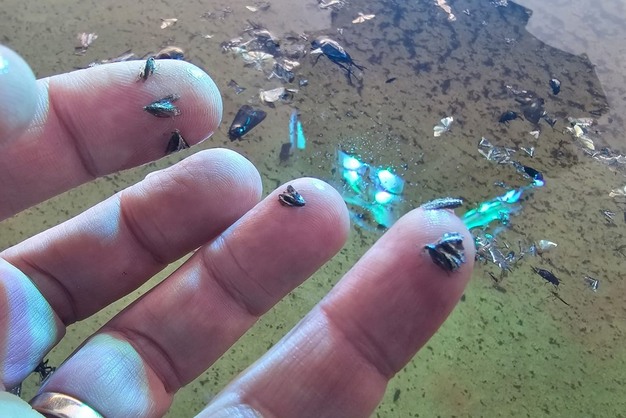
Although the LED traps have only recently been deployed, early observations are striking. "It's only been used now for a few days, so it's too early to tell," he said. "But they are catching an astronomical amount of moths."
 © Woolworths
He is clear that the technology complements rather than replaces existing pest management strategies. "It is definitely not a replacement, but an integral part of it," he shares, noting that management practices may be adapted in response to the additional data.
Operationally, ease of use is a major advantage. "This is far easier to use than any other system, and the best thing I have seen since sliced bread." Although it is too early to measure improvements in scouting and decision-making, he anticipates significant benefits: "It certainly looks like it is going to be a huge help for the scouting team."
Confidence in the system's future is strong. "It's already very evident that it's a winner," Peter says. "I am getting numerous more, as I can see it will definitely work and make all the other tools work better."
Trap design and functional considerations
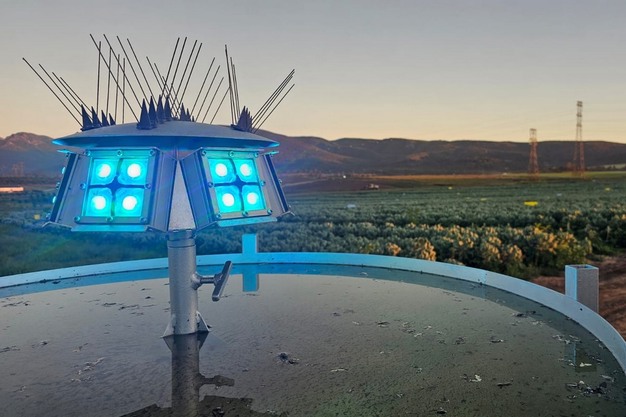
Tom highlights ongoing technical refinements that enhance both effectiveness and usability. Two primary trap variants are being tested. "We refer to this pan light as the 'Fatal Attraction 360'," he says, describing the full-spectrum unit. A directional version, the "Fatal Attraction 180," emits light in a single direction, allowing it to be positioned near housing or infrastructure without light reflecting.
 © Woolworths
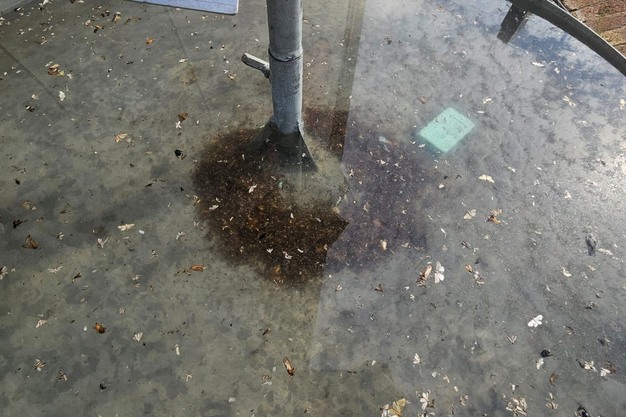
A simple but essential component of the trap is the addition of a surfactant block. "The most important part is a block of sunlight soap. It removes the water surface tension," ensuring that insects cannot escape once trapped. Field observations also provide rapid visual cues: "The brown ring in the water is Tuta," he notes.
These design elements (directional control, tuned wavelengths, and optimized trapping medium) highlight the system's practical orientation for real-world deployment. Incremental improvements in hardware and strategy will continue to define the role of light-based trapping within integrated pest management programs.
For more information: Tom Murray
Woolworths
Tel: +27 21 407 9111
Email: [email protected]
https://www.woolworths.co.za/