Imagine: a robot gently picking a ripe strawberry without turning it into jam, a drone flying through a greenhouse to assess the health of cucumber plants, and sensors that detect exactly when a tomato is ready for harvest. From its opening in june 2026, researchers, students, and businesses will collaborate here to build the future of horticulture, where technology and biology go hand in hand.
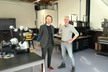
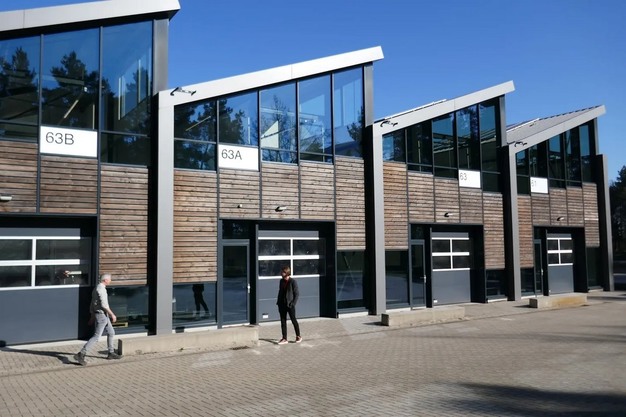
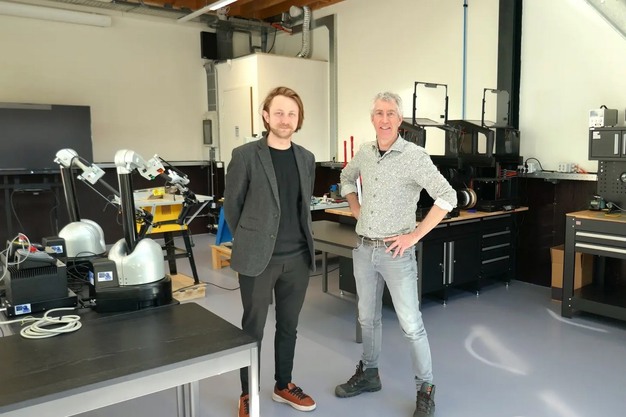
Brightlands High Tech Agro is based in the Brightworks building at Brightlands Campus Greenport Venlo. If you know the campus, it's the building with the distinctive zigzag roof. "We started preparing the spaces last year," explains Leonard Lucas, robotics engineer at Maastricht University. "We had to remove a partition wall and an intermediate floor to make the lab large enough for testing drones, robotic arms, and sensors." Peter Keunen, building manager at Maastricht University, adds, "It was a big job, but now we have a space that's truly suited to our experiments."
 © Brightlands High Tech Agro
The lab is equipped with the latest technology: from touch-sensitive collaborative robots (cobots) that work safely alongside humans, to mobile robot carts that navigate greenhouses. "More and more high-tech equipment will be arriving during 2026," says Leonard.
Robots that harvest, drones that monitor
Peter gives an example of the challenges an agricultural robot faces: "It needs to visually recognise fruits and pick them gently, without damaging the plant. That's not easy, because a plant looks different every day. A cucumber grows, changes colour and doesn't always hang in exactly the same place or might even be hidden behind a leave." Researcher will try to tackle problems like this, using advanced artificial intelligence.
More than just technology
But it's not just about technology. Plant biology also plays a crucial role. "Adapting plants can help introduce robots into greenhouses," Peter believes. One example is strawberries of uniform size when ripe. "If all strawberries are the same size, it's much easier for a robot to recognise and pick them," he explains. "Breeders can work on developing varieties that are easier for robots to harvest. This isn't as strange as it sounds. Plants are already bred to suit human needs. Cucumbers, for instance, are grown so their fruits always hang at similar heights, which is ideal for pickers, whether they're human or robot."
 © Brightlands High Tech Agro
Collaboration and future plans
The launch of Brightlands High Tech Agro makes collaboration with the horticultural sector around Venlo easier. "We want to bridge the gap between research and practice," says Leonard. "Growers need solutions for labour shortages and the increasing complexity of cultivation processes. We help them find those solutions." Peter adds, "The strength of this initiative is that it brings together different disciplines. We integrate robotics, data analysis, genetics and horticultural expertise to develop innovative solutions."
Brightlands High Tech Agro is an initiative of Maastricht University's Faculty of Science and Engineering and within of the Department of Advanced Computing Sciences, the Brightlands Institute for Future Farming, and the Research Institute System Earth Science. Also Brightlands Campus Greenport Venlo is a partner. The initiative is being financed by the Provincie Limburg and Regio Deal Noord-Limburg.
Source: Brightlands