At the core of global hop supply, Yakima Chief Ranches (YCR) operates as a critical link between plant genetics, farm productivity, and brewing performance. As Cameron Fox, Director of Greenhouse Operations, explains, "we're the supply side of the hops for global distribution," supporting a network that produces a significant share of the world's hops across Washington, Oregon, and Idaho. "You know, our whole mission is creating world-class hops and connecting farmers to brewers."
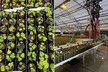
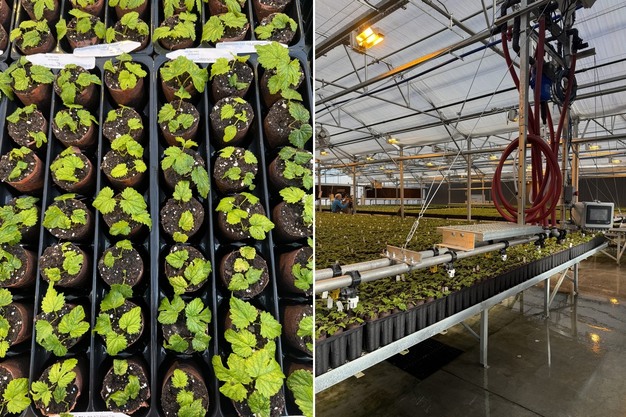
Within this system, greenhouse propagation plays a decisive role. YCR produces virus-free transplants for growers, a factor Cameron identifies as essential to field performance: "those plants that come through our system are typically about 30 to 35% more efficient and produce that much more on a per-acre basis." The operation delivers up to three million plants annually, with approximately 1.5 million produced in-house.
Standardisation before technology
When Cameron joined the organisation, propagation inefficiencies were a primary constraint. "Our propagation team was set up by scientists and not by commercial propagators," he notes, highlighting the gap between research-oriented systems and scalable production. Early losses of over 30% during propagation prompted a reset of operational fundamentals.
"We have to make all of our processes the same every time," he states. This included standardising misting intervals, cutting protocols, plant growth regulator applications, and plant protection strategies. Only after stabilising these variables did the team move toward system-level improvements, most notably irrigation and water treatment.
 © Yakima Chief Ranches
The water quality constraint
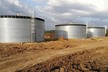
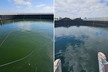
Water chemistry emerged as a central limiting factor. Supplied from regional aquifers in fractured basalt, YCR's source water presented consistently high pH and elevated calcium bicarbonate levels. "Our pH fluctuates from the city anywhere between 7.7 and 8.3, and our dissolved CaCO₃ is between 200 and 350 parts per million," he explains.
For greenhouse propagation, these values are suboptimal. "Typically in the greenhouse, I like my water pH to be right about 6, with and dissolved CaCO₃ under 100 parts per million." Without correction, high alkalinity water drives substrate pH upward, reducing nutrient availability and complicating fertility management.
Cameron emphasises the operational challenge: lowering substrate pH is significantly more difficult than increasing it. "It's easy to increase pH. It's really difficult to decrease and stabilise pH," he says, describing the risk of overcorrection and sudden drops into excessively acidic conditions.
The Dramm irrigation project
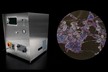
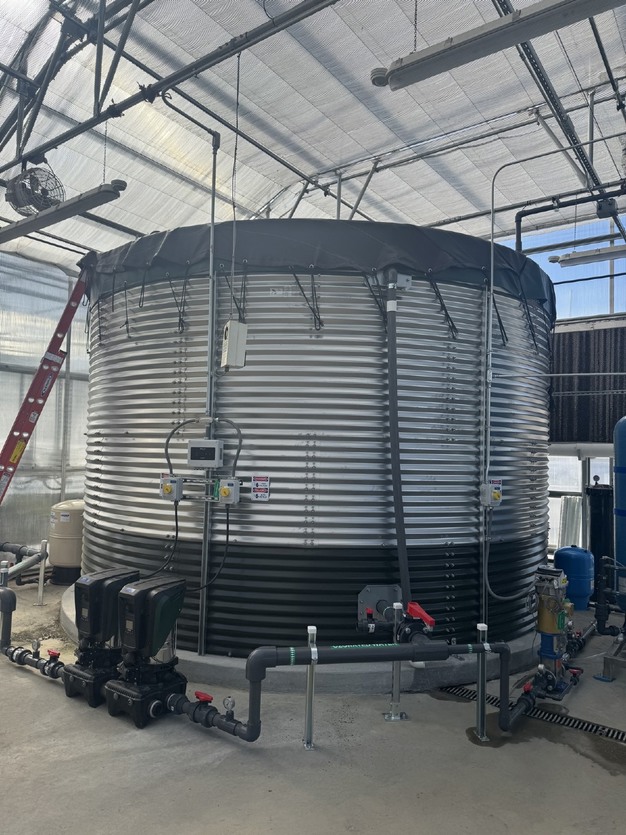
To address these constraints, YCR partnered with Dramm Corporation to design and implement a tailored water treatment and irrigation system. The process began with a clear technical brief. "I reached out and said, 'here's my water quality', 'here are my key targets', 'how do we get there'?"
The project involved evaluating system components, balancing complexity with operational practicality, and defining treatment targets aligned with propagation requirements. From concept to commissioning, the timeline spanned six to eight months.
The system became operational at the start of the current propagation season, allowing immediate observation of performance impacts. "Anecdotally, the plant quality has improved across the board," Cameron reports. "We're taking time off of our time in propagation by probably two to four days."
 © Yakima Chief Ranches
Measurable operational gains
The benefits of the upgraded irrigation system extend beyond plant growth rates. By stabilising water chemistry, YCR has reduced variability in substrate pH, enabling more consistent nutrient management. "Having stability in our substrate pH makes all of our decisions significantly easier."
This stability directly affects fertiliser strategy. Previously, frequent adjustments between fertiliser types were required to counteract alkalinity. With treated water, "you're not constantly having to flip back and forth," simplifying decision-making and narrowing input variability.
He also highlights the importance of integrating data with plant observation. While electrical conductivity (EC) and pH measurements are monitored twice weekly across all active growing areas, he cautions against relying solely on metrics: "EC is just a snapshot… it doesn't tell you if the plant is taking up nutrients." The improved irrigation system enhances the reliability of these measurements by reducing background variability.
Ultimately, the Dramm project demonstrates how water quality underpins every aspect of propagation. From nutrient availability to growth uniformity, irrigation consistency enables tighter process control across high-volume production. "We want to make sure that our plant quality is consistently excellent for our growers. That's why we chose to partner with them to get us the right equipment so that we can do our job in the best, most efficient way possible."
For more information:
Yakima Chief Ranches
Cameron Fox, Director of Greenhouse Operations
[email protected]
https://yakimachiefranches.com/
For more information: Dramm Corporation
2000 North 18th Street
Manitowoc, WI 54221, USA
www.dramm.com