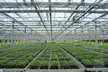
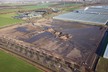
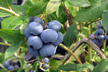
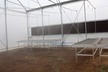
China is expanding greenhouse blueberry production in Moyu County, Hetian, Xinjiang, with a project aimed at supplying the winter market over a period of up to five months.
The development, led by Xinjiang Agriculture and Animal Husbandry Investment Group, includes 300 greenhouses and supporting cold chain infrastructure. The project is located in the Modern Agricultural Industrial Park of Moyu County and is designed to cover planting, harvesting, storage, and transport.
With an investment of 660 million yuan (US$95.5 million), the project also includes water and energy systems, road access, and three cold chain and sorting centres. Construction began in August 2025, with 126 greenhouses already planted. Full completion is expected by the end of March, and the first large-scale harvest is scheduled for November. Annual production is projected at over 1,500 tons, with an estimated value of 120 million yuan (US$17.4 million).
Xinjiang's production window runs from late December to mid or late April. Other regions in China operate in different periods. Yunnan supplies from November to May, with peak volumes earlier in the season. Sichuan and Guizhou supply between May and June, while the Northeast and East China markets are active from June to August.
Climatic conditions in Xinjiang include around 2,965 hours of annual sunshine and a day-to-night temperature range of 15 to 20 °C. Sugar content is estimated at 14 to 16 per cent. The use of meltwater irrigation from the Tianshan Mountains and low industrial activity are also factors referenced in production conditions. Anthocyanin levels are reported to be around 20 per cent higher than in other producing regions.
Wholesale prices are reported at 80 to 120 yuan per kg (US$11.57 to US$17.36), while retail prices range from 160 to 240 yuan per kg (US$23.15 to US$34.72). Demand is reported to exceed supply.
In Shache County, net income per mu is expected to exceed 50,000 yuan (US$7,200). Yields per mu during peak production are reported at up to 10 times those of cotton and 15 times those of corn, supporting further expansion of blueberry production in the region.
Source: Blueberries Consulting