The global pepper market is currently influenced by weather-related disruptions, seasonal transitions, and shifting supply patterns across key regions. Limited availability in some origins continues to support prices, while the gradual increase in new-season volumes is expected to bring more balance to the market in the coming weeks.
In Europe, the Netherlands and Belgium have started the season with slightly reduced acreage and lower imports, supporting early pricing. Italy is seeing an early end to the Sicilian campaign due to weather-related losses, keeping prices elevated, while France remains in a transition phase with sufficient but irregular supply and stable demand. Germany continues to be dominated by Spanish supply, although the arrival of Dutch and Belgian products is starting to influence availability.
 © Viola van den Hoven-Katsman | HortiDaily.com
In Spain, high prices have persisted following lower winter yields, with Murcia now moving toward full supply. In North America, weather-related issues in Mexico and Florida are tightening supply and driving higher prices, with recovery expected later in the season. In South Africa, prolonged rainfall has affected production and quality, while a recent increase in supply has eased prices, with demand expected to improve around Easter. Weather damage in Morocco has tightened pepper supply, lifting prices and redirecting demand toward alternative origins such as Egypt.
The Netherlands: Smaller acreage and a strong start amid lower imports
Traditionally, pepper cultivation in the Netherlands and Belgium resumes in March. This concerns unlit crops, although the sector continues to explore options to advance the start of cultivation using lighting. This year, there were opportunities due to production issues in Spain.
More and more growers are harvesting their first colored peppers in week 13. The pepper acreage is slightly smaller than last year. In the Netherlands, the area is estimated at 1,500 to 1,600 hectares. In Belgium, the acreage is smaller, and a decline is also reported. BelOrta indicates a 5% reduction in area, including specialty peppers.
The local season had a strong start due to lower import volumes from Southern Europe. As in the previous season, growers are focusing on preventing root problems. This is being done through the use of organic substrates, new insights from research into cultivation on rock wool, and, once again, by growing on rootstocks. Last year, growers succeeded in achieving higher yields on rootstocks after a favorable growing season. This year, the challenge is to achieve the same results again, even if the growing season proves less favorable.
From a pricing perspective, 2025 was a difficult year for pepper growers due to high production levels. Financial data for Dutch growers clearly reflects this. The net operating result for pepper growers in the Netherlands was negative in 2025.
Based on an 8.5% increase in acreage in 2025 and higher yields per square meter of around 3%, total Dutch production rose by approximately 12% compared to 2024. In total, production reached 450 to 460 million kg. Prices for Dutch peppers declined by around 25% during the season. According to Rabobank, each 1% increase in supply resulted in a price decrease of approximately 2%.
Italy: Early end to Sicilian season amid supply shortfall
The pepper season in Licata, in the province of Agrigento in Sicily, is ending earlier than usual due to winter rains that have limited the development of late crops. "We usually work with this crop for ten months of the year, from mid-August to May of the following year. This year, however, we will finish within the first ten days of April," stated representatives of a cooperative. "The start of the season in September was disastrous, mainly due to extreme weather events. Heavy downpours at the end of August and exceptional hailstorms seriously compromised product quality. The subsequent phase, characterised by greenhouse production between October and January, saw a clear recovery, with quality improving significantly and prices rising. The average producer price ranged between €1.00 and €1.30/kg, ensuring good profitability for Sicilian producers, with prices peaking between December and January at €1.60 to €1.80/kg."
The sector was also influenced by a reduction in Spanish production, which supported prices for Sicilian produce, as well as by farmers' strategic decision to prioritise peppers over courgettes to optimise labour costs. A product shortage is expected throughout April, with prices consequently remaining high.
Wholesale pepper prices have reached very high levels. This is confirmed by a wholesaler from a market in northern Italy who sources produce from Sicily and Spain. He states that bad weather in January damaged plantings and that currently more than 50% of normal production is missing in both Sicily and Spanish growing areas. This production gap is likely to persist for another 3 to 4 weeks. Price lists change daily. On Wednesday, 25 March, the wholesale price of Sicilian peppers in this market was €3.50/kg, or €3.00/kg when sold in double-layer crates. Spanish produce was sold at €3.20 to €3.40/kg. These prices reflect the limited availability of the product rather than the ongoing war. The high cost of diesel has impacted prices by a maximum of €10 per pallet, which amounts to only a few extra cents per kilogram.
France: Market steady as Northern European supply begins
As March draws to a close, the French bell pepper market is in an off-season phase, marked by a gradual transition toward the first shipments from Northern Europe. Spain remains the dominant supplier, while the Netherlands and Belgium are only just beginning to increase production. Morocco continues to supplement its supply.
This situation results in an irregular supply, with arrivals fluctuating depending on weather conditions in Southern Europe. However, the market is not under significant pressure, as overall availability remains sufficient to meet demand. Prices remain relatively high, although a slight easing has been observed in recent days. A mild downward trend is visible on wholesale markets. This is due to a combination of still-limited supply and high production and transport costs.
Demand remains fairly subdued, constrained by seasonal factors that are not yet favorable. In this context, sales are stable, without any clear acceleration. In the short term, the gradual increase in volumes from Dutch and Belgian greenhouses is expected to ease market conditions and put downward pressure on prices in the coming weeks.
Germany: Spanish supply dominates despite Dutch and Belgian arrivals
Spanish shipments continued to dominate the market. Following the arrival of the first Dutch and Belgian consignments last week, their availability has since increased. In Hamburg and Berlin, the higher supply led to price reductions among competing Spanish products. In Munich, the start of the Dutch and Belgian season was also noticeable, but this did not have a significant impact on Spanish prices. In Frankfurt, customers were eager to purchase red Dutch produce despite prices of up to €26 per 5 kg box. Availability of Turkish produce declined. Prices increased, although stockpiling was largely avoided.
Spain: Murcia supply increases as pepper harvest progresses
Pepper prices in Almería have remained high throughout most of the fall and winter due to lower yields caused by colder and wetter-than-usual weather, as well as the impact of Thrips parvispinus. The pepper harvest in Murcia began in early March and is expected to reach full capacity next week (14). Cooler-than-usual weather has delayed the harvest of coloured peppers in Murcia by one to two weeks.
At the start of the season, prices are averaging over €2 per kilogram at auction. From next week, Murcian growers are expected to have a full supply. The planted area for peppers in the Region of Murcia remains stable. Growers report good quality for this year's harvest, and current conditions point to a positive season, pending the impact of supply from the Netherlands on European markets.
North America: Weather tightens supply and lifts prices
A combination of weather events in both Mexico and Florida has created shortages in several vegetable categories, particularly bell peppers.
Mexico experienced a warmer-than-normal winter, which brought volumes forward but also increased disease pressure. Meanwhile, Florida was affected by significant freezes at the end of January and early February. This impacted production for late winter and early spring, creating a supply gap across both Mexico and the U.S. East Coast.
In addition, the weak U.S. dollar is keeping more products within the Mexican domestic market that would normally be exported to the U.S.
It may take some time before supply recovers. Georgia, the next East Coast growing region after Florida, was also affected by a freeze last week. Relief in bell pepper supply is not expected until May, when California begins production in Coachella.
As a result, prices have increased significantly. Green peppers were recently priced above €37, compared with typical levels in the high teens, approximately €16 to €19.
South Africa: Rain disrupts market, prices ease amid supply increase
The pepper market is in its autumn transition period. Continuous rain since late last year, along with a lack of sunshine, has slowed growth and color development, pushing up prices for yellow and red peppers.
A recent break in the rain has enabled farmers in Limpopo and Mpumalanga to supply peppers to the market, temporarily creating some oversupply and a bottleneck, according to a market trader in Johannesburg. This is expected to ease with improved demand over the Easter weekend.
In Tshwane, a market trader noted that it has been a difficult pepper season due to the rain, with quality issues evident over the past two weeks, compounded by weak demand.
The average green pepper price is €0.36 to €0.45 per kilogram, or €1.78 to €2.67 per 4.5 to 5 kg carton, down from €3.56 to €4.45 a week ago. Yellow and red peppers previously traded at around €2.67 per kilogram before the recent influx of new-season peppers, and are now selling between €1.78 and €2.23 per kilogram.
Morocco: Weather damage tightens supply and lifts prices
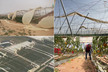
Morocco's pepper industry has been under pressure throughout the season due to several adverse weather events, including heat waves, cold periods, and storms. The most recent storm, which struck the Souss-Massa region in late February and was most severe around Chtouka, caused widespread damage to greenhouses. The reconstruction of greenhouses has been complicated by shortages of plastic and labour. One grower said, "It took a long time to obtain plastic from the factories, more than two weeks. Seasonal workers have also demanded exorbitant prices for reinstalling the plastic, up to €2,800 instead of the usual €470." Growers are still struggling to complete greenhouse reconstruction four weeks after the storm. The sector has also faced pressure since the start of the season due to phytosanitary issues, particularly thrips. As a result, bell pepper prices doubled on the local market between late February and late March, while exporters are unable to source sufficient volumes to fulfil their programs.
Egypt: Export volumes rise as European buyers shift sourcing
The production setback in Morocco has benefited Egyptian exporters. An Egyptian grower said, "We saw signs of a market rebalancing as early as February, when Spain and Morocco, traditional suppliers to the European market, faced production issues. Buyers turned to Egypt, which led to strong results in several markets, particularly in Eastern Europe, such as Poland, the Czech Republic, Romania, Lithuania, and Latvia, as well as in Western Europe, especially the Netherlands, Spain, and France." The same grower shared that he tripled his export volumes to Europe compared to last season, despite logistical challenges.
Next Topic: Limes