The rise in tomato prices, a staple of Mexican cuisine, highlights the factors behind the recent increase in fresh food prices. Market vendors say the increase is due to a combination of bad weather, higher costs, and security concerns. Additionally, further price increases are expected for agricultural products linked to fertilizer and energy costs, both of which are affected by the conflict in the Middle East.
While the US-Israeli conflict with Iran has not directly affected prices in Mexico, it poses a medium-term risk by impacting global agricultural input markets. The National Consumer Price Index (NCPI) was at 4.63% annualized in the first half of March, up from 3.67% during the same period last year, surpassing the Bank of Mexico's (Banxico) target range of around 3%.
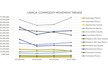
The Grupo Consultor de Mercados Agrícolas (GCMA) stated that the increases are mainly in the most volatile segments, especially fruit and vegetables, whose sub-index increased by 23.91% annually.
Producers and sellers highlighted how climate issues and insecurity together affect their operations. José Alfredo Martínez, who has been selling tomatoes in La Condesa for 58 years, reports crop losses due to snowfall and road blockades imposed by organized crime. "If the truckers don't pay, organized crime doesn't let them move their trucks until their products rot," he stated, referring to shipments from Sinaloa, Jalisco, and Culiacán.
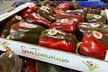
The GCMA stated that this price increase stems from an internal supply shock caused by frost and weather damage in Sinaloa, Zacatecas, Puebla, and Morelos, which decreased the availability of red, green, and courgette tomatoes. As a result, the price of saladette tomatoes rose by 86.8% within a year, reaching 19.80 pesos per kilogram at the Central de Abasto during the week of March 9-13, compared to 7.35 pesos in the same period in 2025.
Insecurity has become an extra cost for producers and transporters, who then pass these costs to consumers. This has led to a decrease in supply in local markets, creating opportunities for prepared foods or other alternatives.
In the near term, prices are expected to stay volatile as Banxico reviews its monetary policy. The rise in the STPS tax on cigarettes and soft drinks has mitigated some of the effects of fuel price increases, but the conflict in Iran may affect future planting seasons. Since Mexico imports 70% of its fertilizer from Russia, China, and the U.S., higher costs for urea, nitrogen, and ammonia could be passed on to crops.
While the United States might partially compensate for fertiliser shortages, producers could seek federal aid to manage increasing energy and agricultural expenses. As economist Milton Friedman noted, "there is no free lunch": every subsidy imposes a burden on public finances.
Source: elpais.com