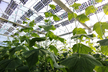
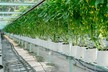
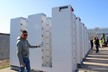
Many agricultural areas of the world are facing unprecedented climate crises characterized by aridification, extreme temperatures, and shifting rainfall patterns with prolonged dry periods. These changes threaten the resilience of many crops, ranging from fruit crops to cereals or vegetables. Despite the natural adaptability of many species to even difficult pedoclimatic conditions, such climate shifts are placing intense pressure on their physiological processes. Moreover, intensive farming coupled with these climatic changes can reduce water availability and exacerbate biodiversity loss.
In this context, agrivoltaics (AV) – the simultaneous use of land for solar energy production and crop cultivation – emerges as a high-efficiency solution (Dupraz et al., 2011). Recent studies showed that integrating photovoltaic panels above crops, as is typical of agrivoltaic systems, can modulate the local microclimate, reduce thermal and water stress, and improve the resilience of high-value crops, especially in Mediterranean regions that are particularly vulnerable to climate change (Ferrara et al., 2023). These systems protect crops from environmental stressors, while supporting the transition to renewable energy sources (Amaducci et al., 2018). In areas with limited water availability and high temperatures during the growing season, such as Mediterranean countries, agrivoltaics represent a potential solution to sustain agricultural productions, sustain biodiversity, and generate energy (Magarelli et al., 2025a). Changing rainfall patterns and extreme temperatures are currently threatening traditional soil water reserves, and AV can help preventing the overexploitation of aquifers, thereby promoting long-term environmental sustainability (Dubrovský et al., 2014; Iglesias and Garrote, 2015).
To achieve optimal results, site-specific designs adapted to local microclimatic conditions, together with appropriate layout criteria for the grown crops, can minimize the negative effects of shading while optimizing crop growth and yield and ensuring clean energy production, even with low-input technological solutions (Magarelli et al., 2025b). However, in cooler climates, the productivity of AV vineyards may decrease, and anthocyanins, total soluble solids (TSS), and polyphenols may be reduced (Ferrara et al., 2023).
Ferrara G, Lombardini L, Mazzeo A and Wagner M (2026) Editorial: Exploring agrivoltaics: balancing crop production and solar energy for sustainable agriculture. Front. Hortic. 5:1827650. doi: 10.3389/fhort.2026.1827650
Source: Frontiers In