"This time, I just sat at the table as a guest. That makes a nice change," says Rick Gitzels with a laugh.
Gitzels recently attended the closing event of the Hungry EcoCities project, a three-year Horizon Europe initiative that brought together artists, educational institutions, and SMEs from the food system to explore the future of food production. The closing event was held at Koppert Cress in the Netherlands and featured a keynote, break-out sessions, and a specially designed lunch.
 © EatThis
Megascale Lunch
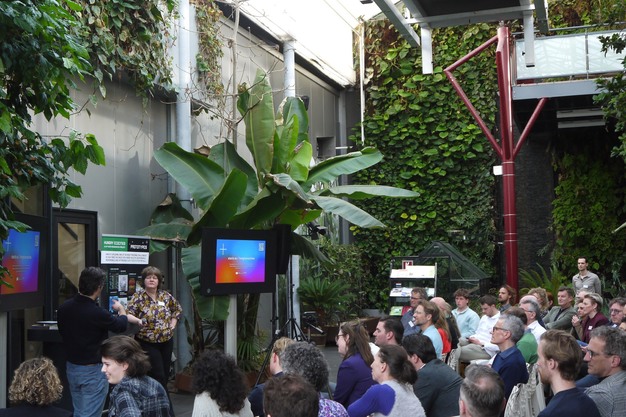
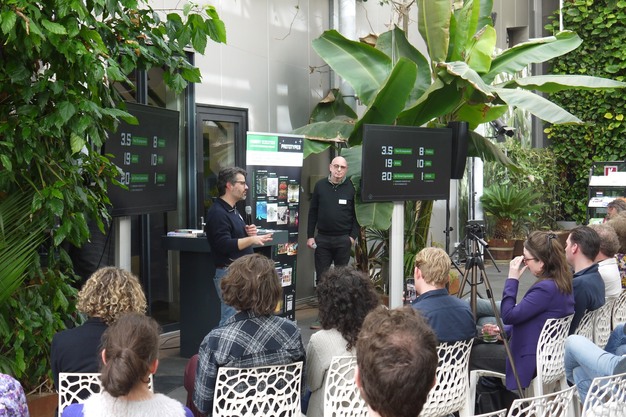
More than eighty guests attended the event, representing architecture, art, politics, research, and food production. The keynote was delivered by author and architect Carolyn Steel, who explored how cities were historically shaped by their relationship with food, and why that connection has largely been lost. Her central question: how did urban areas become so disconnected from the food system, and why have people lost sight of the value of food?
 © EatThis
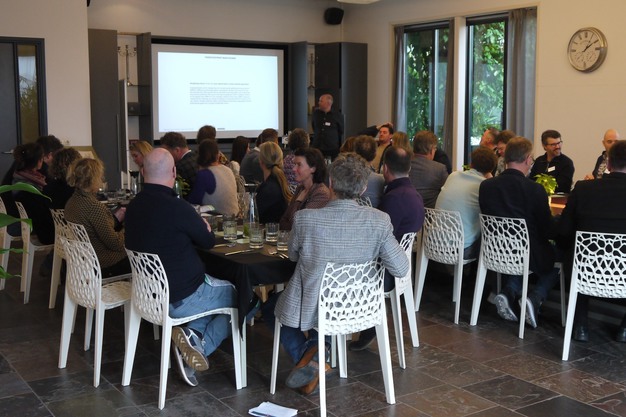
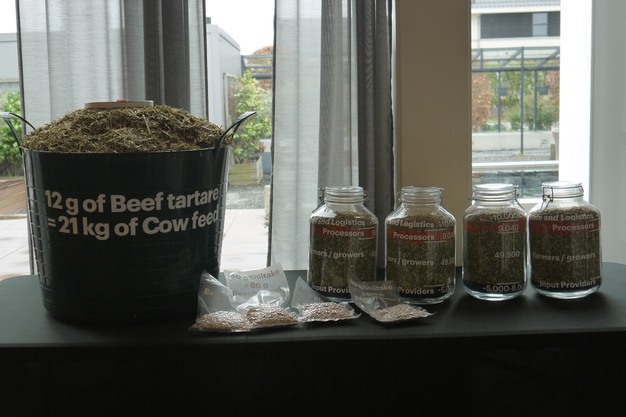
The centrepiece of the afternoon was the Megascale Lunch, a concept developed by Stephan Petermann of EatThis, in collaboration with strategist Marieke van den Heuvel of MANN and chef Arvid Schmidt. Across four courses, each dish illustrated a different aspect of the food system. One course served guests a small piece of steak tartare alongside a visual representation of the land required to produce it. "Next to it, you had a broth with vegetables. The contrast was striking. The scale of that small piece of meat was made very tangible," Gitzels says.
 © EatThis
The group also discussed the Netherlands' role as a major food-producing nation, one that both imports and exports large volumes of food. Guests were invited to reflect on that position during the meal and in subsequent break-out sessions. Three organisations, Tomato Brain, Resource Society, and Vegetable Vendetta, led sessions on topics ranging from AI applications in horticulture and AI-generated vegetable videos to the efficient use of scarce raw materials under increasingly extreme production conditions.
 © EatThis
A key question throughout the project was whether AI could help bring the food production chain closer to consumers through collaboration between businesses and artists. One concrete outcome is WTFood, an AI system that provides consumers with images, stories, and perspectives about the food supply chain when they photograph a product in a store. The concept has since been developed further into Fair Advantage, which focuses specifically on starting and small-scale growers in urban areas.
Bringing different sectors together
The horticultural companies involved in the project were reminded once again that people outside their sector view the food system very differently. Bringing those worlds together, specifically business and the arts, was the core objective of the project. Berlin-based art studio SOS and Turin-based CRA both participated.
EatThis hopes that events like this one will help keep horticulture professionals in lasting contact with other sectors. Gitzels and his partner Esmée have been contributing to that goal through their own initiative: a pop-up restaurant inside a greenhouse, where they serve dishes while telling the story behind the produce on the plate. That project, called Served by Nature, is set to continue. "There is still a real need to tell people these stories. They genuinely don't know what goes into the vegetables on their plate. Food is the medium we use to tell the story of food."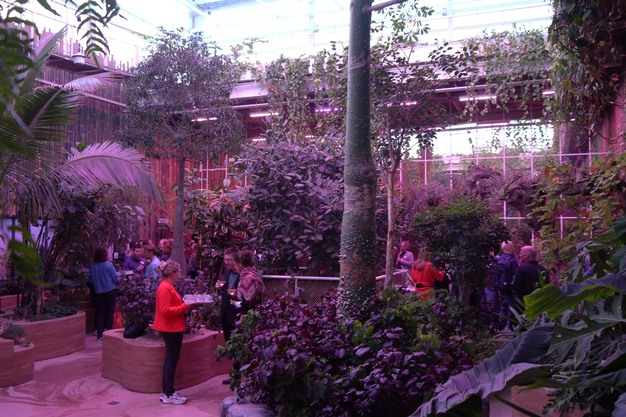 © EatThis
For more information:
EatThis
[email protected]
www.eatthis.info