At the end of October 2025, BelOrta sent an area survey to all active growers to map out their cropping plans for 2026. About 8% of the growers indicated that they were stopping their operations or would no longer supply products through BelOrta. This will bring the number of active growers below 1,000 next year, with an even split between fruit and vegetable growers. This percentage of growers stopping is in line with previous years and reflects the demographics of the grower base.
Total acreage and general trends
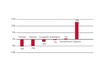
The total cultivated area shows a slight decrease. Among vegetables, the area under glass without lighting is decreasing by almost 5%, while open-air vegetables are declining slightly, especially chicory roots (-6%). Fruit also shows a downward trend, both in top fruit and stone fruit, as well as soft fruit. For strawberries, the share of ever-bearing varieties is increasing, while blueberries and raspberries are shrinking due to price pressure. Redcurrants and blackberries, on the other hand, show a slight increase.
 © BelOrta
Fruiting vegetables
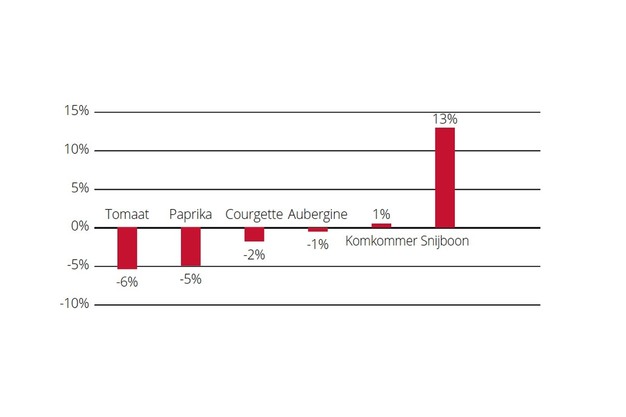
Within fruiting vegetables, tomato acreage declines by 6%, especially for loose tomatoes in the Prince segment, which shrinks by another 10% following previous declines. In contrast, the Baron segment grows by 5%. For bunch tomatoes, the area increases by 2%, mainly due to strong expansion in the Princess segment, while the Elite segment declines by 15%, but remains dominant with a 70% share. The specialty segment shrinks by 10%, with both increases (such as Cherrystar and Deliziano) and decreases (Romared, San Marzano).
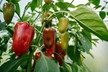
For cucumbers, total acreage remains stable, but year-round cultivation grows by 6%, and the area under exposed cultivation increases by 20%. The sweet pepper area is down 5%, mainly in specialty sweet pepper (-13%) and slightly less in blocky sweet pepper (-4%), with the colour distribution currently at 9% green, 62% red, and 29% yellow. Aubergine remains almost unchanged, with 99% oval varieties. Courgettes are down 2%, while string beans show strong growth of 13%.
 © BelOrta
Greenhouse vegetables
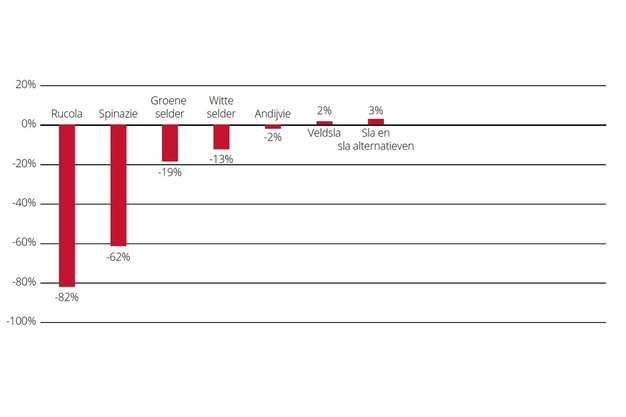
The declining trend in greenhouse vegetables continues. More and more growers are stopping cultivation or opting for reduced acreage, resulting in a sharp decline in arugula (-82%) and spinach (-62%). However, corn salad and head lettuce show slight increases of +2% and +3%, respectively. Soilless lettuce cultivation remains stable, while traditional soil-based cultivation increases slightly, partly due to the divestment of round crops by some growers.
Open-air vegetables
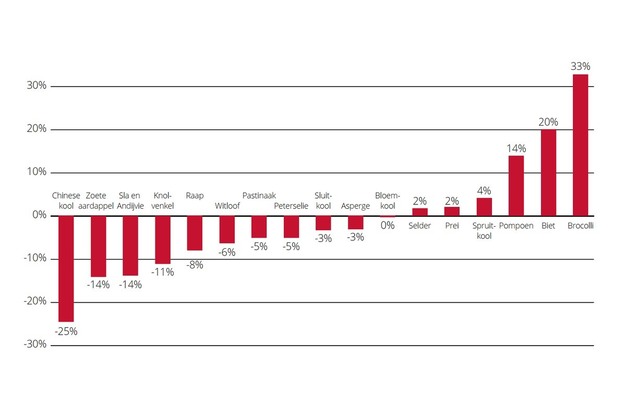
In open-air vegetables, the total acreage remains almost unchanged, despite older growers exiting. Growth among existing and new growers compensates for this loss. Leeks rise slightly by 2%, cauliflower remains stable, and greenhouse cauliflower declines by one third. Chicory roots decrease by 6%, mainly in hydroponics, while asparagus shrinks by 3% due to the removal of older plantings. Alternative leafy vegetables such as iceberg lettuce and endive are down 14%, mainly due to pricing and limited pesticide options against aphids. Other notable changes include broccoli (+33%), beetroot (+20%), pumpkin (+14%), turnip (-8%), celeriac (-11%), sweet potato (-14%), and Chinese cabbage (-25%).
 © BelOrta
Fruit
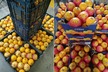
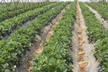
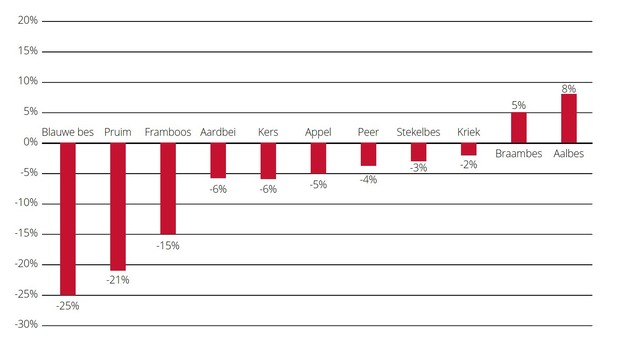
In fruit, acreage declines remain visible but are driven by the nature of perennial crops. Top fruit such as apple and pear decline by 5% and 4%, respectively, with club varieties accounting for 16% of the apple area and only 3% of the pear. Stone fruit is down 6%, with cherries, sour cherries, and plums declining by 2%, 6%, and 21%, respectively. Strawberries are down 6% for 2026, with ever-bearing varieties now accounting for 42% of the total area. Soft fruit also declines by 6%, with the exception of blackberry (+5%) and redcurrant (+8%), while blueberries and raspberries are most affected by price pressure.
 © BelOrta
Organic crops
Changes are also visible in organic crops. Due to the closure of two organic farms, the available acreage of organic fruiting vegetables and greenhouse leafy vegetables will be slightly smaller in 2026. Crop rotation remains an important part of organic cultivation, which may shift acreage between outdoor vegetable crops, but the total organic area remains broadly stable. In organic fruit, plantings of organic apple and pear remain substantial, ensuring a good supply at BelOrta.
The results of the 2026 acreage survey are being discussed within BelOrta's product and grower advisory groups. Alongside crop rotation and market developments, the focus is on efficiency, variety diversification, and anticipating price fluctuations and production challenges.
For more information:
BelOrta
Mechelsesteenweg 120
B-2860 Sint-Katelijne-Waver, Belgium
Tel: +32 (0)15 55 11 11
[email protected]
www.belorta.be