Researchers from the University of Seville and the Polytechnic University of Madrid have shown that it is possible to grow tomatoes and generate solar energy simultaneously, a key strategy for addressing water scarcity at a global level. The study, carried out in Madrid and Seville during the spring 2024 growing cycle, evaluated the use of agrivoltaic systems and regulated deficit irrigation to optimize water use in tomato cultivation. Its findings show that, while using less water reduces overall yield, the end result is a more efficient and sustainable process.
 © Universidad de Sevilla
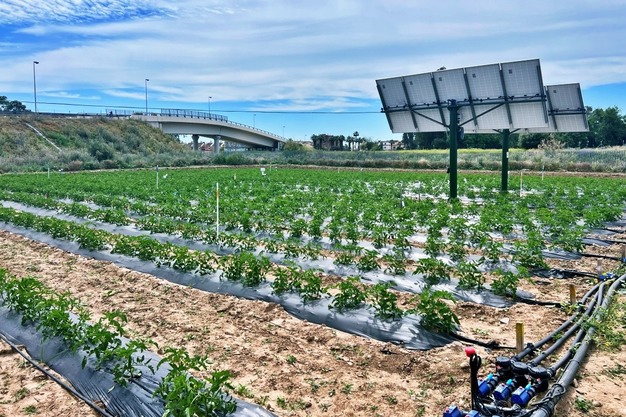
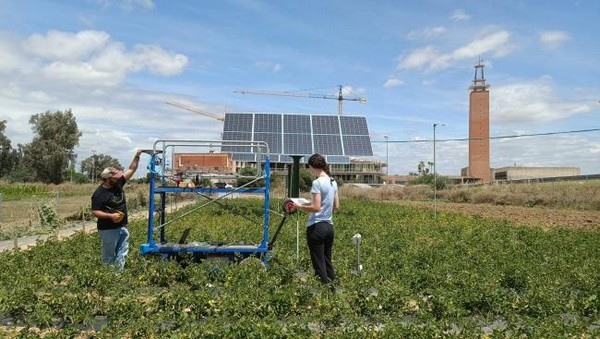
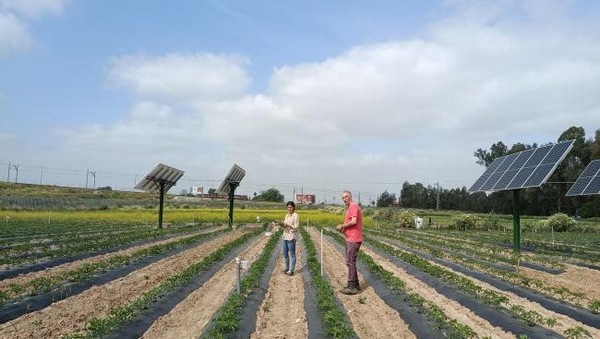
This approach aims to reduce the evaporative demand of plants by shading them with photovoltaic panels, enabling more efficient use of both land and water. The research compared three irrigation methods: a control treatment with full irrigation, a regulated deficit irrigation system based on plant water status, and an agrivoltaic system that applied the same water reduction under solar panels. The study measured variables including leaf water potential and gas exchange to monitor plant stress at different growth stages. Results indicate that, while panel shading reduces available radiation, the system design allows for adequate plant development during most stages of the crop cycle.
 © Universidad de Sevilla
One of the most notable findings is that the deficit irrigation strategy reduced water consumption by approximately 50% compared to conventional irrigation. That sharp reduction in water use, however, led to a roughly 20% drop in yield under the regulated deficit irrigation treatment, attributed primarily to severe water stress during the ripening phase. Despite this decline in total tomato output, irrigation water productivity increased significantly at the Seville site, demonstrating that more fruit can be obtained per unit of water applied.
The overall performance of the agrivoltaic system was validated using the Land Equivalent Ratio, which combines the efficiency of agricultural and electricity production. The values obtained, 1.54 in Madrid and 1.67 in Seville, confirm that combined production is far more efficient than growing tomatoes and generating energy on separate land areas. This means that even where tomato yields are lower under the panels, the profitability and sustainability of the system are enhanced by the clean energy generated within the same footprint.
 © Universidad de Sevilla
The study concludes that agrivoltaics is a promising tool for the agriculture of the future, though it requires more precise irrigation management to avoid excessive stress. The researchers suggest that combining plant-based measurements with soil moisture sensors could further optimize these systems. The advance points toward the dual sustainable use of land as a viable solution to the challenges posed by climate change and the energy transition.
The study is part of the project funded by the Spanish Ministry of Science and Innovation and the State Research Agency, reference PID2021-122772OB-I00, titled Sustainable Production of Horticultural Crops Based on Agrivoltaic Systems. It was led by experts from the ETSIAAB at the Polytechnic University of Madrid and from CEIGRAM and the ETSIA at the University of Seville. The results have been published in the scientific journal Agricultural Water Management.
For more information:
University of Seville
www.us.es