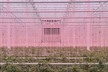
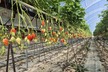
The greenhouse sector is once again facing volatility in the energy market. Over the past week, energy prices have surged dramatically – almost doubling for the first time since 2022. For greenhouse growers, particularly in Northern Europe where heating costs dominate winter production, this shift is more than just a market signal; it directly impacts operational survival.
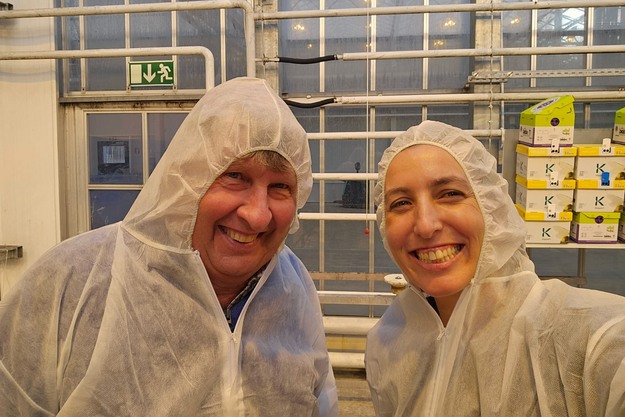
For Matts Erik, CEO of Hatec Baltic, DryGair's distributor in Baltics and Finland, the situation reinforces a trend he has been observing for several years.
"We have been telling growers for a long time that energy efficiency is not just about saving money – it's about securing the future of their operations," Erik says. "With the current energy price spike, that reality has become very clear."
These challenges and possible solutions will also be discussed with growers at the upcoming Trädgårds Expo / Puutarha Expo 2026, taking place on April 16–17, 2026 in Finland. The event brings together vegetable growers and greenhouse professionals from across the region to explore new technologies for improving energy efficiency and climate control. Visitors will be able to see the latest DryGair innovations for 2026, presented together with DryGair's regional partner Hatec Baltic.
 © DryGair
Rethinking traditional greenhouse humidity control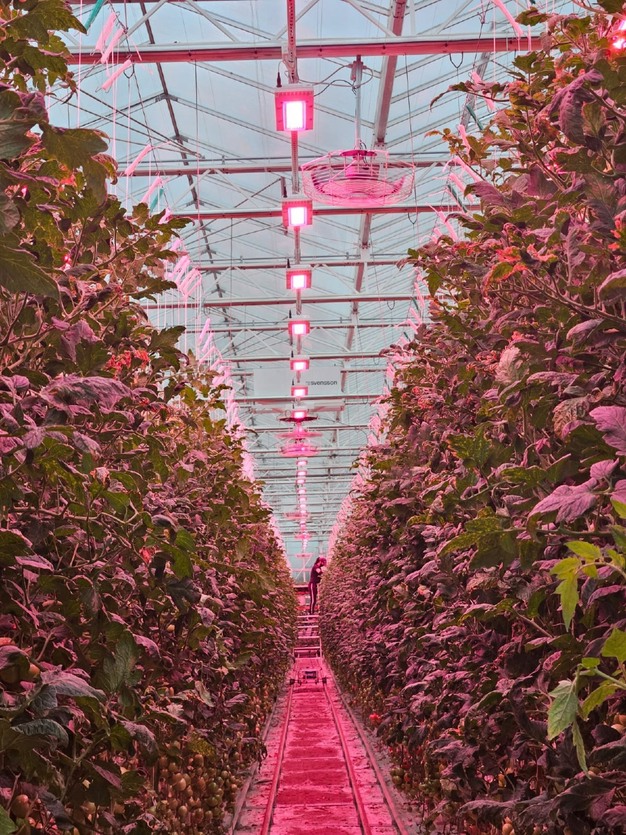 © DryGair
One of the biggest hidden energy losses in greenhouses comes from a practice growers have relied on for decades: ventilating to remove humidity.
During the night, plants continue to transpire and release moisture into the greenhouse air. Traditionally, growers open vents to release this humidity. However, the process also releases valuable heat and CO₂ while allowing cold, damp outside air to enter the greenhouse.
DryGair DG-12 in tomato greenhouse
"That means the heating system has to work much harder to stabilize the climate again," explains Matts-Erik. "In cold regions like Finland, ventilating at night can be extremely expensive."
There are various ventilation techniques used in greenhouses, all of which involve exchanging inside air with the outside environment. While some methods may be more efficient than others, every form of ventilation inevitably results in energy loss.
 © DryGair
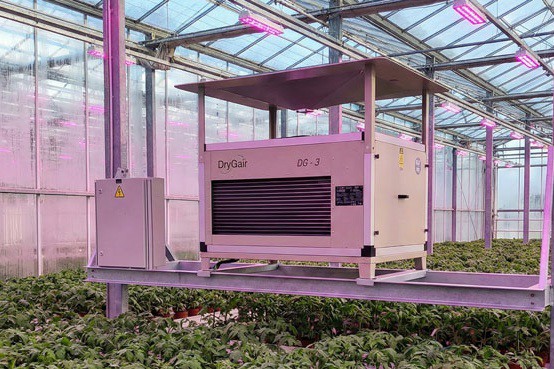
DryGair New DG-3
A shift toward the "closed greenhouse" strategy
Instead of ventilating humidity out of the greenhouse, many growers are moving toward a closed greenhouse approach using internal dehumidification systems.
In this strategy, vents and thermal screens remain closed at night to preserve heat inside the greenhouse. Dehumidification systems then extract moisture from the air while recycling the energy released during condensation.
"Humidity becomes something you manage inside the greenhouse, not something you push outside," says Matts-Erik.
DryGair units not only remove excess humidity, but they also redistribute the dried air evenly across the canopy. This circulation helps eliminate humid microclimates and maintain uniform climate conditions throughout the greenhouse while keeping valuable energy inside.
The result is a greenhouse climate that is both more stable and far more energy efficient.
To help growers better understand how airflow behaves inside dense crops, Hatec Baltic has recently introduced a practical demonstration tool.
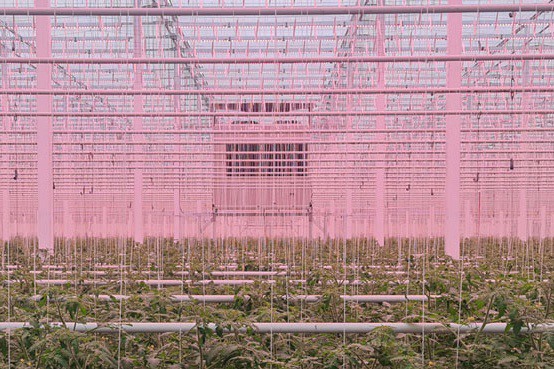
"We recently purchased a smoke machine that allows us to demonstrate air circulation directly inside the greenhouse," Matts-Erik explains. "During grower demonstrations we release smoke into the crop area and show how the airflow spreads evenly through the plants. It's a very visual way for growers to see how proper air circulation improves humidity control and climate uniformity."
 © DryGair
Energy savings and stronger crops
According to field studies and grower experiences, internal dehumidification can reduce energy consumption by around 50% compared to traditional ventilation-based humidity control.
The benefits extend beyond energy savings.
Stable humidity levels help prevent condensation on plants and greenhouse surfaces, significantly reducing the risk of diseases such as botrytis and mildew. In some trials, maintaining proper humidity reduced botrytis infections by up to 98%.
Crop performance also improves. Case studies across multiple crops report 10–25% higher yields in various greenhouse crops when humidity and climate conditions are stabilized.
"These results are not surprising," Matts-Erik says. "When you stabilize humidity and temperature, the plant can focus on growth instead of stress."
From energy saving to operational survival
With the current volatility in global energy markets, growers are increasingly viewing climate efficiency as a strategic investment rather than a technical upgrade.
"Energy efficiency used to be about optimization," Matts-Erik concludes. "Today it's about resilience. Growers need systems that protect them from energy price shocks while maintaining crop quality."
As energy prices continue to fluctuate, technologies that allow growers to reduce heating demand, stabilize humidity, and improve crop health may become essential tools for maintaining profitable greenhouse production.
"In today's market," Matts-Erik says, "efficient humidity control isn't just a nice addition to a greenhouse. It's becoming a requirement for survival."
For more information: © DryGairHatec Baltic
https://hatec.ee/?eng.html
DryGair
www.drygair.com/drygair-and-hatec-baltic-at-puutarha-expo-2026-finland-lp/