Dutch investor Wim Beelen has unveiled ambitious plans for the restart of plant nursery Jongerius in Houten, in the Netherlands. In a video update and accompanying article published on his own channels, Beelen explains his vision and emphasizes that he does not consider himself a real estate developer.
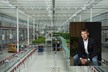
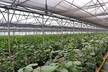
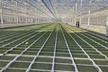
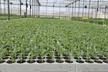
The Jongerius greenhouses are back in production. Beelen is growing a range of crops, with the dual aim of producing food and propagating young plants for the Tuin Op Tafel concept. The large greenhouse complex, divided into multiple compartments, is well suited to this purpose, according to the new grower. Beelen plans to scale from 50 to 150 crop varieties over time.
Further plans include a retail supermarket, a Larendael recipe box, use of greenhouse space by start-ups, and a strategy to address the site's high energy costs. To avoid the energy burden that contributed to the nursery's bankruptcy, Beelen plans to build a data center and develop the business into an energy hub for the surrounding area.
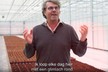
Beelen elaborates on how he envisions a large organic farm contributing to solutions for issues including land use, energy, nitrogen emissions, and housing shortages. The article below is based on content he shared on his own channels.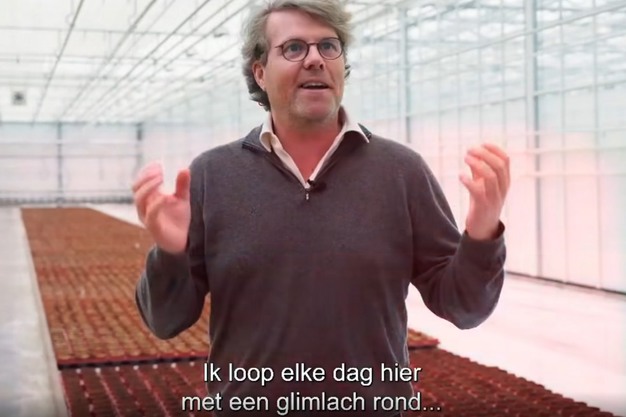 © LarendaelStill from the video, viewable at the bottom of this article.
Not a real estate man
Beelen explains how he became the new owner of the plant nursery. Shortly after the bankruptcy, he says he received a call asking whether he wanted to take over the nursery's operations, including the Tuin Op Tafel project and the company Jongerius Onroerend Goed. He says he did not need long to decide. "I said immediately: this is wonderful. Food in the Netherlands is far from as healthy as people are led to believe, and now I have the chance to do something about that myself."
He is not a real estate developer, he stresses, which is why, he argues, his move into agriculture should come as no surprise. He acknowledges having developed a number of real estate projects, but says his focus has now shifted. "A real estate developer does the same thing over and over." Beelen wants to do something different, under the name De Houtense Boerderij. His goal is to create a "farm for 2026," with healthy and affordable food production as its primary objective.
Acquisition
Larendael, Beelen's investment company, acquired the Jongerius land along with everything on it, including greenhouses and machinery. The machinery was inspected, refurbished, and replaced where necessary. "A business like this goes bankrupt and has obviously been under financial pressure for some time. Now the machines are operational again. We have already started sowing, and expect the first harvest within a few weeks," Beelen says.
Following the Jongerius acquisition, two additional deals were completed to expand the site to approximately 35 hectares. These include Fortweg 5 and Essenkade 2-4, the latter of which the municipality had designated as a potential asylum seeker center. "People might think I am opposed to an asylum seeker center, but I am not. What I oppose is placing large numbers of severely traumatized people together in small, dark spaces with no connection to their surroundings."
'Farm with all facets,' including vertical farm
The residential properties on the acquired land will be made available to people going through difficult periods. Larendael is also developing a farm campsite that, together with the housing, is intended to serve as a base for this group. "They can come and work with us for a few hours a day, because if you are struggling mentally and you sit at home alone, you do not get better. If you can work with your hands and be around other people every day, you feel connected, and that helps far more."
The remainder of the site will be developed into an experience center. Beelen describes this as "a farm with all the facets that go with it." The existing greenhouses will be supplemented with a vertical farm, and the business will also grow crops outdoors. Additional plans include a restaurant, supermarket, playground, and campsite. Alongside vegetable production, livestock will also be kept.
Beyond this, Beelen wants to develop an innovation campus on the site, with space for around forty start-ups, including office space, a laboratory, and a data center. "We can also take a stake in those businesses, if there is interest."
Combination of Functions Also in Previous Projects
This integration of multiple functions within a single project is consistent with Beelen's previous work. He used a similar approach at the current CTPark in Amsterdam, a large logistics project developed by Larendael in 2022. "I received quite a bit of criticism from the real estate sector for that, because it was seen as unconventional," Beelen says. The distribution center features logistics infrastructure designed for consolidated transport and also includes space for production.
"There is a vertical garden for food production, we generate electricity that we share with the surrounding area, there is high-quality office space, the facility is accessible by bicycle, car, truck, and boat, and companies can collaborate to consolidate deliveries into the city. I came up with that combination of functions," he says. He adds that several similar projects are expected to follow in the coming years. "I look at a business model, and if I find it compelling and see an opportunity, I make it happen."
"It is not my intention to offend or shock anyone, but the real estate sector often calls this a flawed project, and it is not. All the elements are there and it is self-sustaining. Apparently I set a trend with that, because today everyone suddenly considers these things important. But when I designed it in 2019, without much experience in logistics development, nobody was thinking this way."
Fixed patterns
Being "unconventional" or deliberately doing things differently from the market norm is not something Beelen pursues as a goal in itself. "I am creative. That does not mean I am exceptionally talented or anything like that, it is simply part of who I am. I look at a business model and if I find it compelling and see an opportunity, I make it happen."
The market tends to think in fixed patterns, he continues. "New infrastructure requires an entirely new way of working. A multinational accustomed to operating with articulated trucks will not switch to consolidated electric van deliveries until it has been proven that this is more efficient."
This, he believes, is why progress is slow. "And in the real estate sector, it is even more striking. Real estate does not ask what the end user wants, what kind of home a resident wants to live in, or what kind of building will attract a business. Instead, it produces a product that appeals to investors. That is precisely why I do not see myself as a real estate developer, and why I did not want to be named real estate person of the year."
Addressing multiple challenges at once
The farm concept and its production model aim to address several major challenges simultaneously. "In the Netherlands, we face four significant problems: land use, energy, housing, and nitrogen." Beelen believes these can be tackled in a straightforward way, and wants De Houtense Boerderij to serve as a model.
He points to the export figures for Dutch food production. "We export 80 percent of our agri-industry output, meaning 80 percent of our agricultural land is not used to meet our own needs," he says. This applies not only to physical land, but also to capacity on the electricity grid. "All those agricultural businesses consume enormous amounts of energy, while only 20 percent of that energy goes toward Dutch domestic production."
Energy hub for the region
Plant nursery Jongerius was paying approximately half a million euros per month in energy costs. "I have seen the invoices, and this is still a relatively small business," Beelen says. He plans to approach this differently, in part by building a data center to supply heat to the greenhouses, and by installing battery storage to capture self-generated electricity.
"With this, we want to become an energy hub for the surrounding area," he says. These two pillars, innovation and energy, are expected to become the primary sources of revenue and, according to Beelen, will ensure the farm's long-term viability.
Migrant workers
Beelen also raises the issue of migrant labor in the food industry, noting that the productivity of migrant workers largely benefits other countries. "These people are housed in so-called 'Polish hotels,' or crammed into ordinary residential properties, while we have a serious housing shortage. How is it that in a small country like this, we house hundreds of thousands of migrant workers and put them to work, only to export the vast majority of what they produce?" he asks.
If the Netherlands were to produce only for domestic consumption, he argues, only half the current number of farms would be needed. "And therefore half the agricultural land, half the energy use, and no need for migrant labor."
Education
At the same time, the Netherlands imports food from countries with different production standards and regulations. "We do not know how much contamination is in their soil, and we eat those products. And what happens to healthcare costs? They are rising sharply. A large part of health starts with good nutrition. We want to show here how truly healthy food is produced."
This extends beyond the production process itself. Beelen wants De Houtense Boerderij to serve an educational function for children. "They no longer know how food grows, how a pig lives, or where a cucumber comes from. How valuable it is to create space for education and teach children about these things again." Larendael is developing a walking route where children can learn about the farm's production process.
Financial picture
"I think this project is brilliant and I am genuinely pleased that we were able to acquire it. What will ultimately come of it, I cannot say with certainty. But I do know that we want to contribute, at whatever scale is possible, to a better world." When asked how he weighs profitability against social impact, Beelen says that financial return has never been the primary objective.
A strong concept built on the right foundations will always generate revenue, he argues. "There will be a data center, and we will generate our own electricity, store it in the battery park, and share it with the neighborhood, that generates income. We will create office space and a laboratory for start-ups, we can charge rent for that. There is a restaurant and a supermarket where we sell our own products. That is how you piece together the financial picture."
Source: Larendael / Plantenkwekerij Jongerius