 © Ontario Plants Propagation "Propagation is where plant health, uniformity, and yield potential are set," says Mathieu van de Sande, President and CEO of Ontario Plants Propagation. "As greenhouse scale increases, that makes it the primary control point in the production system."
Ontario Plants is building its operations around this principle, developing a propagation platform across both vegetables and soft fruit focused on consistency, biosecurity, and system-level control.
The company's strawberry program reflects this broader shift. "Like much of the CEA sector, we moved quickly to support demand," Mathieu explains. "It became clear quickly that long-term success in soft fruit requires a different level of control."
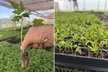
The program has since been reset around first principles: clean plant material, tissue culture, and stronger alignment with breeders, consultants, and growers.
"We do not view strawberries as a standalone initiative. It is part of building the broader propagation platform, where outcomes are defined at the earliest stage of the value chain."
Quality as a system, not an outcome
A defining element of this strategy is the positioning of quality as an integrated system attribute. "We treat quality as infrastructure. Not something you inspect at the end, something you build into the system."
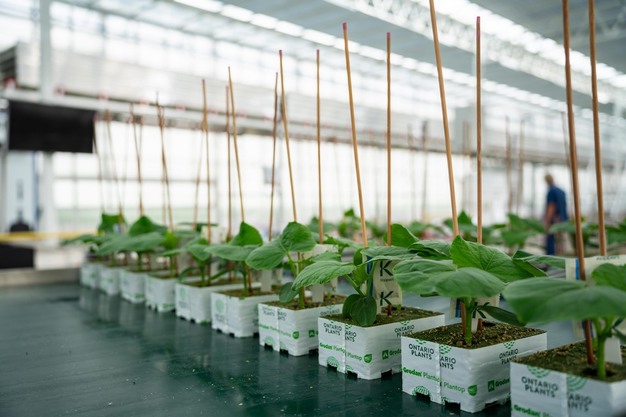
This approach begins with genetics and upstream inputs, supported by strict biosecurity, controlled environments, and standardised processes. Investments in R&D, particularly in phenotyping, are helping the company better understand how genetics express under controlled conditions and translate into consistent grower outcomes.
"At scale, consistency comes from system design, not effort," he adds. Advanced technologies, including LED lighting systems and grafting robotics, are being deployed to reinforce repeatability and scalability.
 © Ontario Plants Propagation
Glencoe: Advancing propagation infrastructure
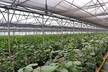
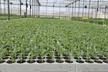
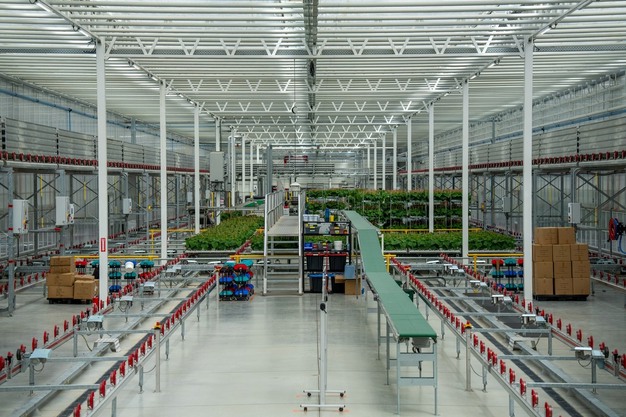
Ontario Plants' Glencoe facility represents a next-generation model for propagation infrastructure. Designed to optimise environmental control and operational efficiency, it enables measurable improvements in plant performance and resource use.
"We are seeing more vigorous, uniform plants, lower labour dependency, lower energy inputs, and higher biosecurity," Mathieu notes. "More importantly, it allows us to control outcomes rather than manage variability. That is the shift."
As greenhouse operations expand, variability costs at the propagation stage increase significantly. "When propagation goes wrong, there are very limited options to recover downstream. That makes this stage the primary risk control point in the system."This is supported by purpose-built facilities and a multidisciplinary team that now extends beyond growers to include R&D specialists, engineers, data scientists, and sustainability experts.
 © Ontario Plants Propagation
Traceability and data-driven crop steering
Traceability is fully embedded within Ontario Plants' operations, with plant material tracked from origin through to delivery. This includes genetics, batch information, and all process steps, creating a closed feedback loop between inputs and outcomes.
"That gives us visibility, but more importantly, it creates a feedback loop. Outcomes are tied directly back to inputs and decisions."
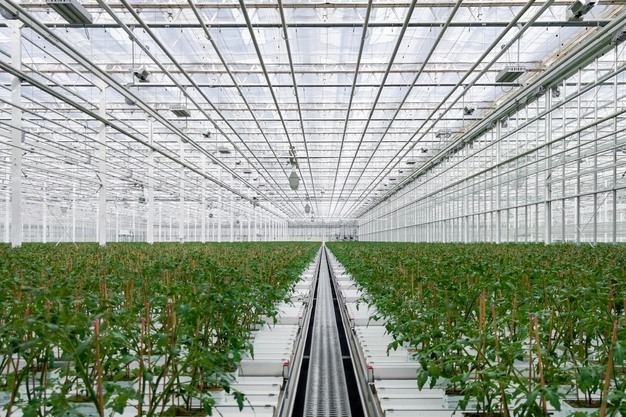
This data integration supports proactive crop steering. By combining climate, irrigation, and plant data, the company can guide crop development from the earliest stages. "The goal is to keep crops within optimal ranges, not correct them later," he says. "Propagation is the control point. That is where outcomes are determined."
 © Ontario Plants Propagation
Collaboration through applied research
In parallel with infrastructure and technology investments, Ontario Plants is strengthening its role within the broader CEA research ecosystem. The company recently joined the OHCEAC Consortium, a public-private partnership focused on advancing applied research and industry collaboration.
"For us, this was not simply about joining another consortium," he shares. "It was about aligning with a group that understands that the future of CEA, especially in high-value crops like strawberries and soft fruit, depends on deep collaboration between universities, government researchers, and commercial operators."
This is not just research collaboration; it is part of building the knowledge layer that will define how propagation is done in the future.
"High-quality transplants are foundational to the success of controlled environment fruit and vegetable production," he adds. "That focus directly aligns with how we think about risk reduction, yield consistency, and long-term grower success."
Scaling a platform for North American CEA
The company continues to expand its propagation infrastructure across North America. Developments at Glencoe are ongoing, while the St. Thomas facility is being retrofitted to support soft fruit, organic production, and evolving market demand.
"The propagation layer in North America remains fragmented, with inconsistent levels of scale, biosecurity, and technical capability," he observes. "Our focus is to bring that into a single, reliable system the industry can build around."
"Our objective is simple: to define the standard for propagation and build the infrastructure platform the industry relies on."
For more information:
Ontario Plants Mathieu van de Sande, President and CEO
[email protected]
www.ontarioplants.com