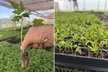
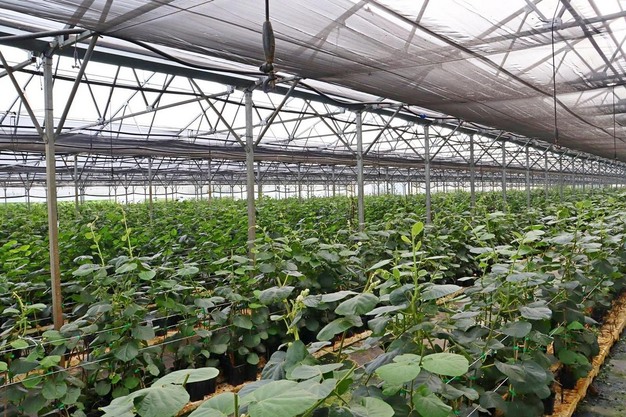
With the return of the growing season, Vivai F.lli Zanzi has completed its campaign to graft seedlings onto Bounty 71 rootstock. As an authorized producer of all major integrated production programs for Actinidia chinensis and Actinidia deliciosa, including the Zespri G3 Sungold variety and Hayward plants, Vivai F.lli Zanzi only uses cuttings for its plants.
 © Vivai F.lli ZANZI di C. Zanzi & C S.S.Soc.Agr.
"The choice of cuttings was made years ago on a purely intuitive basis and has been confirmed over the years thanks to the results of scientific tests," says Giovanni Zanzi. "The plants were chosen for their lushness and resistance, especially during the early stages of breeding and when adapting to the open field after transplanting."
 © Vivai F.lli ZANZI di C. Zanzi & C S.S.Soc.Agr. © Vivai F.lli ZANZI di C. Zanzi & C S.S.Soc.Agr. | 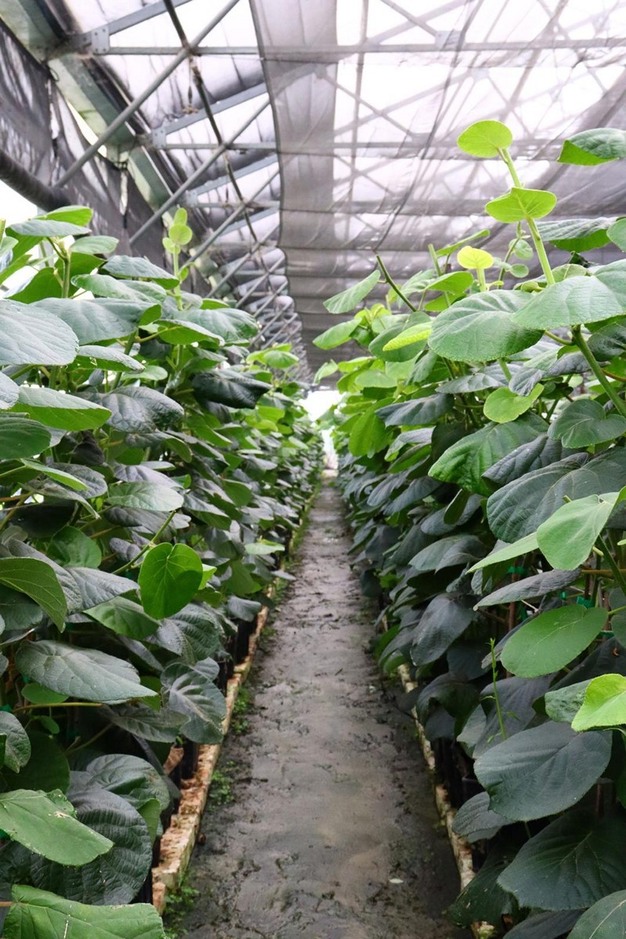 © Vivai F.lli ZANZI di C. Zanzi & C S.S.Soc.Agr. © Vivai F.lli ZANZI di C. Zanzi & C S.S.Soc.Agr. |
He continues, "This perception, both ours and that of the farmers, has been scientifically confirmed by a study completed in November 2025 by the Italian Diagnostics Laboratory of the Interdepartmental Center for Innovation in the Agro-Environmental Field (Agrinnova). The study showed that an increased presence of endophytes in cutting plants induces an adaptive process when transitioning from a controlled greenhouse environment to an open field. This process is faster and less energy-intensive. It enables the plant to continue developing without delay, achieving greater growth by the end of the season and ensuring better affinity and resistance between the graft and rootstock."
 © Vivai F.lli ZANZI di C. Zanzi & C S.S.Soc.Agr.
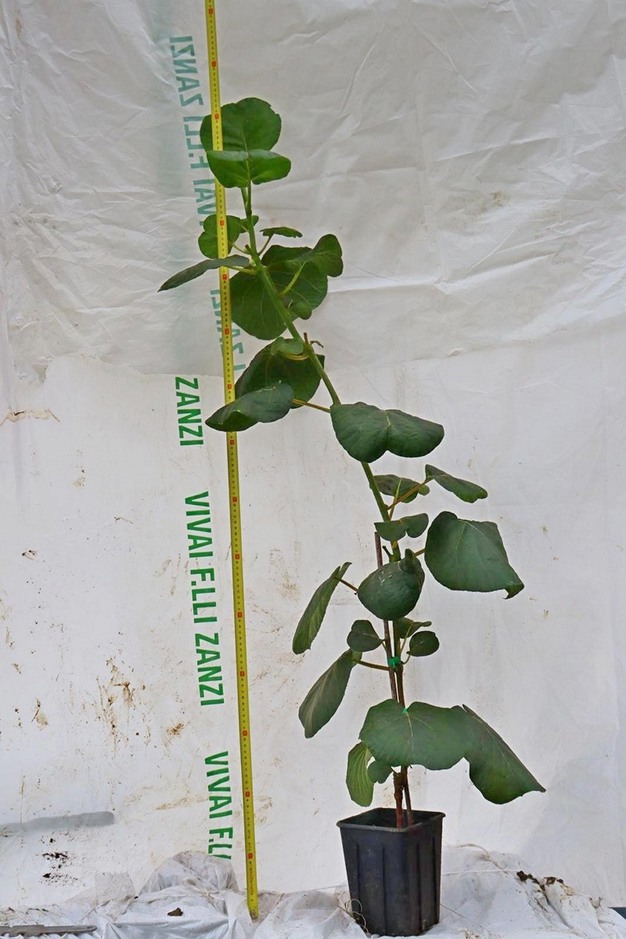
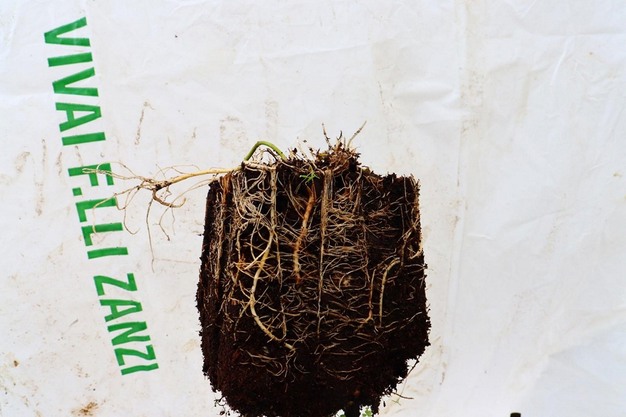
"Moreover, the Bounty 71 rootstock benefits from its origin from cuttings because we can choose plant material with a larger caliber during the first six months of rooting and colonization of the pot. Therefore, the caliber of the future plants is important from the beginning, allowing for uniform development after grafting without differences between the root system and the aerial apparatus."
Zanzi concludes, "As reported in the December 2025 issue of Frutticoltura, the propagation method significantly influences the structure, composition, and diversity of the endophytic microbial community of kiwi cuttings, particularly at the root level. Field cuttings have richer and better microbial communities than micropropagated material and are more resilient and adaptable to environmental stressors."
 For more information:
F.lli Zanzi Nurseries
Via del Gorgo, 137
Loc. Gorgo di Fossanova San Marco
44124 Ferrara - Italy
+39 (0) 532 719072
[email protected]
www.vivaizanzi.it