Agriculture in protected environments faces a new and fearsome challenge. The official journal of the European and Mediterranean Plant Protection Organisation (EPPO) has officially confirmed the first sighting of Thrips parvispinus (Karny, 1922) in Italy, an insect native to south-east Asia and Australia that is spreading rapidly across the globe.
The discovery, which occurred in south-eastern Sicily, i.e., the beating heart of Italian greenhouse horticulture, raises great concern for professionals in the sector. The Ragusa area, in fact, accounts for 32% of the national greenhouse area and contributes 40% of Italian tomatoes, peppers, aubergines, courgettes, and cucumbers.
The discovery in Italy
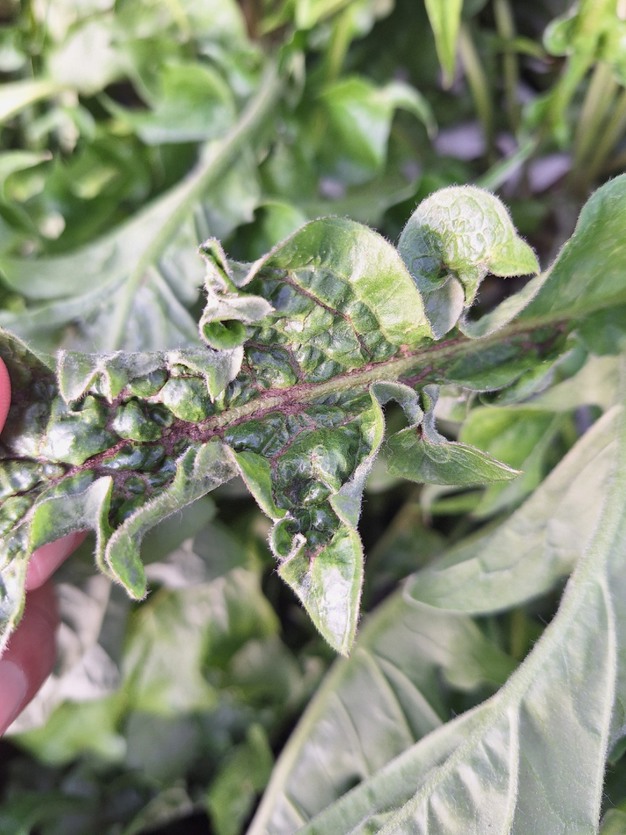
The first detection occurred on 8 October 2025 in a flower farm in Vittoria (RG), on gerbera plants imported from Spain. In the following months, infected samples were also detected on gardenia and mimosa plants in the Messina area, and on greenhouse pepper crops in the Agrigento area.
|
|  © SIRIAC Srl © SIRIAC Srl |
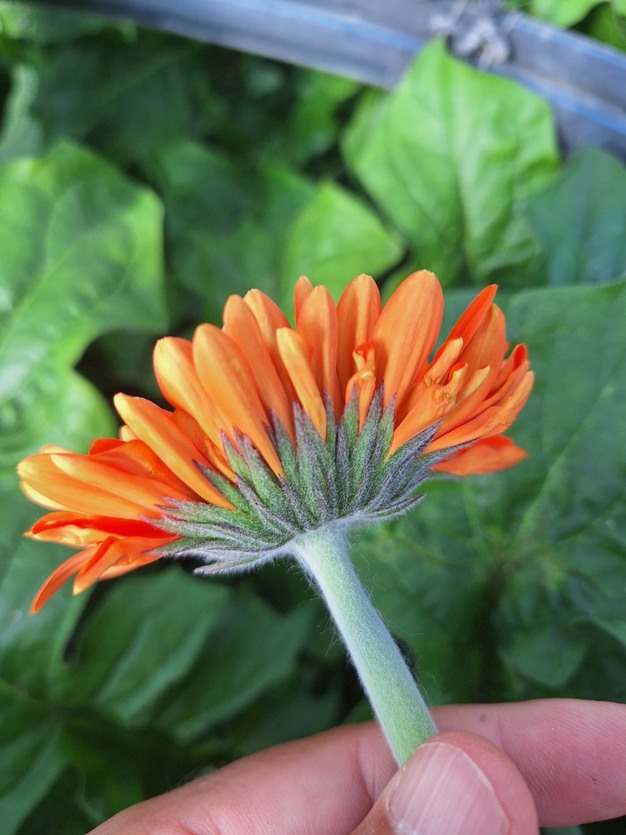
A crucial aspect, which caused delays in the initial reports, was the confusion of the symptoms with those caused by the western flower thrips (Frankliniella occidentalis), already widespread in our greenhouses.
But how can it be recognised? On observation in the field (use of a magnifying glass is recommended), the adult female of T. parvispinus is dark brown in colour, while the head and thorax are visibly lighter than the abdomen, and the legs are yellow.
Host plants
Thrips parvispinus boasts an extremely varied 'menu', as it has been reported on as many as 60 host plants belonging to 24 different botanical families.
- Horticulture: The main targets are undoubtedly peppers, followed by cucumbers and aubergines.
- Floriculture and Ornamental plants: It severely affects gerberas, gardenias, chrysanthemums, dahlias, and nursery species such as dipladenia (Mandevilla). In Spain, it has also caused damage to young citrus seedlings and rootstocks in nurseries.
- Fruit crops: It can severely affect strawberries, mangoes, and papayas.
Symptoms and damage: what to look out for in greenhouses
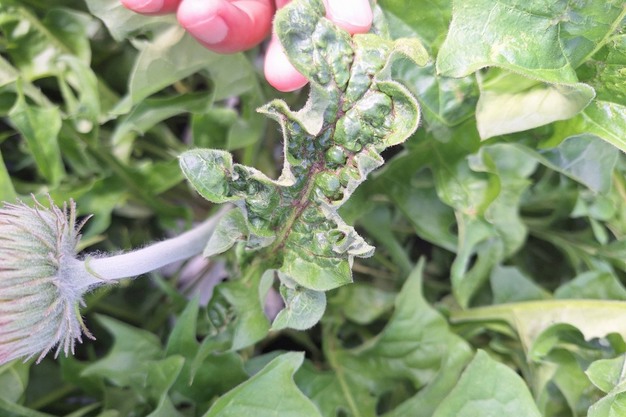
Both young and adult insects concentrate mainly on the flowers and on the underside of leaves. These thrips possess an extraordinary destructive potential. In countries such as India and Indonesia, production losses on peppers have reached 40%.
 © SIRIAC Srl
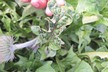
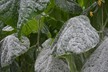
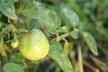
The thrips damage the young pepper leaves and flowers directly. The trophic activity causes the leaves to take on a yellowish to reddish-brown colouring. Attacked leaves in the development phase become deformed, curled, and spotted, while older leaves take on a silvery appearance. The affected fruits are malformed and have a rough, suberised surface.
One positive thing, at least, is that it is not currently considered a vector of tomato spotted wilt virus (TSWV).
Biology and life cycle
The invasive success of this insect is guaranteed by its rapid development cycle. Under optimal conditions, similar to those found in Mediterranean greenhouses (around 25°C), T. parvispinus completes its cycle from egg to adult insect in only 14 days. This speed enables it to overlap several generations in a single crop cycle, which makes them particularly difficult to manage.
Monitoring and control strategies
Managing T. parvispinus requires timeliness. Experience in Spain and other countries has shown that, once established, eradicating the pest is virtually impossible. Therefore, prevention and integrated control are the only way forward.
Every farm located in areas at risk should initiate systematic monitoring.
- Shaking: It is very useful to shake flowers or shoots on a white plate or a collection funnel in order to promptly detect individuals.
- Chromotropic traps: A key detail that has emerged from studies is that WHITE sticky traps are much more effective in attracting T. parvispinus than the classic blue or yellow traps usually used for thrips.
The quick worldwide spread of this pest has been facilitated mainly by the trade in infected nursery material. It is imperative to carefully inspect incoming seedlings (whether cuttings or young rooted plants) and demand phytosanitary certification.
Luckily, biological control studies are already underway, also taking advantage of the knowledge gained with F. occidentalis. Currently, indications (based on protocols in use in Spain) suggest the release of different natural enemies:
- Generalist predators: the anthocorid bug Orius laevigatus (already a mainstay in thrips control) and the chrysopid Chrysoperla carnea.
- Phytoseid mites: predators such as Neoseiulus californicus and Amblyseius andersoni are used during the flowering phase. In colder and wetter periods, Amblyseius cucumeris and Transeius montdorensis are used.
Relying solely on chemical plant protection treatments has proven ineffective and counterproductive. As with other thrips species, its extraordinary biology (multiple generations in a protected environment) allows it to rapidly develop insecticide-resistant strains when subjected to high chemical pressure. Therefore, the use of authorised active ingredients must be prudent, supported by insecticides of biological origin (bio-insecticides) and strictly integrated within an integrated pest management (IPM) plan.
Conclusions
The discovery of Thrips parvispinus in Sicily represents an 'alarm bell' for the entire Italian fruit and vegetable sector. The ease with which it can hide in young seedlings and its high destructive potential - especially on peppers - leave no room for carelessness.
Farmers, nurserymen, and agronomic technicians are called upon to work as a team: strong collaboration is required to isolate any outbreaks in good time, implement strict visual inspections at the entrance of nursery materials, and apply modern organic defence protocols. Only an informed, vigilant, and resilient agriculture will be able to cope and live safely with this new alien pest.
Source:
Massimino Cocuzza, G., Hmad, E.B. & Novara, R. (2026). First report in Italy of Thrips parvispinus (Karny, 1922) (Thysanoptera, Thripidae), a major threat for Sicilian horticulture and floriculture. EPPO Bulletin