Where do you find the man who spent fifty years helping develop climate computers at Hoogendoorn Growth Management? In the workshop, of course. That is where Leo van der Hoeven can be found one morning in mid-February, screwdriver in hand, working through a technical job, much as he once found himself in a grower's bedroom installing a bespoke system.
For nearly sixty years, the Netherlands-based company Hoogendoorn has supported greenhouse growers with process automation. Leo was an indispensable part of that journey for fifty of those years, a milestone the company had never before had the opportunity to celebrate. The anniversary was marked with cake and a short speech during a Tuesday morning coffee break at the Vlaardingen office. Within the hour, Leo was back at the workbench.
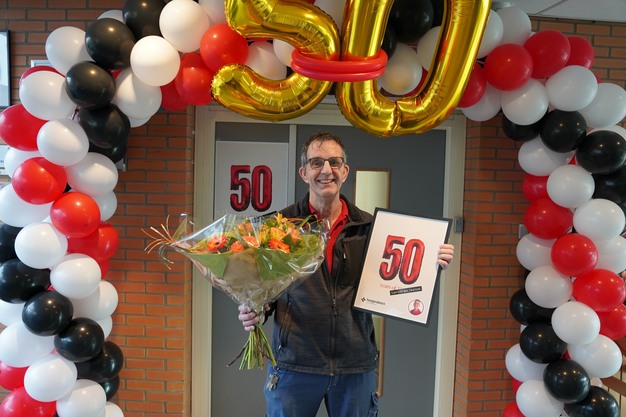 © Hoogendoorn Growth Management
These days, Leo's responsibilities at Hoogendoorn extend beyond climate computers to general facility management. He stayed on after reaching retirement age, working three mornings a week. A television screen needed attention that Tuesday morning — just another job on the list.
His technical affinity serves him well in this new role. He also acts as a sounding board for colleagues and keeps the Vlaardingen sales team informed about developments in the Westland region. If a greenhouse is being demolished nearby, Leo is the first to know — and the first to flag a potential opportunity for a new Hoogendoorn installation.
Between repairs, there was time that morning for coffee and reflection. Leo is due to finish at the end of March, just after his seventieth birthday in early March. Even so, he has made clear he will not stay away for long — he plans to ride his classic motorcycle back to Vlaardingen for a visit.
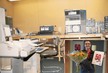
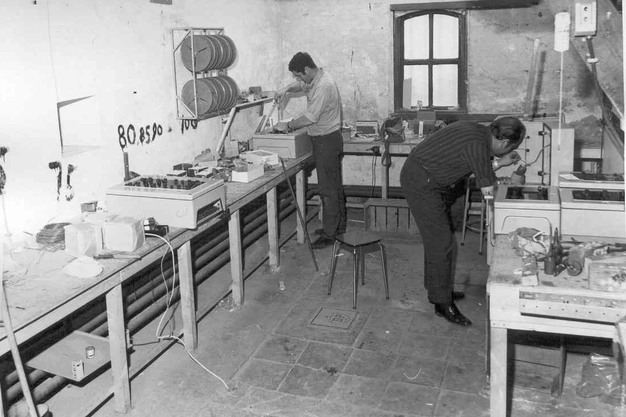 © Hoogendoorn Growth ManagementThe Hoogendoorn workshop in the early years
From bulb shed to Vlaardingen workshop
Leo grew up as a grower's son. After leaving school, he went to work in the greenhouse of his uncle Theo, who ran a Hoogendoorn climate computer. Through his uncle, Leo, then nineteen years old, heard that Hoogendoorn was looking for staff. He approached the company at a trade fair in Den Hoorn, was invited for an interview the following day in 's-Gravenzande, and was offered the job almost immediately.
At the time, Hoogendoorn was based in a bulb storage shed on the edge of the village. "During that interview, Henk Hoogendoorn said to me: 'Your uncle Koos is also a customer of mine.' The next morning, Henk visited my uncle's nursery. By that afternoon, I was starting at Hoogendoorn."
The company later moved to larger premises in 's-Gravenzande before relocating in 1999 to its current address on the Westlandseweg in Vlaardingen. "Back then, the workshop was on the second floor. Everyone had their own spot where they sat soldering."
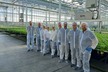
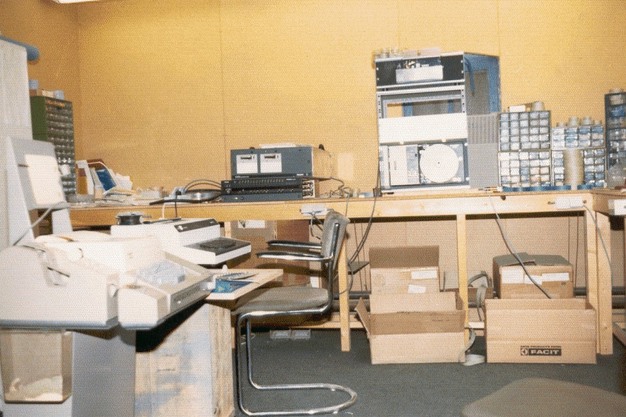 © Hoogendoorn Growth ManagementHere, work is being done on Hoogendoorn's first climate computer
Acquiring 'secret materials'
Leo is regarded within Hoogendoorn as a pioneer in climate computer development. He joined the company shortly after it made a landmark move in 1974 with the introduction of TUCO, the first climate computer designed specifically for the greenhouse industry.
In those early years, Leo ran errands in support of Gé Bentvelsen, who had joined Hoogendoorn as an accountant but developed a deep interest in technology and began designing climate computers himself. "I was sometimes sent to the Binkhorst district in The Hague to collect materials," Leo recalls. "I didn't always know exactly what I was picking up." He would be given a name and an address, and would return with components. "We also used to sand the markings off integrated circuits so that competitors couldn't identify which components we were using."
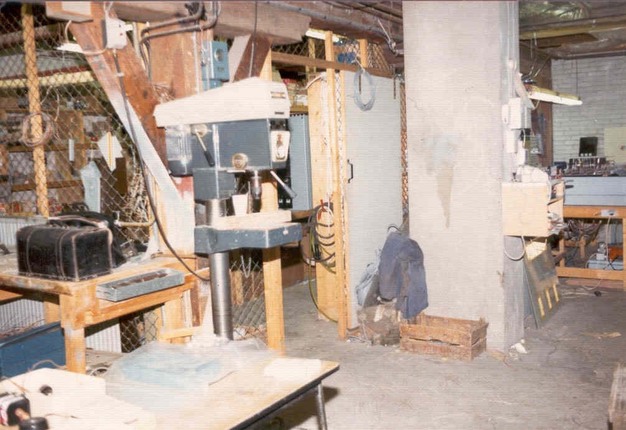 © Hoogendoorn Growth ManagementLeo experienced all the relocations and was still roaming around in Hoogendoorn's very first workshop back then
Special assignments
A total of 150 TUCO systems were built, and Leo assembled and tested every one of them. His work was primarily based in the workshop, though it occasionally took him to growers' premises for more unusual installations.
One job stands out. A grower who lived some distance from his greenhouse asked Hoogendoorn to develop a system that would allow him to monitor climate data from home. "Suddenly I was standing in the man's bedroom," Leo laughs. "I installed a screen and a control unit that established a connection between the greenhouse and the house."
Another custom request came from a grower who was an avid sailor. "We built a special case with a battery, a telephone, and a small screen. While he was out on the water, he could remotely check the climate data from his greenhouse. If there was a fault, he knew to head back. He was a very forward-thinking grower."
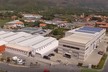
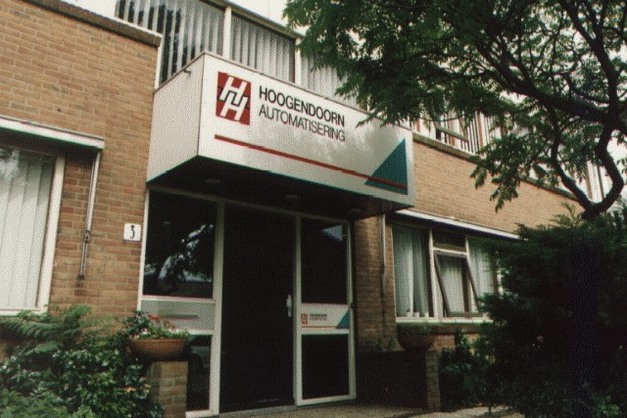 © Hoogendoorn Growth ManagementThe building of Hoogendoorn Automation on Franklinstraat in 's-Gravenzande
From control panel to the cloud
The systems Hoogendoorn developed grew progressively more sophisticated. "The technology kept getting smaller and more refined," Leo says. What began as a cabinet of buttons and dials eventually evolved into today's IIVO platform.
Climate computers enabled growers to automate an increasing number of processes, while also reducing the amount of cabling required. "That was a real selling point for us. At a certain stage, only one cable was needed between the climate computer and the connection box. Fewer cables meant lower costs, and that helped us compete."
The current IIVO system is the first Hoogendoorn platform to operate entirely via the internet, with no hard drives or moving parts. "The iSii was already heading in that direction. Eliminating moving parts reduces the risk of faults."
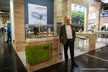
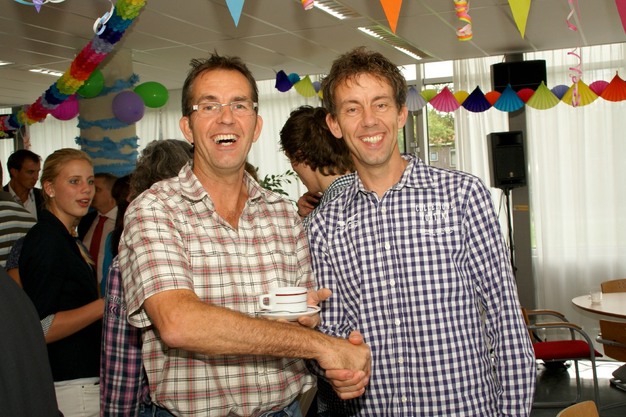 © Hoogendoorn Growth ManagementLeo and brother Sjef, who also works at Hoogendoorn
Hard worker
The role of the workshop evolved alongside the technology. "With our latest climate computer, there is nothing left for us to install on site," Leo explains. "With the iSii, that was already largely the case. One of the last steps I would carry out was setting the language. If it was going to be used in a foreign language, I would configure that so the customer could start working in their own language straight away. Reading foreign languages was never my strong point."
Leo was never concerned that advancing technology would make his role redundant. Soldering may be a thing of the past in Vlaardingen, but the workshop remains active. "I always said: in the workshop, there will always be work. We still test systems here and carry out repairs. That will continue — I'm sure of it. We also hold a stock of spare parts, and those need to be picked, packed, and shipped. The weekly goal was always to clear two racks: one with systems to test, one with units in for repair."
Outside of work, Leo is a proud father and grandfather. At his home in De Lier, he is rarely far from a technical project. "I have a shed, two and a half by six metres. I've already restored two motorcycles in there. Right now I'm taking apart my youngest son's scooter."
For many years, Leo combined his job at Hoogendoorn with early morning rose cutting and evening work bundling stems, seasons of pruning and weekend shifts in the rose greenhouse. That chapter came to an end around thirteen years ago following a serious illness, from which he recovered, but the double days are behind him.
He still enjoys visiting a nursery, these days the holding run by his son-in-law. "He grows chrysanthemums and is expanding. I like to come and see how things are developing." Any chance of an IIVO going in there? Leo smiles: "He has a different brand of climate computer. I have tried, though…"
For more information:
Hoogendoorn Growth Management
[email protected]
https://hoogendoorn.com/