Yesterday, the Plant Health Committee of the Region of Murcia met at the Regional Ministry of Water, Agriculture, Livestock, and Fisheries. At the meeting, which was led by Regional Minister Sara Rubira, the Government of the Region of Murcia and agricultural organizations advanced the development of an action plan to streamline crop phytosanitary controls, enabling earlier processing of applications for exceptional authorizations for specific active ingredients.
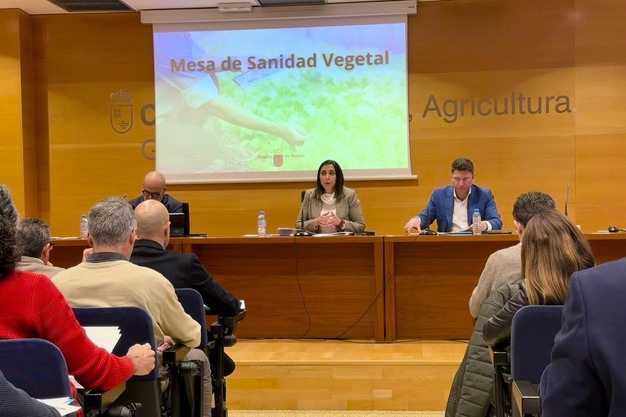 © CARM
The meeting was attended by top officials from agricultural organizations, the federation of cooperatives, and associations of fruit and vegetable growers and exporters, as well as specialized technicians. They discussed the current pest situation and its impact on crops. The sector estimates the loss of 6,100 hectares of crops, of which approximately 4,000 are lettuce, 1,500 are brassicas, 300 are celery, and 300 are artichokes.
During the meeting, the team reviewed potential phytosanitary threats to the Region's crops based on past seasons. The goal was to anticipate requests for exceptional authorizations and ensure growers have access to necessary products when required.
Issues such as the reduced effectiveness of certain authorized active ingredients, the status of current exceptional authorizations, and the sector's needs for phytosanitary protection were also discussed.
The Regional Minister briefed the sector on the actions taken by the Government of Murcia, in collaboration with Andalusia and the Valencian Community, to request Emergency measures from the Ministry of Agriculture, Fisheries and Food. This initiative tackles the issues faced by the agricultural sector due to limited tools for pest control affecting fruit and vegetable crops.
Rubira and her counterparts in both autonomous communities sent a joint letter to Minister Luis Planas requesting "an urgent meeting and the adoption of exceptional solutions."
The three communities warn that the gradual removal of active substances, along with the impacts of climate change and rising commercial demands, is threatening farm production and profitability.
"We have requested that the emergency mechanisms outlined in European regulations be used swiftly to enable exceptional authorizations when there is a serious risk to production," Rubira stated.
Rubira emphasized that this situation causes a comparative disadvantage and reduces the competitiveness of Spanish growers compared to producers in other EU countries that possess these tools.
For more information:
Region of Murcia
www.carm.es