The use of drones in crop protection was one of the topics drawing the most attention at the 18th Plant Health Symposium, held in Seville from March 4 to 6, 2026. Researchers, technicians, and public authorities gathered to discuss the technology's potential, which the sector sees as significant, although still limited by regulatory constraints.
According to Carlos León, president of the Colegio Oficial de Ingenieros Técnicos Agrícolas de Andalucía Occidental, the organization behind the event, the symposium takes place at a particularly important moment for European debates on phytosanitary regulation and emerging technologies. "We are very excited about the level of interest this edition has generated again. There is enthusiasm and responsibility, which are both very important," León said about the opening of the event, noting that the forum offers an opportunity to present concrete proposals for future European regulations.
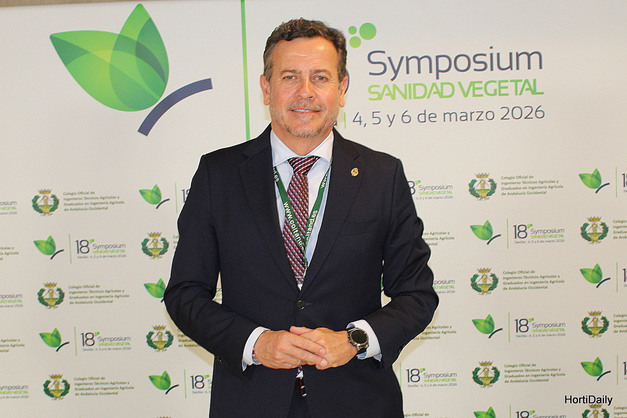
At the moment, the European Union is discussing the so called Omnibus simplification regulation, an initiative aimed at reviewing several regulatory frameworks linked to the agricultural sector. "In that context, the symposium can contribute technical and scientific knowledge that helps improve some aspects of the legislation," he explained.
One of the main debates concerns biorational products, substances considered safe for human health but whose authorization process remains slow. León warned that as the number of available active substances continues to decline, it will become increasingly important to accelerate both registration procedures and the technologies used to apply crop protection products. "If we continue to have fewer active substances, we have to speed up the processes. And that also includes application with drones," he said.
"Drone spraying can be more sustainable than ground application"
For agricultural drones, the main barrier is not technological but regulatory. These devices are currently classified as aircraft, meaning they fall under airspace regulations and the supervision of aviation authorities. According to León, this classification creates restrictions that do not reflect how these systems actually operate in agricultural settings.
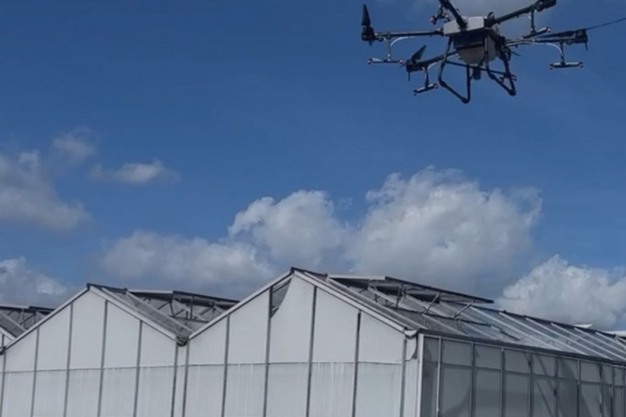
Research carried out in recent years suggests that drone based applications can be even more precise than traditional methods. "It has already been shown that aerial application with drones results in less drift and can therefore be more sustainable than even ground based spraying," he said.
 © Quality Drone Coating
Unlike traditional agricultural aircraft that operate at higher altitudes and may generate product dispersion, drones typically fly only two to three meters above the crop, significantly reducing the risk of contamination of nearby water bodies or surrounding areas.
Simplifying product registration
Another major challenge is the registration of plant protection products for aerial application. Under current European rules, a specific registration is required for this type of use, which significantly limits the number of authorized products.
"At the European level, there are very few products registered for aerial application," León said. "This is why the sector is calling for products already authorized for ground application to also be allowed for use with drones."
Such regulatory adjustments would allow growers to take full advantage of the technology, enabling more localized treatments, reduced drift, and more efficient use of crop protection inputs. Beyond regulatory challenges, the sector broadly agrees that drones could become a key tool in the future of plant health management. Their ability to carry out highly targeted applications allows treatments to be applied precisely where phytosanitary problems appear.
"We can apply products much more locally, exactly where the problem is, with less drift," León explained. This approach not only benefits the environment but also reduces costs for growers by lowering phytosanitary product consumption.
From this perspective, the combination of drones, new biorational substances, and more agile regulatory frameworks could significantly transform how pests and diseases are managed in crops. "The objective is clear," León concluded. "To control pests and diseases in a more efficient way."