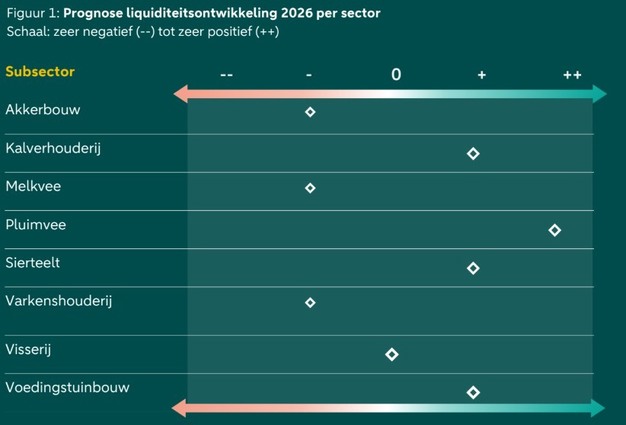
ABN AMRO considers the outlook for the greenhouse horticulture sector in the Netherlands positive after reviewing the sector's liquidity position. However, the bank warns that geopolitical tensions in the Middle East could push up energy prices, which would affect greenhouse horticulture more strongly than less energy-intensive sectors.
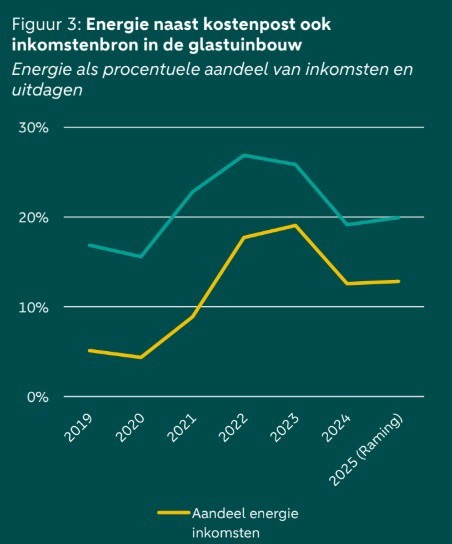
Energy costs account for around 20 percent of total costs in greenhouse horticulture. According to ABN AMRO, the energy crisis of 2022 prompted many greenhouse companies to improve their preparedness for volatility in energy markets. Some businesses are even able to benefit from higher prices because they produce electricity themselves.
Growth highlights tomato acreage
In its latest sector report, the bank reviews income developments in the greenhouse industry in 2025 (link in Dutch). Based on discussions with market participants, ABN AMRO expects that the area of lit tomato production has recovered to pre-crisis levels after several difficult years and could start expanding again. The report also notes that prices for several greenhouse crops in the Netherlands were strong at the start of 2026, partly due to production issues in key import countries.
The bank anticipates growth in the lit tomato area in 2026. Analysts say growers are responding to demand from European retailers following lower production volumes in Spain and Morocco. However, higher energy prices resulting from the conflict involving Iran could disrupt this trend. It remains uncertain how long the conflict and the resulting volatility in energy markets will last, and whether the business case for lit production could be structurally affected.
Sector economist Agri & Food Jelmer Schreurs explains: "The situation is different from 2022. Energy prices are still considerably lower, it is unclear how long the current increases will persist, and greenhouse companies have invested heavily in sustainability. Supported in part by the SIG&F subsidy scheme, growers have invested in energy-efficient LED lighting, for example, and have reduced their natural gas consumption." The bank did not quantify the expected growth.
 © ABN Amro
Well prepared
The report also focuses on developments in the energy market and their impact on greenhouse horticulture. ABN AMRO refers to an internal survey conducted among its greenhouse horticulture clients in 2022 during the energy crisis.
The survey showed that companies in the sector were actively managing their energy strategies. At the time, 71 percent of respondents said they had a clear understanding of their energy position, and 55 percent worked with an external adviser. Only 12 percent indicated that their energy purchases were not secured through long-term contracts. Most companies had a mix of gas and energy contracts, meaning that sudden price fluctuations had only limited impact on business results.
 © ABN Amro
ABN AMRO expects that growers have taken additional steps since the energy crisis. Since 2021, the sector has reduced fossil energy consumption by about 20 percent through investments in energy-saving technologies and alternative energy sources. Energy management within companies has also become more professional.
Higher energy prices do not necessarily have a negative impact on every greenhouse business. Slightly less than half of the companies in the sector also produce energy. Greenhouse companies generate energy through combined heat and power systems (CHP), converting natural gas into electricity, heat and CO₂ using generators. These installations supply around 12 percent of the Netherlands' electricity demand and help stabilise the power grid.
Before the COVID-19 pandemic, energy revenues accounted for about 5 percent of greenhouse growers' income on average. During the 2022 energy crisis, this rose to 19 percent, before stabilising at around 12 percent in 2025.
However, not every greenhouse business has a CHP installation, and energy demand and production levels vary widely between companies. As a result, financial results across the sector can differ significantly, the bank notes.
Source: ABN Amro