A research team composed of plant virologists from the Plant Virus Department at Leibniz Institute DSMZ-German Collection of Microorganisms and Cell Cultures, the Italian National Research Council and BASF-Nunhems Italy, has recently published the findings of a scientific collaboration on investigating the occurrence of resistance-breaking strains of tomato spotted wilt virus (TSWV) in tomato and pepper fields. The results, which prove for the first time the emergence of double resistance-breaking strains (D-RB) of TSWV in agricultural settings, have been published in Virology.
A novel scenario in agriculture
The study highlights an emerging risk in the management of tomato spotted wilt virus, one of the most devastating plant viruses, given its ability to infect a large number of ornamental and vegetable crops worldwide, including tomato and pepper. Upon infection, the crop yield is reduced, and in severe outbreaks, entire fields suffer substantial economic losses. Traditionally, the most effective strategy to limit TSWV has combined the use of resistant cultivars with control of insect vectors. This study reports a new scenario occurring in the field.
"Because resistance to TSWV in tomato and pepper is based on different genes, alternating cultivation of tomato and pepper varieties has long been considered a safe and sustainable strategy to reduce the risk of outbreaks associated with the emergence of resistance-breaking virus strains. Our study reports a novel scenario, where TSWV strains capable of overcoming resistance in both crops have been identified," says Dr. Paolo Margaria, leader of the group Discovery and Diversity at the Plant Virus Department at DSMZ.
 © DSMZ
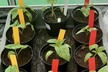
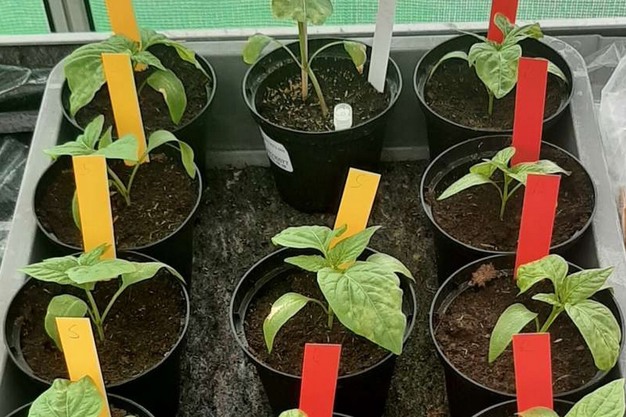
Biological assay to assess the resistance-breaking potential of tomato spotted wilt virus strains in pepper genotypes
Impact of research findings on agronomic practices and disease management strategies
The study highlights that certain agronomic practices, including the alternation of resistant cultivars or cultivating resistant tomato and pepper crops in close proximity, may unintentionally favor the selection and spread of these more aggressive virus variants. This scenario has already occurred in Italy, and may apply to other areas globally.
"Our findings open new perspectives on production systems in which tomato and pepper are cultivated in close proximity, and call for a reassessment of current agronomic practices and disease management strategies. In particular, we recommend systematic screening for D-RB strains of TSWV wherever the two crops are grown near to each other. Monitoring and adapted management approaches will be essential to reduce the risk, spread, and impact of these novel virus strains and preserve crops production," says Margaria.
Of interest, in the context of the study, the accurate molecular characterization of genome sequences of the D-RB strains evidenced the occurrence of an amino acid residue in the movement protein that allows the virus to break the resistance and had so far not been revealed in Italian settings. Overall, the research results provide a significant, valuable resource for studying resistance mechanisms and plant responses in crops of major relevance.
Source: phys.org/news