The first quarter of 2026 has highlighted both the challenges and the capabilities of modern greenhouse production in Greece. According to Andreas Lypas, Co-Founder of Fertile Land, precise agronomic management has proven essential during a particularly demanding winter season.
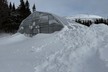
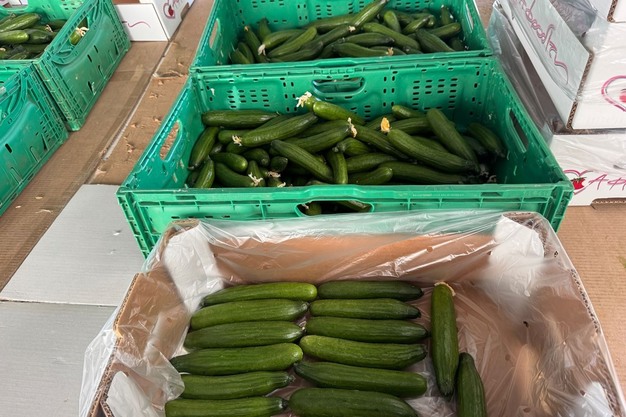
"It has been one of the most demanding and rewarding periods for our team," Andreas shares. One greenhouse partner producing mini cucumbers faced external temperatures dropping to –6 °C. "Despite the pressure, through precise crop steering, climate strategy, and nutrition management, we managed to keep the crop vigorous and productive."
Maintaining plant health under these conditions allowed the grower to sustain output during a difficult market window. "Healthy plants during the most difficult period of the season meant the grower could benefit from exceptionally strong market prices," he explains. "This is exactly what modern greenhouse horticulture is about: turning challenges into opportunities through science and expertise."
 © Fertile Land
New season plantings underway
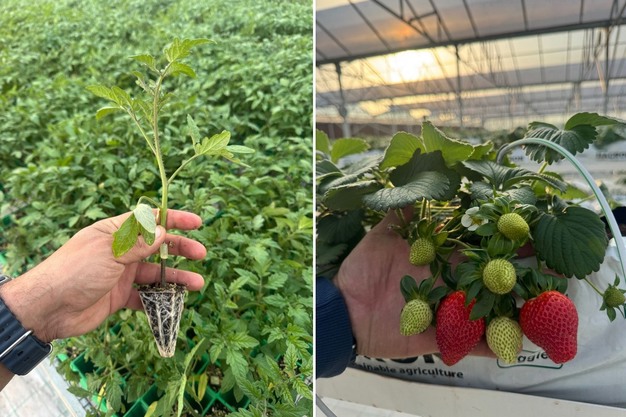
Across the consultancy's network, the spring production cycle is already well established. "Ten out of our fifteen clients have successfully planted tomatoes and cucumbers," he notes. "The crops are establishing strongly under controlled greenhouse environments."
To support the growing workload and expand field-level monitoring, Fertile Land has recently strengthened its technical team. "Three new agronomists have joined us to reinforce on-site technical support and crop monitoring," he says.
The consultancy places strong emphasis on frequent greenhouse visits, sensor calibration, and real-time crop performance analysis to guide irrigation, pruning, and climate decisions.
Investment momentum in Greek greenhouse production
Alongside operational progress, investment in new greenhouse infrastructure is also increasing. One of the company's key milestones this year is the development of a large-scale project in central Greece.
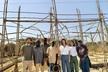
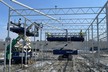
"We are currently developing a 10-hectare greenhouse project in Sterea Ellada. It's a significant investment and a strong signal that confidence in high-tech greenhouse production in Greece is growing."
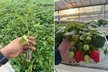
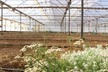
Meanwhile, production at existing facilities continues to progress. "Our 2.5-hectare greenhouse in Thessaloniki is currently reaching its peak harvest period," he adds. "The strawberries are delivering outstanding quality and consistency."
 © Fertile Land
Integrating energy and crop management
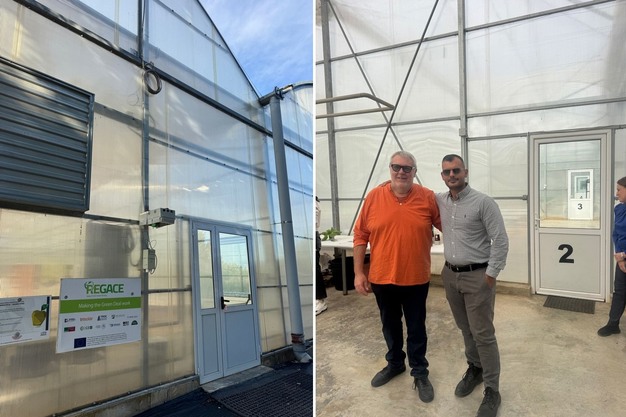
Looking ahead, Lypas sees increasing potential for integrating greenhouse crop management with energy systems, including agrivoltaic technologies explored through the REGACE initiative.
"Over the last five years we've seen a clear shift toward high-tech greenhouse infrastructure and data-driven crop management in Greece," he explains. "Projects like REGACE add an energy intelligence layer that can help growers manage light, climate and plant performance as a single system."
Technologies such as adaptive photovoltaic shading and CO₂-linked climate control could help maintain stable photosynthetic conditions while reducing heat stress during Mediterranean summers.
"We're particularly interested in how dynamic shading can respond to real-time metrics such as VPD, radiation and CO₂ levels," he shares. "Managing energy, light and plant health together is the next step for greenhouse production."
 © Andreas Lypas
Building the next generation of greenhouse farming
He believes the progress seen this season is a very good sign. "We are proud to support growers who are willing to push the limits and build the next generation of greenhouse production in Greece."
With new investments underway and the season only beginning, he believes the momentum in the Greek greenhouse sector is likely to continue building throughout 2026.

For more information:
Fertile Land Ltd
Andreas Lypas, founder
+44(0)7438194307
71-75 Shelton Street, London
[email protected]
[email protected]