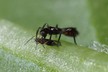
Aphids are emerging as a growing threat to open field crops in Murcia region and Andalusia region, raising concerns among growers and regional authorities about millions in potential losses, abandoned hectares, and risks to employment in two of Europe's most important fruit and vegetable producing areas.
In Murcia region, the regional Ministry of Agriculture has joined forces with Andalusia region and Valencian Community to send a joint letter to the Spanish Ministry of Agriculture, Fisheries and Food requesting "an urgent meeting and the adoption of exceptional solutions," according to regional agriculture councillor Sara Rubira.
Rubira explained that the progressive withdrawal of certain active substances, climate change, and growing commercial requirements are undermining farm profitability. She also warned that other European countries such as Portugal, Italy, Greece, Germany, Slovenia, and France have already authorized certain products under exceptional conditions that are still not permitted in Spain, creating what she described as "a clear competitive disadvantage and loss of competitiveness" for Murcian producers.
Among the areas most affected are the Guadalentín Valley, the Campo de Cartagena, and the surroundings of Pulpí.
According to Plácido Pérez Chuecos, president of the farmers' organization COAG Lorca, the outbreak could have "catastrophic" consequences if action is not taken quickly.
"Producers feel completely defenseless when it comes to protecting their crops," he said. "When products are repeatedly rejected in international markets, the only option left is to plough the fields or abandon the crop, with the corresponding economic losses."
In Andalusia region, the situation has worsened following recent rainfall. During the Symposium on Plant Health, regional agriculture minister Ramón Fernández Pacheco warned that between 60% and 70% of the open field vegetable production area in eastern Almería is already affected, particularly lettuce and spinach crops.
Fernández Pacheco stressed that climate change, international trade flows, and supermarket requirements regarding the absence of pests are all influencing the spread of plant diseases and pests.
The minister noted that although integrated pest management techniques are being applied, including biological control, biopesticides, and cultural practices, insect populations and plant diseases continue to increase year after year.
For this reason, he has asked agriculture minister Luis Planas to establish an extraordinary technical working group on plant health, bringing together regional governments, scientists, companies, and public administrations to analyze and approve measures needed to protect crops and ensure the sector's profitability.
Both in Murcia region and Andalusia region, growers and authorities agree that the lack of effective phytosanitary tools against aphids and other pests threatens the economic stability and competitiveness of fruit and vegetable farms, especially while other European countries are already applying exceptional solutions to protect their growers.
Pressure on the central government is therefore increasing, with the sector calling for immediate responses to prevent the current campaign from turning into an irreversible blow for thousands of farming families.
Source: laopiniondemurcia.es and diariodesevilla.es