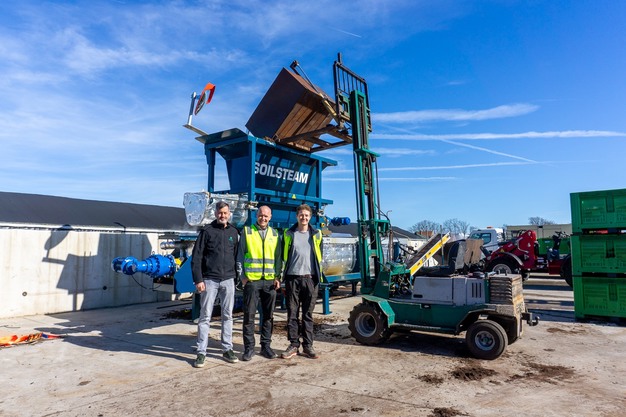
This season, SoilSteam conducted a full-scale steaming of substrate at the Belgian strawberry company Elmi in Hoogstraten. The demonstration aimed to prepare substrate for five different growers and test the process on a production scale. The operation brought together Hans Kristian Westrum of Soil Steam, Ruud Elst of Elmi, and Peter Melis of Proefcentrum Hoogstraten.
Hans Kristian Westrum, SoilSteam, explained the focus of the activity: "We ran tests last year to see how steamed substrate performs across different teelt types and scales. Thanks to the result and the trust these growers have in the procedure, we can now observe practical outcomes directly in growers' operations, not just in a research setting."
 © Arlette Sijmonsma | HortiDaily.com
The process on location
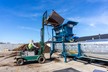
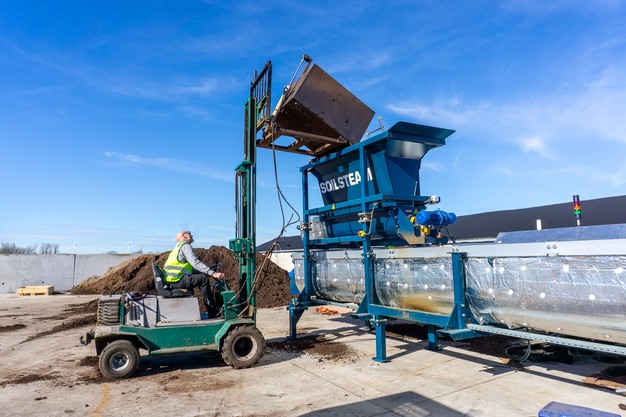
The steaming took place using a mobile installation equipped with a screw conveyor system, which ensures that every particle of the substrate passes through the steam chamber. The substrate itself consisted of a standard horticultural mix: peat, coconut coir, and perlite. The team treated a total of 2,500 cubic meters, targeting the removal of weeds, root pathogens, and residual organic material from previous cycles.
Energy consumption for the process varied from 10 to 90 kW per cubic meter, depending on the moisture content and density of the substrate. Hans noted that the system is designed to handle larger volumes and can be automated, enabling growers to integrate the process into routine substrate management.
"The mobile setup allows us to treat substrate on-site without the need to transport it elsewhere," Hans added. "This is especially relevant for growers handling substantial volumes over a full growing season."
 © Arlette Sijmonsma | HortiDaily.com
Applications for Elmi's operations
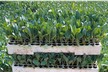
At Elmi, the steamed substrate will be applied across multiple cultivation types, including standard plantings and everbearers. The trials aim to determine the operational feasibility and plant responses for different cultivation schedules, from short-term spring crops to extended autumn or year-round production.
According to Peter Melis of Proefcentrum Hoogstraten, who has been involved in prior substrate research, steaming provides a comparable alternative to fresh substrate. "In earlier experiments, we observed that plants in steamed, reused substrate developed similarly to those in virgin substrate. This included growth, root development, and fruit yield," Peter explained. "Previous methods of substrate reuse did not produce results on par with fresh material, but steam treatment has matched—and in some cases slightly exceeded—those standards."
The 2026 trial at Elmi extends previous work by evaluating full-scale application and examining the impact of steaming on different substrate compositions. Last year, the research center also tested mixing steamed substrate with fresh substrate in ratios of 20%, 40%, 60%, and 100%. All ratios produced consistent growth, though Peter noted that lower proportions of steamed substrate occasionally yielded marginally higher fruit production.
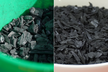
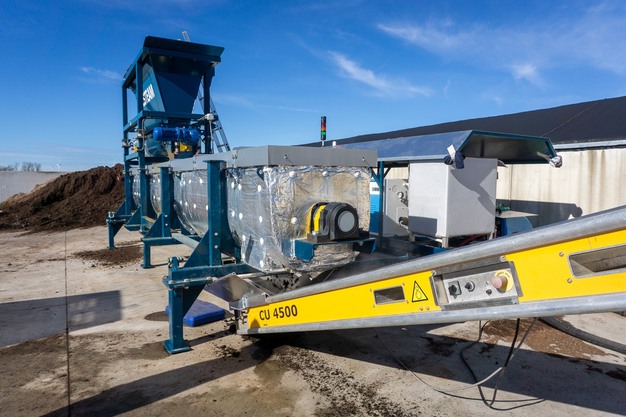 © Arlette Sijmonsma | HortiDaily.comthrough the automated screw system and steamed untill clean
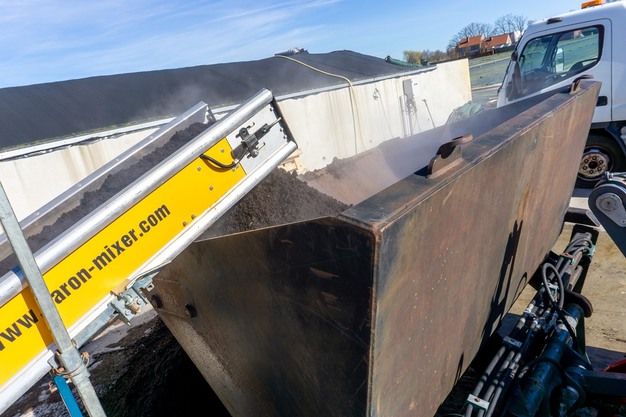 © Arlette Sijmonsma | HortiDaily.comHot and steamy that is!
Observations from past trials
Research on steamed substrate has been ongoing since 2025. In the first half of that year, Soil Steam and Proefcentrum Hoogstraten conducted experiments comparing reused, steam-treated substrate with virgin substrate for strawberry production. The study measured plant growth, root development, fruit yield, and storage longevity. Melis led the research and confirmed that the steaming process successfully removed pathogens without adversely affecting substrate structure.
Hans Kristian Westrum emphasized that the process does not change the physical composition of the substrate: "The steaming kills pathogens and weeds, but it does not alter the particle size or structure. Plants respond according to the same growth patterns expected from untreated fresh substrate."
One of the findings from previous trials was that reused substrate can slow plant development even when disease-free. Hans explained, "Even if the plants are healthy, reused substrate often hampers growth due to residual microorganisms or organic compounds. Steaming neutralizes these factors, allowing plants to develop consistently."
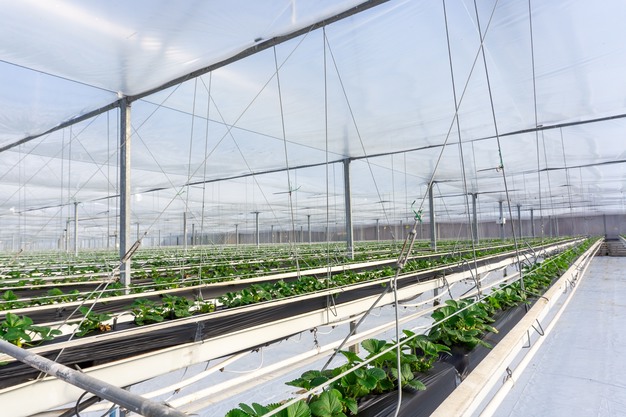
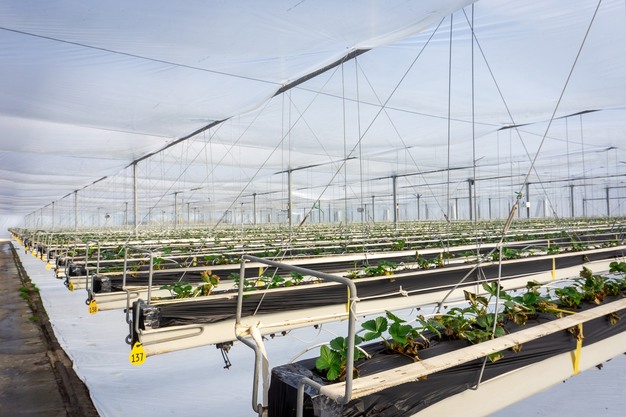
The process has also been tested in various teelt environments, including plastic tunnels, glasshouses, and open-ground plantings. Steamed substrate has been applied to both short spring cycles and longer autumn or continuous cycles, providing growers with a broad perspective on its operational implications.
 © Arlette Sijmonsma | HortiDaily.com
 © Arlette Sijmonsma | HortiDaily.com
Operational considerations
Elmi's trial not only examines plant responses but also evaluates energy use, scalability, and integration with routine operations. Hans Kristian Westrum noted that growers with large annual substrate requirements—exceeding 1,000 cubic meters—could implement on-site steaming to reduce reliance on purchased fresh substrate. The automated screw system in Soil Steam's mobile installation ensures uniform treatment and can be integrated with conveyors for loading and unloading.
"I know there will be a lot of growers that want to know something about the cost", Hans says. "The energy use if 10-40 KW is off course depending on the cost of the energy source, but it will most likely be less than EUR 5 m3. On top of that there are the cost of the machines which depend on how many m3 you treat per year."
He accumulates: "If you only treat 1000 m3 per year the cost will be around EUR 60, while if you treat as much as 5000 m3 per year the cost will be less than EUR 20 per m3. If you steam 10.000 m3 per year the cost will be less than EUR 10 per m3." The company is also trying to figure out if the SoilSteam machines are covered by a EU sustainable subsidy, which will cover up to 40-50% reduction in price.
Additionally, the team is exploring applications for vertical farming and hybrid systems, combining steaming with other cultivation technologies such as plant saunas. Hans said, "We are looking at how the steamed substrate interacts with different cultivation methods. The objective is to see whether the treatment is practical across multiple systems and cultivation types."
For more information:
Hans Kristian Westrum
Sales Manager at SoilSteam
Email: [email protected]
Phone: +47 4040 2090
Strawberry Research at Proefcentrum Hoogstraten
Peter Melis
Email: [email protected]
Phone: +32 3315 7052