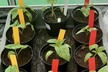
Viral diseases pose a major threat to tomato cultivation, mainly due to the lack of effective antiviral control methods.
Plant growth-promoting microorganisms (PGPMs) represent a promising and sustainable strategy for virus disease management, as, in addition to plant growth, they can promote resistance to pathogens. In this study, researchers examined the antiviral potential of selected PGPMs against three economically important and genetically distinct tomato viruses, tomato spotted wilt virus (TSWV, Orthotospovirus tomatomaculae), cucumber mosaic virus (CMV, Cucumovirus CMV), and tomato brown rugose fruit virus (ToBRFV, Tobamovirus fructirugosum) under controlled greenhouse conditions. The efficacy of each PGPM was assessed by monitoring disease development via visual scoring and DAS-ELISA. The results indicate a significant TSWV symptom attenuation upon the application of Paraburkholderia eburnea EP3 and the yeast isolate SRL248, though, without a respective reduction in virus accumulation. However, no antiviral effect was observed by any PGPM tested against CMV or ToBRFV. A targeted gene expression analysis revealed a PGPM-specific induction of salicylic acid-dependent defense and RNA silencing markers, indicating priming of host immune responses.
Overall, this work increases knowledge on the antiviral potential of PGPMs showing a strain- and virus-specific effect primarily associated with enhanced symptom tolerance.
Kotsaridis, K.; Dimopoulou, A.; Theologidis, I.; Arapitsas, N.P.; Poulaki, E.G.; Sarris, P.F.; Tjamos, S.E.; Vassilakos, N.; Beris, D. Assessing the Antiviral Potential of PGPMs Against Severe Virus Diseases of Tomato. Agronomy 2026, 16, 518. https://doi.org/10.3390/agronomy16050518
Source: MDPI