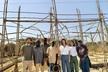
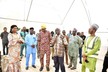
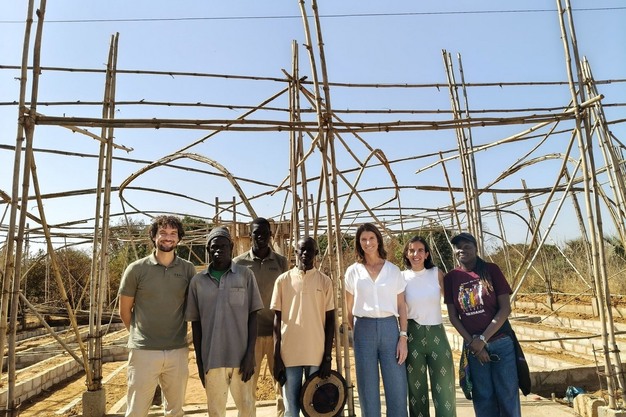
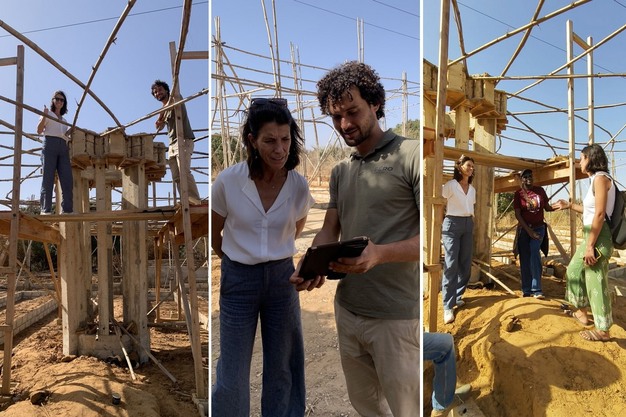
A pilot greenhouse project in Senegal recently welcomed an official visit from Carmen Hagenaars, Ambassador of the Netherlands to Senegal, alongside Viviane Ndamba Djeumen. The visit highlighted a developing greenhouse and agroforestry model designed to improve livelihoods for smallholder farmers while restoring degraded agricultural land.
The initiative is led by Féro, a Dutch-Senegalese company focused on reforestation and sustainable agriculture. The project forms part of the company's Great Green Farmers initiative, which integrates mid-technology greenhouse production with agroforestry systems.
According to Paula Medina, Project Manager at Fero Design, the company's work in Senegal began with a clear challenge.
"When we first came to Senegal three years ago, we saw that many smallholder farmers were earning around €1,000 per year or less," she explains. "That reality made it clear that any environmental solution also had to create real economic opportunities for farmers."
 © Féro
Mid-tech greenhouse designed for local conditions
The pilot greenhouse system was developed to address the region's harsh climate conditions while remaining accessible to local growers.
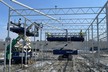
The structures are built using bamboo harvested from southern Senegal and covered with transparent polycarbonate plastic. In the near future, the company plans to transition from virgin plastic sheets to recycled plastic materials to improve sustainability further.
"Our greenhouse is designed as a mid-tech system that balances climate control with affordability," Paula says. "We regulate the key abiotic factors for plant growth, including temperature, humidity, and light. This is critical in Senegal, where outdoor temperatures can reach 40°C."
The greenhouse also incorporates passive cooling and water-efficiency measures. Rainwater collection and storage systems allow water captured during the short rainy season to be used during the extended dry periods typical of the region.
These climate controls address a key limitation of existing greenhouse structures in the country.
"Most greenhouses currently available in Senegal are low-tech structures without effective climate control. We have measured temperatures above 37°C inside some of them, which creates severe stress for plants and significantly reduces yields."
Under suboptimal temperature and humidity conditions, crop performance can decline substantially. Paulina explains that yields from uncontrolled environments can be two to five times lower than those achieved in the controlled greenhouse model.
 © Féro
Agroforestry as a complementary production system
While the greenhouse enables intensive crop production, the surrounding land is restored through a multi-layered agroforestry system.
Fruit and nut trees, including palms, mangoes, papayas, and oranges, are planted alongside shrubs and smaller crops such as pigeon peas and hibiscus. This layered ecosystem helps rebuild soil fertility, increase biodiversity, and provide additional revenue streams for farmers.
"The greenhouse provides high-value vegetable production, while the agroforest restores the land and diversifies farmers' income," she explains. "Together they create a resilient production system that works both economically and environmentally."
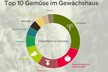
The combined system allows farmers to cultivate profitable vegetable crops inside the greenhouse, including cucumbers, peppers, and tomatoes, which are in strong demand in local markets.
Current production is based on compost-enriched soils, but the company is preparing to introduce hydroponic systems in a future project planned in southern Senegal.
Addressing climate and economic pressures
The initiative is also responding to broader agricultural challenges in the region. Rainfall patterns are becoming less predictable, and the traditional three-month rainy season is gradually shortening.
"Many farmers are facing increasingly unreliable growing conditions, and that uncertainty makes agriculture less attractive for younger generations," Paulina adds.
Rising temperatures and declining productivity have already led some rural youth to leave farming in search of opportunities elsewhere, including migration to urban areas or overseas.
The greenhouse-agroforestry model aims to demonstrate that agriculture can remain a viable and profitable livelihood.
"By combining protected cultivation with reforestation, we can transform degraded cropland into productive ecosystems. Our goal is to help farmers increase their incomes while restoring up to 80% of their land with trees and vegetation."
According to the company's projections, the integrated system could potentially increase smallholder farmers' annual income from approximately €1,000 to more than €15,000, while simultaneously contributing to landscape restoration.
The recent embassy visit provided further recognition for the pilot project and its potential role in advancing sustainable horticulture in Senegal.
For more information:
Féro
[email protected]
https://ferodesign.nl/