Dmitry Astakhov, Machulishchi greenhouse complex Director, said: "The year 2025 was truly productive for the complex. According to performance results, the enterprise ranked first in greenhouse vegetable yields among companies in Minsk District, reaching 72.8 kilograms per square meter. We harvested 4,690 tonnes of vegetables, achieving almost 73 kilograms from every square meter."
 © BELTA
The complex continues to innovate: a supplemental lighting system is now being introduced to ensure maximum yield from every square meter, even on cloudy days.
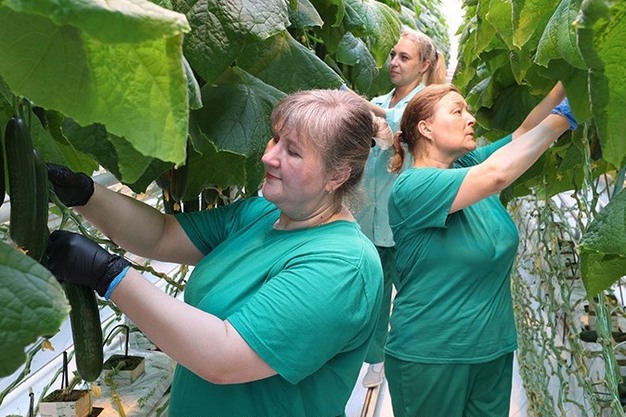
Today, the complex's products have firmly secured its place on the shelves of all major retail chains in the country. To see the journey a vegetable takes before reaching a shopping basket, visitors step into the greenhouses. After the cool director's office, it is overwhelming. At first, it feels pleasantly warm, like arriving at a southern resort. However, soon you realize how difficult it must be to work in such a hot and humid environment for eight hours, especially with physical labor involved.
Visitors are greeted by Gennady Polubyatko, head of the greenhouse production department, who proudly gives a tour of his domain. Of the vast 6.44-hectare area, almost 2.5 hectares are dedicated to cucumbers, and a significant portion of that is light-culture grown year-round.
"The majority of the area, more than four hectares, is devoted to tomatoes. Their growing cycle lasts almost a full year, from December to November. By mid-spring, the harvest is already in full swing. We rely on a proven hybrid, Xantero. Both we and our customers love it: the fruits are hefty, up to 250 g, very flavorful, and they handle transportation extremely well. In the hands of an experienced grower, this variety delivers excellent results: up to 70 kilograms of vegetables per square meter. For variety, we also grow Merlis cherry and cluster tomatoes," Gennady Polubyatko noted.
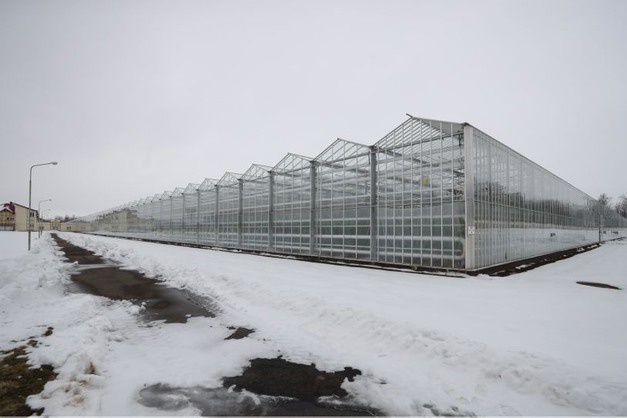
All processes in this "glass city" are fully automated. Each crop has its own microclimate. Smart sensors carefully monitor even the slightest fluctuations in temperature and humidity. If it gets too cool, the system automatically activates pumps to supply additional heat. If the sun becomes too intense, the automation gently opens the vents to let in fresh air. An operator of the highest, sixth, qualification grade continuously oversees this complex technical "orchestra", ensuring that not a single plant is left without proper attention.
A good greenhouse is not only about warmth: above all, it is about light. As Gennady Polubyatko noted, in our climate natural sunlight is critically lacking during the off-season. To ensure fresh vegetables reach tables year-round, the complex has implemented artificial supplemental lighting. This is why winter cucumbers and tomatoes cost more: their price includes significant electricity expenses.
 © BELTA
Natural protectors
The greenhouse management is convinced that vegetables must be not only safe but genuinely beneficial. That's why they rely on biological plant protection. It's one of those rare cases where ecology and economics go hand in hand: "natural" protection is cheaper than aggressive chemicals, and the result is a perfectly clean product.
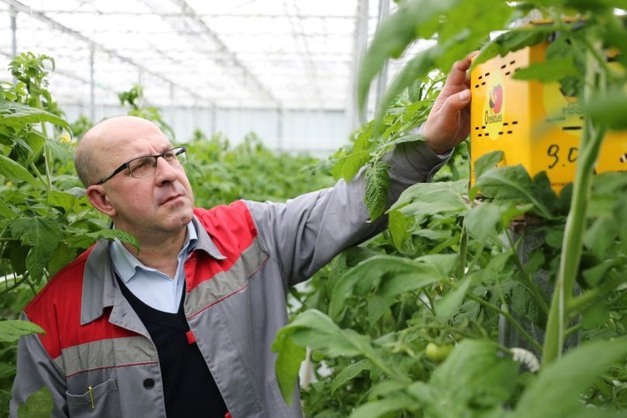
Olga Khoroshko, chief agronomist for plant protection, explains how this micro-world works. It turns out that real battles unfold in the greenhouses are hidden from the human eye. Instead of spraying pesticides, they use "natural hired protectors": predatory insects introduced into the substrate to hunt pests.
"Against spider mites and whiteflies, we deploy special units: predatory mites Phytoseiulus and Amblyseius swirskii, as well as the predatory bug Macrolophus. They are the natural enemies of those who hinder vegetable growth," Olga Khoroshko explained.
 © BELTA
One of the key roles in the growing process is assigned to bumblebees. Without these fluffy winged helpers, pollination, and therefore the harvest, would be impossible. But Belarusian bumblebees, due to their physiology, prefer to sleep through the winter. To keep greenhouse work running without interruption, the complex brings in "foreign specialists" from Spain or Israel. Bumblebee colonies of 80-90 individuals live in special hives, diligently pollinating flowers and collecting nectar under the leadership of their queen.
The atmosphere of this natural balance is complemented by an unexpected sound: in the cucumber section, crickets are singing at full volume. This is the best indicator of purity: in an environment overloaded with chemicals, such "musicians" simply wouldn't survive.
Vegetable grower's school
Behind every juicy tomato and crisp cucumber stands the work of professionals. At the Machulishchi greenhouse complex, they emphasize that the best specialists are the ones they train themselves. Almost all of the enterprise's leading experts began their careers as vegetable growers, receiving basic education in Belarus and honing their skills directly on site.
The complex runs a unique educational program and an experimental greenhouse where newcomers undergo internships, mastering both theory and practice before being allowed to work in the most advanced technological units. Training takes place "in the field": over 2-3 months of working side by side with an experienced mentor, a trainee learns all the nuances of the craft.
After passing the final exam, the employee receives an official state-standard certificate in the specialty "vegetable grower".
"Our specialists constantly upgrade their qualifications through professional courses in Belarus and Russia," Dmitry Astakhov said. "This approach allows us not only to provide people with jobs but to open real career prospects. Many of our employees have gone from vegetable grower to chief specialist."
Today, Belarusian greenhouse vegetable production is a high-tech conveyor of freshness. Last year's results are impressive: not only have we forgotten about shortages, but we have significantly increased cucumber exports, and thanks to modernization and new facilities, winter self-sufficiency in tomatoes is confidently approaching the target of 80-100%. Reduced electricity tariffs support agricultural enterprises, directly lowering prices on store shelves.
Thanks to this strategy, high-quality Belarusian vegetables are now available to every customer in every corner of the country, regardless of the season.
Belarus has set a course toward vegetable self-sufficiency: the strategy through 2027 aims to completely replace imports through year-round production. The focus is on light-culture technologies, expanding greenhouse areas and product range, and improving energy efficiency so that fresh vegetables and greens are available in any season.
Source: BELTA