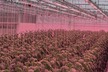
"Everything revolves around research, but innovation would be an end to itself if it were not useful to customers. Very often, they are the ones who give us suggestions for dealing with production difficulties. And we try to fulfil their requests together with our research team," reports Kostiantyn Shevchuk, Farm manager at BASF|Nunhems.
"Our research centre in Sant'Agata Bolognese is a state-of-the-art innovation hub. But the team of people working there is just as important and includes agronomists, maintenance technicians and workers, all united by a strong passion for agriculture. We work in synergy with other company departments to ensure the continuous advancement of solutions and knowledge, thereby contributing to the success of the varieties on the market. Our team mainly supports research on crops such as tomatoes, watermelons and peppers."
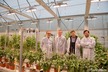
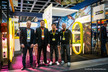
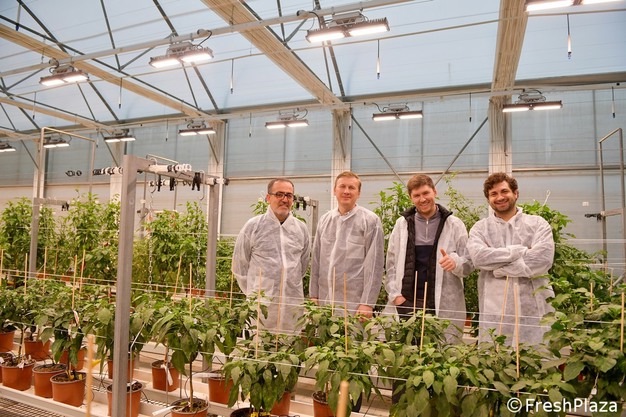 © Cristiano Riciputi | HortiDaily.comLeft to right: Raffaello Montanari (C-LED) Kostiantyn Shevchuk and Dan Bordea (BASF|Nunhems) and Cristian D'Elia (C-LED)
Research never stops. In the spring/summer period, the number of people employed exceeds 50, but the work of the geneticists continues even in winter with the identification and multiplication of parental lines.
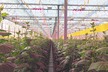
"Our work takes place in different agronomic environments, from the open fields to state-of-the-art high-tech greenhouses. As far as the open fields are concerned, soil health is a central element for us. Healthy soil ensures proper crop growth, which is essential for our breeding colleagues, as they need to be able to see the strengths and weaknesses of a variety in the fields," explains agronomist-technician Dan Bordea.
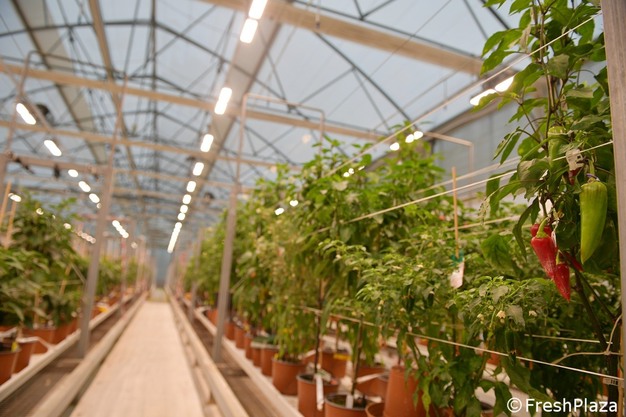
"As far as high-tech environments are concerned, the elements to be controlled are temperature, humidity, nutrients, artificial light in the dark months, etc. From these needs comes our collaboration with C-LED, which provides us with sustainable and high-quality artificial lighting solutions."
The winter of 2025-2026 was quite dark, with many cloudy days until mid-February. Research, however, cannot slow down depending on the weather conditions, which is why the choice of artificial lighting is also becoming increasingly strategic in research centres.
 © Cristiano Riciputi | HortiDaily.com
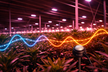
"We all know what the advantages of LED lamps are compared to HPS lamps: lower energy consumption, lower CO2 emission, longer service life, good safety characteristics, adjustable spectrum. This last feature is very important for us, because it gives us the possibility to shape the plants morphologically, trigger defence mechanisms, and anticipate or delay a phenological phase such as flowering."
BASF|Nunhems' tomato, watermelon and pepper research does not only focus on production aspects. Resistance to diseases, environmental stresses (drought, high temperatures and temperature fluctuations) as well as the organoleptic characteristics of the fruits are an integral part of the researchers' objectives.
"The collaboration between C-Led and the experimental centre in Sant'Agata Bolognese began almost ten years ago: in recent years, there has been a continuous dialogue to support the lighting requirements of BASF|Nunhems researchers. Each new project has been defined in relation to the plant species of interest, the different phenological phases and the production objectives of each individual greenhouse," explains Raffaello Montanari, C-Led sales manager.
Cristian D'Elia, technical manager, adds that "The application of C-LED solutions with the COMBO product range within the experimental greenhouses shows how artificial light is now a fundamental parameter for advanced agronomic research. By guaranteeing an optimised light spectrum for tomatoes, watermelons and peppers, our artificial lighting not only supports faster and more uniform growth cycles, but also makes it possible to replicate ideal climatic conditions at any time of the year, thereby accelerating the process of innovation and varietal selection."
 © Cristiano Riciputi | HortiDaily.com
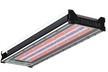
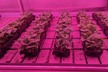
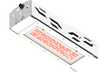
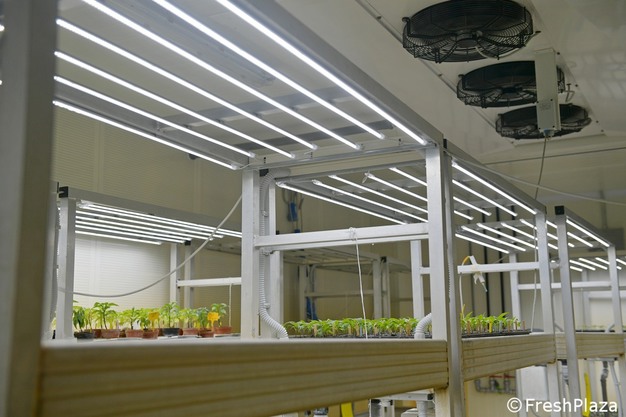
"Light is an essential element in full-indoor environments, particularly in climatic chambers dedicated to phytopathology where lighting is provided exclusively by linear LED systems from the SLIM range. These controlled environments are designed to provide highly standardised and reproducible experimental conditions, allowing researchers to conduct 'in vivo' tests on plants subjected to various diseases. Within these chambers, researchers develop pathology tests by inoculating specific pathogens of interest in a controlled and safe manner on plant material selected by genetics colleagues (breeders), and monitoring plant response under optimised microclimate conditions to promote the development of target diseases."
"The use of adjustable LED lighting systems allows different light intensities to be simulated, replicating precise environmental scenarios. These protocols are crucial for genetic improvement (breeding) activities, as they aim to identify and select plant lines with desired agronomic traits, including genetic resistance to specific diseases. Through phenotypic evaluation under controlled conditions, it is possible to validate the efficacy of introduced resistances and select promising new hybrids, which can then be proposed for commercialisation."
"We support BASF|Nunhems in overcoming seasonal limitations, taking the efficiency and reliability of variety testing to a new level. We are, of course, very proud to work with such an innovative and cutting-edge research centre and this allows us to hone our skills in high-tech soilless cultivation," concludes Montanari.
For more information:
C-LED 
Via Gambellara, 34
40026 Imola (BO) - Italy
+39 0542 654980
[email protected]
www.c-led.it
Nunhems Italy SRL 
Via Ghiarone 2
40019 S.Agata Bolognese BO
www.nunhems.com/it