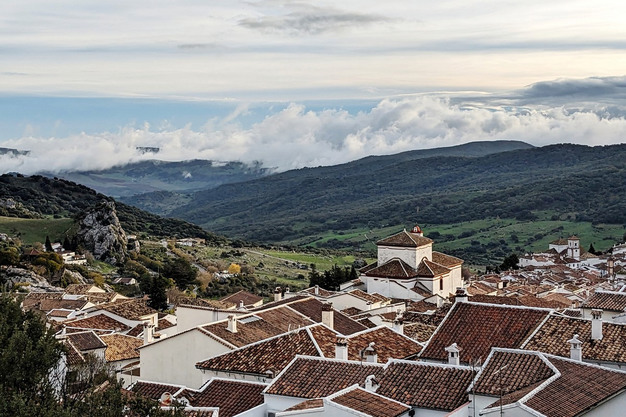
Nearly all residents of the small town of Grazalema have now returned home, after the entire population was forced to evacuate twenty days ago following the historic rainfall recorded in early February. The exceptional weather event caused the saturation of the aquifer beneath the town, making it necessary to assess the geological safety of the area before residents could return.
While this extraordinary episode has once again placed Grazalema in the international spotlight, the town's reputation stretches back centuries. Wool production, around which a thriving textile industry developed, once made Grazalema known across Europe. However, around two hundred years ago, the Industrial Revolution and the loss of competitiveness to regions with better railway logistics shifted the production of cloths and blankets elsewhere. The activity that had once put Grazalema on the map gradually declined, to the point where of the more than twenty five textile mills that once operated in the town, only one remains active today.
 © Maslana
Since then, many residents were forced to leave this white village in the mountains of Cádiz, but new settlers also arrived. Among them was Dutch national Fred Guelen, who through the Fundación Grazalema Regenerativa has helped drive the revival and transformation of this historic local resource, wool, into a one hundred percent natural and sustainable solution for intensive agriculture, supporting the Maslana project.
Maslana: sheep wool puts Grazalema back on the European agricultural map
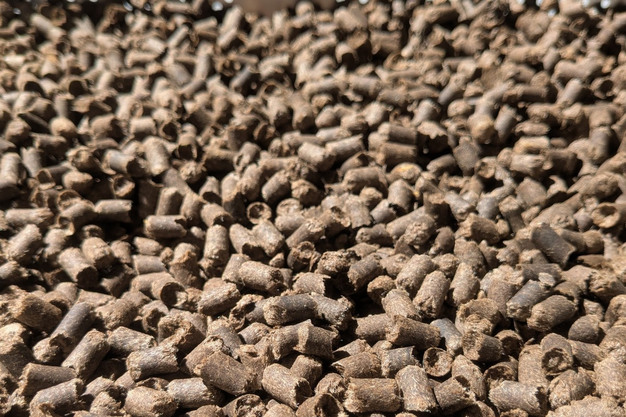
Maslana has developed a sheep wool pellet for agricultural use, an organic fertiliser that provides nutrients while improving soil structure and water retention.
"With the emergence of synthetic fibres and the closure of some markets to Spanish wool, a large share of the wool produced nationally has fallen into disuse. High quality Merino wool for textiles still exists and is highly valued, but there is also a lot of wool that finds no outlet. Our goal was to give value to a material that today is practically a waste product for farmers," explains Juan Baena from the foundation.
 © Maslana
"We are in a situation where many livestock farmers are not paid for their wool, or it costs them more to bring in the shearer than what they earn from it. We buy that wool at a fair price so that it stops being a problem and becomes part of the value chain and the circular economy."
Lanopellet: a natural NK fertiliser
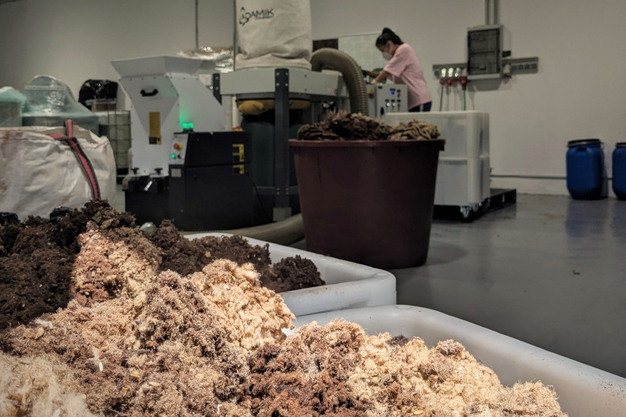
Maslana's flagship product is its wool pellet, marketed under the name Lanopellet. "It is additive free wool, one hundred percent natural, processed only through a mechanical pelletising process in which lanolin, the sheep's natural wool grease, acts as a natural binder. The pellets are then dried and packaged."
"From an agronomic perspective, the pellet has interesting nutritional characteristics, with more than eight percent nitrogen and around four percent potassium, making it a slow release NK fertiliser."
But its advantages go beyond nutrition.
Water retention and soil structure improvement
One of the strongest features of Maslana's wool pellets is their water retention capacity, thanks to the hygroscopic nature of wool. "Wool retains moisture, allowing irrigation intervals to be extended, which is extremely important in areas with limited water resources or dry climates. Under certain conditions, savings of up to two point five million litres of water per hectare per year can be achieved," says Álvaro Benítez, manager at Maslana.
 © Maslana
In addition, the pellet improves soil structure, especially in degraded soils or, as seen in Grazalema itself, soils affected by heavy rainfall that causes the loss of soil and nutrients. "When you mix pelletised wool into stressed soil, you improve its structure, aeration and water holding capacity. It is a very interesting solution for intensive agriculture looking for organic alternatives," he adds. "On top of that, it has a deterrent effect against slugs and snails, which is also highly valued in horticulture."
A market still to be built in Spain
While the wool pellet market is more developed in countries such as Germany, it was practically non existent in Spain before the creation of Maslana. "Commercialisation of our pellets began on 1 January, after obtaining the necessary authorisations from the Ministry, a process shaped by SANDACH regulations on animal by products not intended for human consumption, which extended the administrative timelines."
"The recent rains and the evacuation of the town caused a logistical pause, but activity has now resumed and while starting something new is always challenging, it is also very exciting."
"For now, we are doing a significant amount of educational work, establishing contacts with distributors and farmers, because this is a largely unknown product. But our objective is clear. In addition to being pioneers in the production of wool pellets in Spain, we want to be the reference point and the driving force behind a new industrial model that could grow in other regions, offering an important solution for livestock farmers and a new future opportunity for rural towns that are gradually losing population. Removing a waste product from the equation and reintegrating it into the value chain as a circular and sustainable solution."
 © MaslanaFor more information:
Maslana
Calle de las Piedras 47
11610 Grazalema Cádiz (Spain)
[email protected]
https://maslana.es