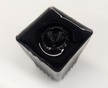
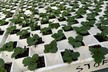
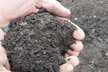
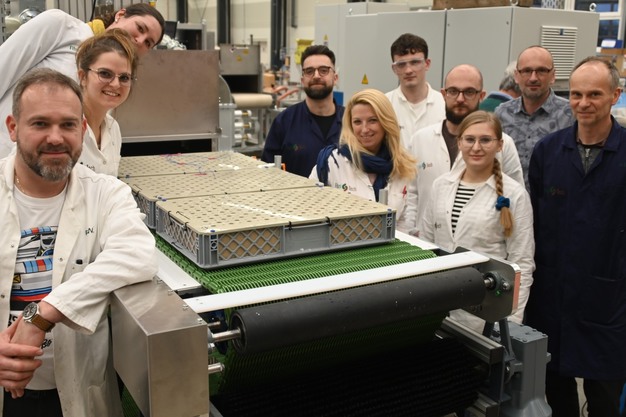
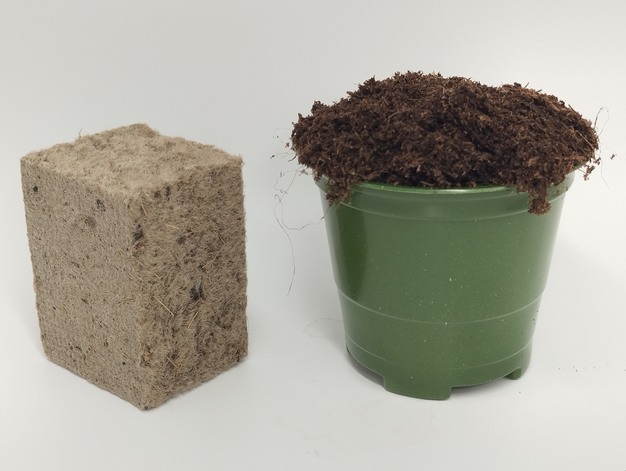
FibriTech has developed a new substrate made primarily from virgin cellulose fibers, enriched with green compost and reinforced with a small amount of coir. Through a unique manufacturing process, these natural raw materials are transformed into a structural, spatial biomaterial — without the use of chemical glues. By expanding and interconnecting the cellulose fibers, the company creates a stable and high-performing growing medium.
According to inventor and founder Tomasz Ciamulski, the strength of the product lies in how the components work together: cellulose provides the structure, green compost supports biostimulation and stability, and coir improves workability. The agricultural version, marketed as FibriAgri® substrates under the commercial leadership of Tomislaw Krężelewski, was developed with growers' key concerns in mind. When considering alternative substrates, growers typically ask whether a product could harm plants, introduce diseases, or disrupt operations. FibriTech says its material choices and production process were carefully designed to address exactly those questions.
He explains the most important aspect of these materials is that they are 100% peat-free and renewable, helping growers meet increasingly strict environmental regulations without sacrificing performance. "Unlike raw peat or loose organic mixes, our materials undergo a high-temperature manufacturing process that renders them clean, eliminating the risk of introducing soil-borne pathogens or pests like fungus gnats into your greenhouse. We have rigorously tested these ingredients for phytotoxicity to ensure they are chemically neutral and safe for sensitive root development."
The resulting solid structure does not crumble, providing a clean working environment and eliminating the need for plastic pots or trays in many applications. Furthermore, because the materials are fully biodegradable, the used substrate can be composted or converted into energy through biogasification instead of generating costly waste.
 © Fibritech
 © Fibritech
All very nice – but who will use the new material? According to Tomislaw, FibriAgri is highly versatile and has been successfully proven with a wide variety of crops. "However, we see the most immediate and significant potential in specific high-value segments."
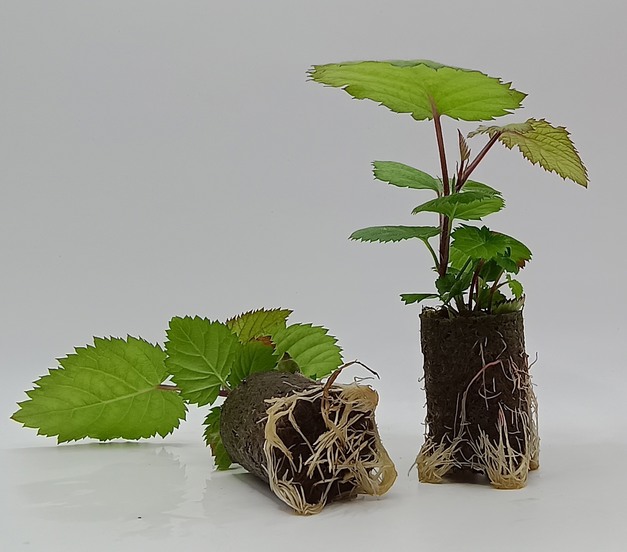
One of them is the acclimization of in-vitro plantlets. "This is where our exceptional microbiological cleanliness is paramount. Plants transitioning from sterile lab conditions are highly vulnerable; our substrate is free from soil-borne pathogens upon delivery, which drastically reduces mortality rates during this critical stage. This advantage alone positions FibriAgri as essential for tissue culture operations."
 © Fibritech
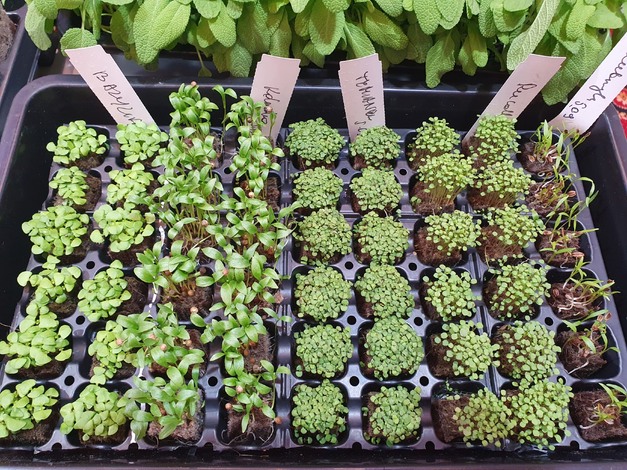
The second: propagation across the spectrum. "The product is highly effective for the broader propagation sector, specifically for rooting herbaceous cuttings and starting seedlings, where our solid plug protects delicate root systems during transplanting and eliminates transplant shock. For microgreens, our substrate raises the bar: our clean, dust-free plates have demonstrated higher fresh harvest weights compared to hemp or peat alternatives. All without fungus growth issues", says Tomislaw.
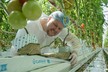
Third are general hydroponics and vertical farming. "Because the substrate is dimensionally stable and does not crumble, it is uniquely suited for hydroponics and vertical farming systems (like gutter systems, flood tables or DWC) where preventing filter clogging and maintaining a clean water loop is critical. This opens the door to the leafy greens market, where retail demand for fresh produce cultivated in 100% peat-free, sustainable systems and sold with the entire root system intact is accelerating rapidly."
 © Fibritech
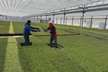
Regardless of the crop, operational simplification is key. "FibriAgri® eliminates the need for the heavy machinery pipeline typically required for peat, such as bale choppers and potting machines, thereby streamlining your production workflow. Since our substrate is clean and pest-free, it significantly extends shelf life and provides a hygienic, soil-less solution ideal for the food service sector."
Enough to talk about – and that's exactly what the FibriTech team is doing in 2026. In addition to thelettuce and herbs sector mentioned earlier, the company is serving the in-vitro market. "This includes not only commercial young plant production but also the critical propagation of stock material (mother plants) and the breeding of new varieties, such as raspberries and blackberries. In these segments, where every single seedling is precious, our substrate's sterility and high survival rates set a new benchmark. To support this market entry, we are refining our manufacturing processes to further boost efficiency and ensure we can meet growing volume demands with absolute consistency."
Beyond that, on the development side, the company is engineering specific substrate definitions for multi-stage systems, with special focus on the delicate acclimatization of in-vitro plantlets. "We are perfecting a seamless "rooting-through" solution that allows a plug to be transplanted directly into a larger finishing block without any root disturbance or shock. This development aims to solve critical bottlenecks in high-tech tissue culture supply chains by ensuring continuity from the lab to the greenhouse."
"For years", says Tomislaw, "the industry was told it had to choose between sustainability and performance. In 2026, the era of trade-offs is over – not only you shouldn't have to make any sacrifices, you must seek solutions that deliver both, as that is the only way forward. A fully sustainable, biodegradable substrate serving as the reliable standard for industrial-scale horticulture isn't a thing of the future – it's here today and it's called FibriAgri®." Year 2026 marks the transition from successful validation to commercial scale-up. "We are currently wrapping up extensive production trials and expect to finalize significant supply agreements, particularly within the lettuce and herbs sectors where our "pot-less" system offers huge operational savings", Tomislaw concludes.
For more information:
FibriTech
Tomasz Ciamulski
[email protected]
https://fibri.tech