The tomato contact group from France, Italy, Portugal, and Spain met on February 10-11 in Torres Vedras, Portugal, to review the EU-Morocco agreement and discuss the future of European tomato trade. The main focus was on establishing a single market with equal competition conditions for all operators, including those outside the EU, which is essential for supporting Community production.
The Spanish delegation stated that the gap between the phytosanitary, labor, and social standards required by EC regulations for Community producers and the lack of enforcement of these standards in third countries results in unfair competition. This situation causes producers within Member States to become less competitive over time.
They also emphasized that the EU-Morocco agreement has already severely impacted the Spanish sector by displacing it as the EU's main tomato supplier. They warned that the situation would worsen with the proposed modification of the association agreement on October 2, which would allow Saharan produce to access the same commercial benefits as Moroccan produce. Additionally, production in this region is expected to increase by 1,000%, reaching 13,000 hectares by 2030, with 85% of the output intended for the EU.
Additionally, Saharan produce will feature confusing labels for consumers, bypassing EU rules that mandate the country of origin to be shown on products sold in the EU. These regulations now permit fruit and vegetables from this area to be labeled with specific regional names, as per the updated delegated regulation 2023/2429 on marketing standards for fruit and vegetables, approved on November 26.
The Spanish delegation urged the contact group to prevent the European Parliament from ratifying the EU-Morocco Association Agreement modification. Fepex introduced the initiative "We Tomato Europe, Don't Betray UE Tomato," to defend EU producers and promote fair trade aligned with EU values.
The contact group also discussed key challenges facing the production sector, such as shortages of phytosanitary products for crop treatment and a lack of manpower, both of which affect producers across the four countries and are crucial to maintaining crops within the EU.
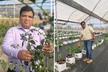
The tomato group consisting of France, Italy, Spain, and Portugal was formed under the Joint Fruit and Vegetable Committee. It included representatives from Spain's Fepex and its associated groups: Coexphal, Proexport, and Fedex; agricultural organizations UPA, ASAJA, and COAG; and Spanish Agri-food Cooperatives. Advisors from the Ministry of Agriculture, Fisheries, and Food in Rome, Paris, and Portugal also participated. The contact group meeting concluded with technical visits to several Portuguese farms.
For more information: www.coexphal.es and www.fepex.es