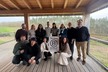
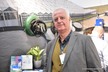
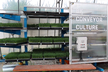
As energy markets shift and cultivation methods evolve, cucumber growers are facing a new set of agronomic challenges. An interviewer sat down with Justin van der Putten, DryGair's European Engineer, and Landry Rossdeutsch, Plant physiologist at CTIFL, to discuss their new strategic partnership in France and the launch of a "living showroom" for growers.
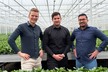
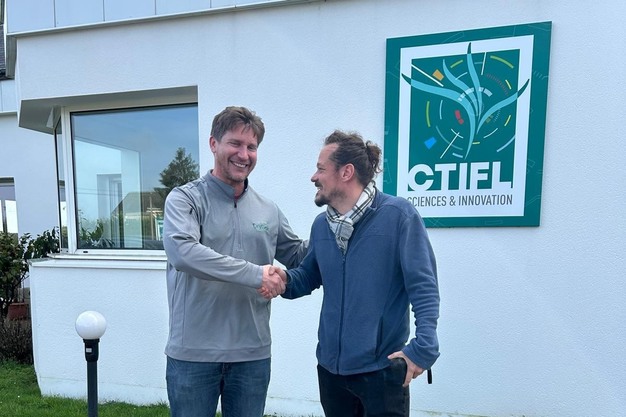 © DryGairJustin (left) and Landry (right)
Q: Justin, you often refer to cucumber cultivation as a "paradox." What do you mean by that?
Justin van der Putten: "It comes down to the nature of the plant itself. Of all greenhouse crops, the cucumber is perhaps the most demanding 'athlete'. It grows rapidly and fruits heavily, which essentially makes the plant a massive biological water pump.
The paradox is this: to achieve the maximum yield a commercial grower needs, you must have high planting density, high temperatures, and intense lighting. Yet those exact conditions generate a continuous flood of water vapor. If you leave that uncontrolled, you stall growth and invite disease. Historically, growers solved this by 'heating and venting' – opening windows to release moisture while blasting the heating pipes. But in today's energy market, throwing heat out of the window is simply no longer a viable equation."
Q: To address this, DryGair recently announced a major move in France. Can you tell us about the partnership with CTIFL?
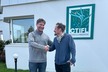
Justin: "We are very excited about this. At DryGair, we believe that the only way to really solve these paradoxes is through rigorous data. That is why we signed a new 3-year strategic agreement with CTIFL (Centre Technique Interprofessionnel des Fruits et Légumes).
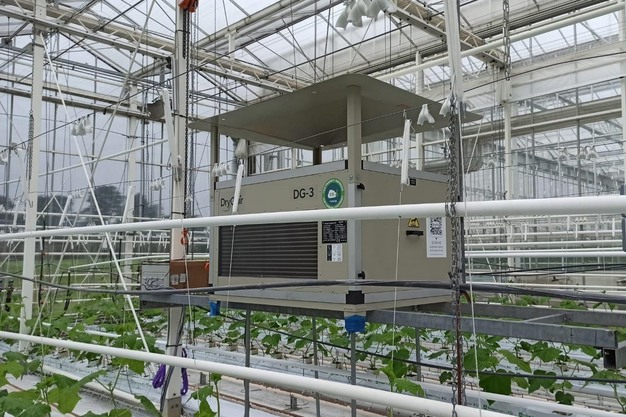
We have installed a DG-3 unit at their experimental station specifically to run comprehensive trials on cucumbers. We will be measuring everything from climate uniformity to the energy savings of growing with 30% reduced carbon footprint."
 © DryGair
Q: Turning to CTIFL—Landry Rossdeutsch, why was it important for your organization to implement this trial now?
CTIFL—Landry Rossdeutsch: "Our mission at CTIFL is to improve the performance and competitiveness of the fruit and vegetable sector, from production to distribution. With the current challenges in the energy market, French growers are actively looking for solutions that reduce energy consumption without sacrificing crop quality.
Partnering with DryGair allows us to test this innovation – active dehumidification – within our unique experimentation network in Europe. It is essential for us to validate these technologies independently to ensure they provide real economic and agronomic value to our industry."
Q: What specific data or results are you hoping to achieve from this 3-year project?
CTIFL—Landry Rossdeutsch: "We are looking for data that is specific to the French climate and production methods. While we know the technology works elsewhere, our role is to conduct economic analysis and innovation testing in a local context.
We will be monitoring how the DG-3 unit impacts the climate uniformity of the greenhouse and whether it allows for a reduction in heating inputs. Moreover, we want to demonstrate that the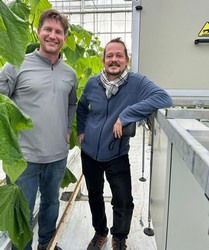 © DryGair performance of active dehumidification is linked to its integration into the overall climate strategy, and it is not just an apparatus to take care of the humidity itself! Ultimately, the goal is to integrate active dehumidification into a 30% reduced carbon footprint climate strategy to provide growers with a technical solution for economic and ecologic performance."
Q: Justin, how does this benefit the local growers? Is this purely for academic research?
Justin: "Not at all. We are viewing this project as a 'living showroom.' It is important to us that this isn't just a closed lab; we want it to be a hub for knowledge transfer.
The station is actually located just an hour from my home base, so I will be personally involved. We are inviting growers from France and the surrounding European regions to visit. We will be hosting open days and VIP tours where they can see the DG-3 in action and review the live data with us.
We want to show growers exactly how the DryGair solution supports 'Generative Steering' – keeping plants active and productive throughout the year, specifically in these local climate conditions."
Q: Finally, looking at the wider market, many growers are transitioning to LED lighting. Does that make humidity management easier or harder?
Justin: "It actually complicates the picture significantly. Even though this specific trial at CTIFL focuses on the local infrastructure, the industry-wide shift is creating what we call the 'Cold Greenhouse' effect.
When growers switch from HPS to LED to save electricity, they lose the radiant heat that HPS lights used to emit. Suddenly, the greenhouse is colder and significantly wetter, leading to outbreaks of Botrytis and Downy Mildew that they didn't experience before.
You also have to deal with the 'Green Wall' – the dense foliage blocks airflow. A sensor in the walkway might read 75% relative humidity, but deep inside the canopy where the fruit develops, it can be at saturation point. Whether you use LEDs or HPS, you need a system that can penetrate that canopy."
For more information:
DryGair
https://drygair.com/
CTIFL
https://ctifl.fr/