The need to regenerate agricultural soils and reduce the carbon footprint of production systems is driving interest in solutions that not only nourish crops but structurally transform how soils function. In this context, biochar, a plant based charcoal obtained through pyrolysis, is beginning to find its place in Spain as a regenerative amendment, with applications ranging from professional agriculture to urban arboriculture.
 © Livingchar
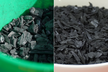
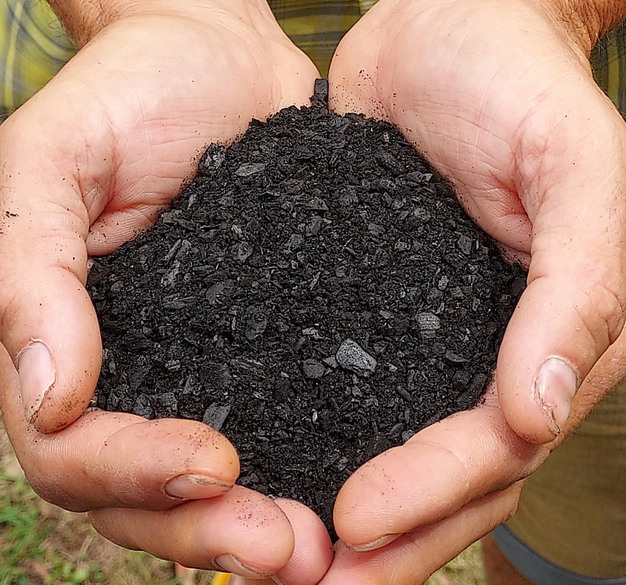
At the cooperative Carbón Vivo, promoter of the LivingChar brand, the team works with biochar produced from pine wood and certified under the European Biochar Certificate, which guarantees both process sustainability and product safety. "Biochar is an organic carbon material whose purpose is to improve the physical, chemical and biological properties of soil and act as a carbon sequestration tool," explains Abel Zahínos, one of the project's promoters.
More than carbon, soil infrastructure
"Our biochar contains more than 80 percent carbon and acts as a soil regenerator by restoring a key mineral, carbon, which many Spanish soils have lost due to intensive agronomic practices, high temperatures and reduced water availability. Unlike conventional fertilizers, biochar does not directly supply NPK," he notes, "instead it improves soil structure, cation exchange capacity and the management of water and nutrients".
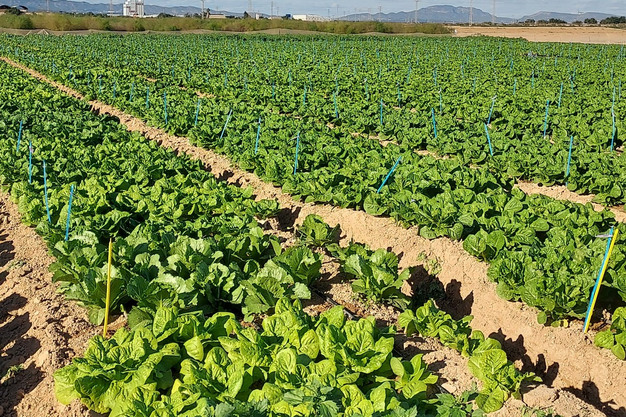
"An ideal soil is made up of roughly 25 percent water, 25 percent air, and the remainder mineral fraction and organic matter. In degraded or compacted soils, those pores collapse and the capacity to store and properly manage the water and oxygen that plants need for their physiological functions is lost," he explains. "That is why it is so important to provide soils with a structure that ensures proper circulation of water and gases, elements that are essential for crops to thrive and to be resilient to climate change".
 © Livingchar
In this respect, biochar is particularly valuable because of its ability to increase plant available water in soils, the fraction of stored water that roots can extract and use for growth. "According to trials carried out with the Universidad Politécnica de Madrid, conventional compost provides around 7 percent plant available water, while biochar offers more than 50 percent. This allows for a significant improvement in soil water efficiency, a critical factor for Mediterranean crops".
Less leaching, higher efficiency
Another key property of biochar is its high cation and anion exchange capacity. "In practical terms, it acts as a retention structure that binds nutrients and reduces losses through leaching. Nitrate losses can be reduced by up to 60 percent. This not only improves plant uptake, but also helps optimise fertiliser use and reduce the environmental impact linked to aquifer pollution".
On this basis, LivingChar has developed solutions such as Compostchar, a regenerative fertiliser combining organic compost, biochar and rock minerals, and Arbochar, designed for woody crops and long term plantations. "The goal is to permanently improve soil conditions from the moment the crop is established".
In addition, the biochar production process through pyrolysis allows the carbon previously captured by plants during photosynthesis to be stabilised. "Each tonne of our biochar sequesters up to 2.9 tonnes of CO₂ equivalent. Unlike natural biomass decomposition, which returns carbon to the atmosphere, biochar stabilises it in the soil for estimated periods ranging from 700 to 3,000 years".
"In fact, the Intergovernmental Panel on Climate Change recognizes it as one of the currently available technologies with net carbon removal, adding a climate dimension to its agronomic application".
From fields to cities
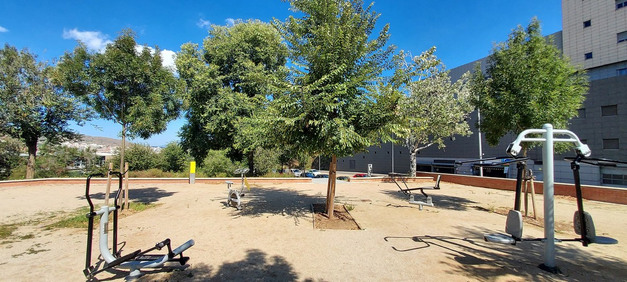
Beyond agriculture, biochar is also gaining prominence in urban gardening and arboriculture projects. "Cities such as Stockholm began incorporating biochar into their plantings after detecting mortality and disease rates of up to 80 percent in urban trees due to soil compaction. Since 2008, all new trees have been planted with biochar, achieving survival rates close to 100 percent," Abel shares.
 © Livingchar
In Spain, LivingChar is working with municipalities such as Barcelona and Córdoba to improve urban soils. "The problem in cities is compaction. Soil loses its ability to properly manage the air and water that trees need, and roots cannot develop. A tree, and plants in general, can die both from lack of oxygen and from lack of water," he points out.
An emerging market with room to grow
Although awareness of biochar has increased over the past five years, adoption in professional agriculture remains limited. "At LivingChar we recognise that there is still a strong need for outreach and for clear differentiation in quality, since raw material, production process and certification make a substantial difference to the final product".
"At present, we are focusing on the Spanish market, with a grower focused model based on soil analysis and personalized technical advice. But we are convinced that wider use of biochar is only a matter of time".
 For more information:
Livingchar
C/ Margarit 37
08004 Barcelona
T. (+34) 670 585 159
[email protected]
https://www.livingchar.com