As Horti India Expo 2026 approaches (12–14 March, New Delhi), East-West Trade & Consulting is preparing a focused horticulture trade mission designed to support European suppliers entering the Indian market. Building on earlier discussions about India's scale and growth trajectory, the emphasis now lies on practical positioning, technical demand, and realistic market alignment.
"We organise trade missions across multiple agri and food subsectors, but horticulture remains a key focus," says Matthijs Muller of East-West Trade & Consulting. "India stands out because of its population size and long-term market potential. At the same time, it is a market that operates differently from what many European companies are used to. That makes preparation essential."
Evolving market dynamics
According to Muller, India's horticultural sector has matured considerably in recent years. Growth is supported by domestic demand, urbanisation, and an expanding middle class seeking higher-quality produce and ornamentals. However, he stresses that India should not be viewed simply as an importing market.
"Local capabilities are developing quickly," he explains. "India is not only consuming technology and inputs; it is increasingly producing them as well."
This is particularly visible in substrates and other basic inputs, where Indian companies are already internationally active. For European exporters, differentiation is therefore critical.
"If you offer something highly specialised, or something that clearly improves yield and quality, there is an opportunity," he notes. "But price sensitivity is real. Companies need to align their value proposition with local market conditions."
Technical demand: Where are the opportunities?
Demand varies by region, but Matthijs highlights several segments with potential for international suppliers.
"Input suppliers are especially relevant," he says. "That includes seeds and bulbs for ornamentals, irrigation systems, and certain fertiliser concepts. Screening solutions and price-competitive greenhouse systems can also be valuable."
The ornamental segment remains structurally important. "Flowers and decorative plants have consistent demand. Varieties that are not produced domestically can present clear opportunities."
At the same time, he cautions against assuming that highly sophisticated Western solutions will automatically translate.
"In countries like the Netherlands, systems are often highly automated and capital-intensive. In India, adaptation may be necessary both technically and commercially. Given the size of the country, it can be worthwhile to adjust your model."
For greenhouse builders and technology suppliers, this could mean modular systems, phased automation, or partnerships that combine international expertise with local service capacity.
"Finding a strong local partner is crucial," Matthijs emphasises. "Distribution, after-sales support, and understanding regional dynamics make a significant difference."
 © Florance Flora
Chrysanthemum pot plants of Florance Flora, one of the potential grower visits
The role of Horti India Expo
The mission is structured around participation in Horti India Expo 2026, where East-West Trade & Consulting acts as a European partner. For first-time entrants, Matthijs considers the exhibition a very good starting point.
"It is one of the few platforms in India dedicated specifically to horticulture, covering both vegetables and ornamentals," he explains. "There is considerable overlap between those segments in terms of inputs and technology."
He also highlights the event's independent organisation and international ambition. "In a country with many trade fairs, continuity and long-term vision are important. An independent platform with an international outlook provides a more neutral meeting ground for both local and foreign companies."
From exhibition to field insight
Beyond the exhibition floor, the programme includes grower visits, including greenhouse operations. The objective is not solely commercial matchmaking.
"The main goal of these visits is to understand common practice. Participants need to see how growers operate, which constraints they face, and what drives their investment decisions."
Direct interaction with growers allows suppliers to assess climate strategies, irrigation practices, labour dynamics, and cost structures before moving into detailed discussions.
"You need to understand the context before you can position your solution effectively."
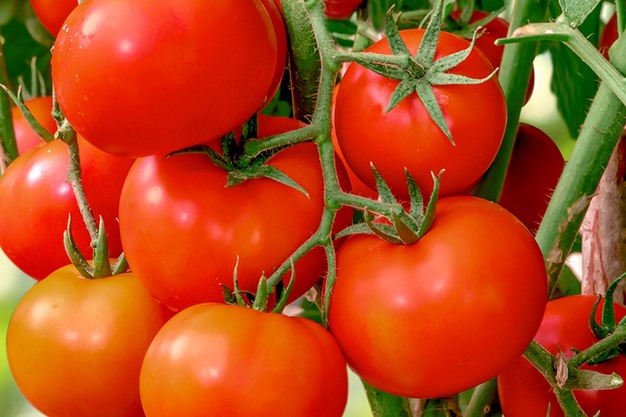 © indam seeds
F1 Tomato Hybrid –INDAM 14301 of Indam seeds, one of the potential grower visits
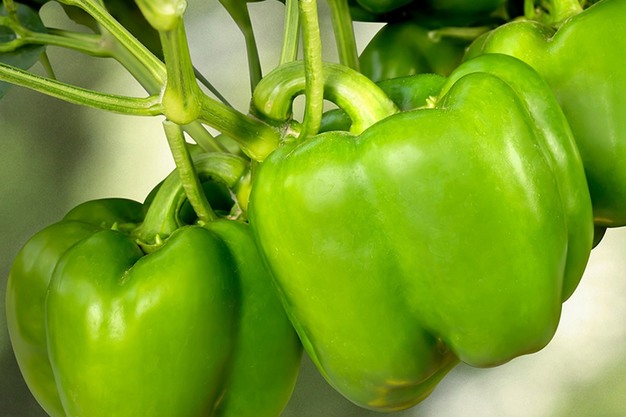 © indam seeds
F1 Hybrid Sweet Pepper INDAM Samrudhi of Indam seeds, one of the potential grower visits
First contact, long-term strategy
"During the mission, we bring companies together and create the right context for first contact," he explains. "Once discussions move into detailed negotiations or sensitive information, we step out."
While the organisation monitors outcomes and may organise follow-up activities, it does not manage partnerships or pilot projects directly.
"Our role is market exploration and connection. After that, companies move forward independently."
For greenhouse suppliers willing to invest time in understanding India's regional diversity and price dynamics, he sees clear long-term prospects.
"Better inputs deliver better output; higher yields per square metre and improved quality. With a growing and increasingly affluent population, that creates structural opportunity. The key is entering the market with realism, adaptability, and a long-term perspective."
For more information:
East-West Trade & Consulting
[email protected]
+31 (0) 70 221 2168
Horti India Expo
www.hortiindiaexpo.com/conference