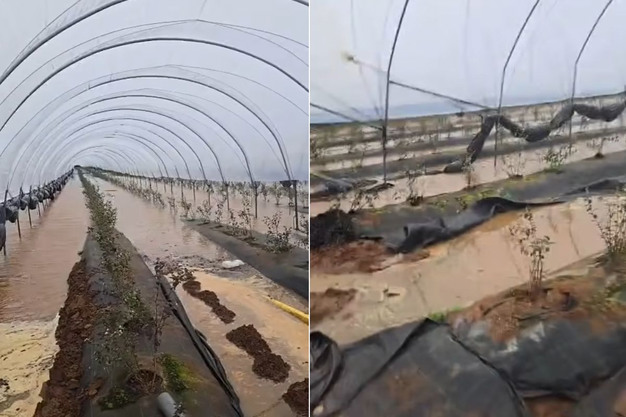
After three weeks of flooding in northern Morocco, soft fruit growers are preparing to return to their farms to assess the damage and carry out the necessary repairs, even though for many of them the season is already over. According to Amine Bennani, president of the Moroccan Association of Soft Fruit Growers, the impact is most severe and direct in the regions of Kenitra, Sidi Slimane, and Larache, where a large part of the country's soft fruit production is concentrated.
 © Amine Bennani
Bennani describes a difficult situation on the ground: "All soft fruit growers in the north of the country are affected to varying degrees, and several farms are completely flooded. Production losses could reach up to 10% of the season's volume, affecting all products, including strawberries, raspberries, and blueberries. This could even mean an early end to the strawberry season. Blueberries could recover after the rains with a delayed campaign, but blueberry producers have suffered heavy losses in their greenhouses and plants."
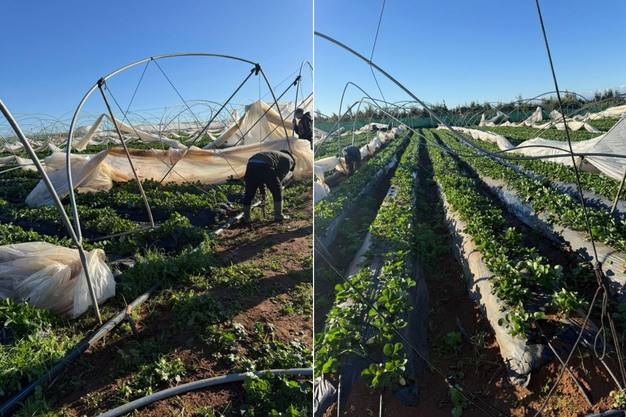 © Amine Bennani
Exports of soft fruits have been halted in the last couple of weeks due to flooding. Bennani explains: "The Moroccan origin has disappeared from European shelves for several reasons. First, major logistical disruptions have affected all products, including soft fruit harvests from Agadir in the center of the country. Many exporters had to destroy shipments of soft fruits after waiting too long at the port of Tangier without finding a way to reach their customers. We also experienced slow harvests and quality issues related to the weather. Nevertheless, harvesting continued when producers were able to do so."
The evacuation of the city of Kser Kebir, which was hardest hit by the floods, led to a labor shortage, according to the growers' representative. "A large part of the agricultural workforce comes from this city. It was difficult to continue harvesting or repairing greenhouses during the evacuation."
For more information:
Amine Bennani
Moroccan Association of Soft Fruit Growers
Tel: +212 66124 3424
Email: [email protected]