In the Netherlands, rising electricity prices have prompted greenhouse growers to reassess their lighting strategies. The key question is how to reduce electricity consumption for assimilation lighting without negatively affecting crop growth and yield. Options include dimming the lights when there is sufficient natural radiation or when electricity prices are high, compensating brighter days with days of lower light input, or using predominantly red light with high energy efficiency.
 © Kas als Energiebron
These approaches are being examined in the 'Masterplan Light' project, which focuses on developing energy-efficient, intelligent lighting strategies for greenhouse growing. Anja Dieleman and Jaco den Bakker of Wageningen University & Research (WUR) provided an update through Kas als Energiebron.
On 16 September 2025, four tomato crops (cv. Macxize) were planted. Lighting was gradually increased to a 17-hour photoperiod under four different strategies.
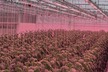
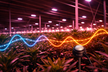
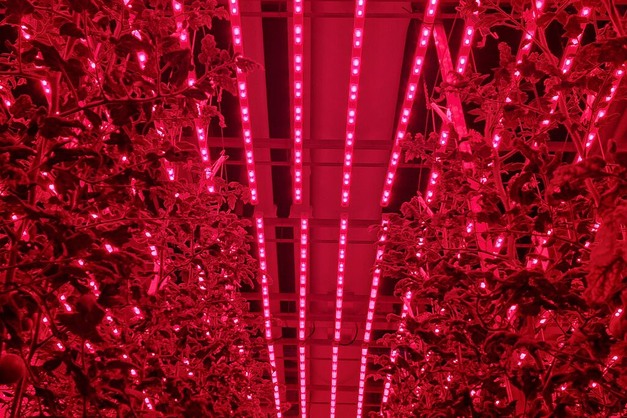
The reference treatment consisted of 325 µmol/m²/s with a spectrum of 5% blue, 5% green and 90% red light. A second treatment used 100% red light at the same intensity. In the third treatment, light intensity alternated daily between 225 and 425 µmol/m²/s. The fourth treatment alternated weekly, with four days at 225 µmol/m²/s and three days at 458 µmol/m²/s.
During the first weeks of cultivation, plants grown under 100% red light appeared vigorous, with long leaves and truss development comparable to the other treatments. As the crop developed, all treatments showed a generative crop with slight leaf edge symptoms. Discolouration was observed in the first harvested trusses, although not at the same time in each treatment.
The two treatments with alternating light levels were broadly comparable to the reference, and in some cases appeared slightly more vigorous. However, plant load and production figures were similar to the reference treatment. This suggests that tomato plants are able to compensate for days with low natural light when higher radiation levels occur later. Compensation therefore does not necessarily have to come from artificial lighting.
Lighting with only red light offers two advantages. Red light is energy-efficient, with a high µmol/J output, and is effective for photosynthesis. Traditionally, however, it has been assumed that tomatoes require a broader light spectrum for optimal growth and development. So far, production under 100% red light has been comparable to the other three treatments. At the same time, the plants appear less robust, with thinner heads and a lower plant load. Whether this will affect long-term performance remains to be seen. Up to this point, the crop under full red light has performed better than many growers and advisers had anticipated. The plants have maintained their condition and are recovering as natural light levels increase.
The trial continues until the end of May.
The aim of Masterplan Light is to reduce energy use in greenhouses through intelligent control of assimilation lighting, enabling growers to light differently, less intensively or more efficiently. The project is a collaboration between the greenhouse business unit of Wageningen University & Research, Delphy Improvement Centre, Plant Lighting and Glastuinbouw Nederland, with funding from the Top Sector Horticulture & Starting Materials and Stichting KIJK.
Source: Kas als Energiebron